
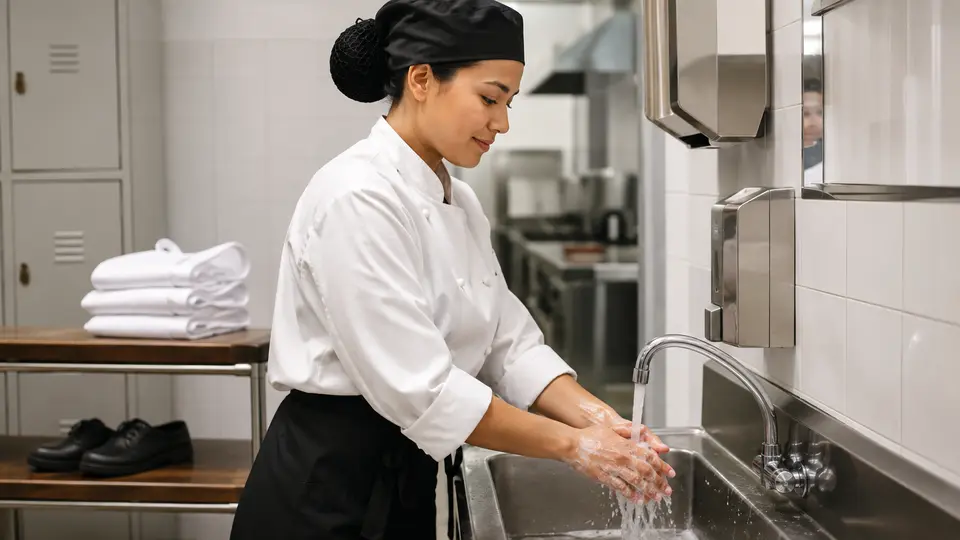
Lesson 4: Your personal standard enters the kitchen before your knife does. Clean clothing, controlled behaviour and honest illness reporting protect food, colleagues and guests.
What You Will Learn
- Apply effective hand-washing at the moments that matter.
- Prepare a clean, safe uniform and control hair, jewellery and personal items.
- Respond responsibly to illness, injury and unprofessional behaviour.
Why This Matters in a Professional Kitchen
Guests cannot see most preparation areas, so trust depends on the discipline of the team. A professional chef follows the same hygiene and conduct rules whether a supervisor is present or not.
Hands are a moving hazard
Wash hands before starting, after touching raw food, waste, phones, face or hair, after using the toilet and whenever changing tasks. Gloves never replace hand-washing; change them when they become contaminated and never wash disposable gloves.
Uniform is protective equipment
Arrive in clean chef clothing and suitable closed footwear. Restrain hair, keep nails short, cover approved dressings and avoid jewellery that can trap dirt or fall into food. Change a heavily soiled apron rather than carrying contamination across sections.
Professional conduct protects the brigade
Move with awareness, say clear safety calls, keep phones and personal food away from preparation, and report damage, pests, injuries or illness promptly. Respectful communication keeps the kitchen safer than shouting or hiding mistakes.
ChefLock Professional Method
- Change into a clean uniform and store outdoor clothing and personal items away from food areas.
- Wash and dry hands correctly before setting up the station.
- Check hair restraint, nails, jewellery, cuts and footwear.
- Keep tasting spoons, water bottles and personal food controlled according to workplace rules.
- Report symptoms, injuries or contamination immediately to the responsible manager.
- Finish the shift by separating soiled uniform and leaving shared changing areas clean.
Common Mistakes and Corrections
Wearing gloves all day
Correction: Change gloves between tasks and wash hands before putting on a new pair.
Working while unwell to appear committed
Correction: Report symptoms honestly and follow the manager’s exclusion or restricted-duty procedure.
Carrying a phone between the dining room and prep bench
Correction: Store it away; if workplace use is essential, clean hands and follow the agreed device-cleaning method.
Practice Drill
Before a practice shift, perform a two-minute personal readiness check in a mirror and at the hand-wash sink. Ask a colleague to observe one task change and identify any moment when your hands, apron or tools could transfer contamination.
Service-Ready Checklist
- Clean uniform, apron and closed non-slip footwear.
- Hair restrained, nails short and jewellery controlled.
- Cuts covered with an approved visible dressing and glove when required.
- No uncontrolled phone or personal items at the station.
- Illness and injuries reported before handling food.
Chef’s Note
Professionalism is visible in small repeated actions: a clean sleeve, a clear safety call and the courage to report a problem early.
Key Takeaway
Personal hygiene and conduct are active food-safety controls, not matters of appearance alone.
This lesson provides general culinary education. Follow local food-safety rules, workplace procedures and the manufacturer’s instructions for your equipment.