
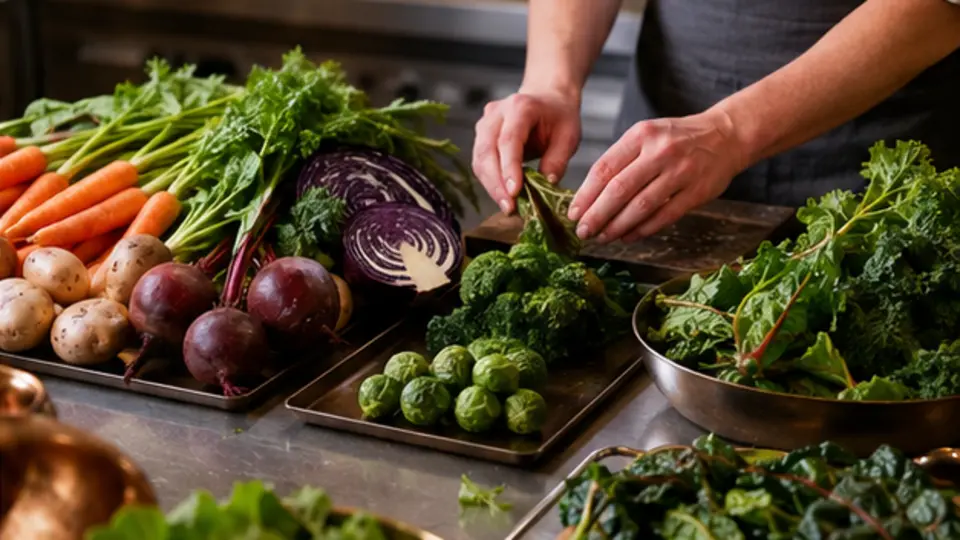
Lesson 16: Different vegetable families carry different structures, soil risks and preparation needs. Treating them all the same leads to waste, discoloration and poor texture.
What You Will Learn
- Wash soil-bearing vegetables without spreading dirt.
- Trim roots and brassicas for maximum usable yield.
- Prepare and store leafy greens to limit bruising and wilting.
Why This Matters in a Professional Kitchen
Careful washing and trimming remove genuine hazards while preserving edible product. Separating stems, leaves and florets also allows each part to receive the cooking time it needs.
Control soil before fine preparation
Keep dirty roots away from clean ready-to-eat areas. Wash with potable water according to the kitchen method, clean the sink and tools afterward and never let washing splash onto prepared food.
Use the whole edible structure intentionally
Peel only when needed for quality or safety. Broccoli stems, cauliflower leaves, beet greens and herb-like tops can be valuable when fresh and suitable for the dish. Give dense stems more cooking time than delicate leaves.
Moisture can help or harm storage
Leafy greens need enough humidity to avoid wilting but free water encourages damage. Drain or spin them gently, use breathable or protected storage as appropriate and keep heavy items from crushing them.
ChefLock Professional Method
- Sort vegetables by cleanliness and intended use.
- Wash dirty produce before it enters the clean prep sequence.
- Remove only damaged, tough or unsafe parts.
- Divide dense stems, tender leaves and florets by cooking time.
- Cut pieces consistently and protect cut surfaces from drying or discoloration.
- Store covered or ventilated as appropriate, then label and rotate.
Common Mistakes and Corrections
Peeling every root heavily
Correction: Use a brush or thin peel when suitable and judge the actual skin quality.
Cooking stems and leaves for equal time
Correction: Stagger them by density so both finish with the intended texture.
Storing wet greens in a compressed box
Correction: Drain well, avoid crushing and use a container that protects without trapping excess water.
Practice Drill
Prepare one root, one brassica and one leafy green. Weigh total product, finished component, useful secondary cuts and waste. Cook the dense and tender parts with staggered timing, then compare colour and bite.
Service-Ready Checklist
- Dirty and clean preparation separated.
- Only unsuitable material discarded.
- Pieces grouped by density and cooking time.
- Cut surfaces protected.
- Storage prevents crushing, dehydration and free-water damage.
Chef’s Note
Waste reduction starts with recognising that a vegetable is a collection of usable textures, not a single standard cut.
Key Takeaway
Prepare each vegetable family according to its soil risk, structure, moisture and cooking behaviour.
This lesson provides general culinary education. Follow local food-safety rules, workplace procedures and the manufacturer’s instructions for your equipment.