Lesson 22: Sautéing and stir-frying are fast methods, but speed comes from preparation and heat control rather than frantic movement.
What You Will Learn
- Prepare ingredients for fast even cooking.
- Control preheat, oil and pan loading.
- Sequence components by density and moisture.
Why This Matters in a Professional Kitchen
If ingredients are wet, uneven or crowded, the pan cools and food steams. Correct sequencing lets dense and delicate components finish together without burning aromatics.
Preparation must be complete
There is little time to chop or measure once cooking starts. Cut food consistently, dry surfaces, arrange ingredients in use order and prepare the serving vessel before heating the pan.
Heat must recover between additions
Use a pan and burner suited to the portion. Add enough food for active sizzling, not enough to flood the surface. Work in batches and combine at the end when the pan cannot recover quickly.
Movement has a purpose
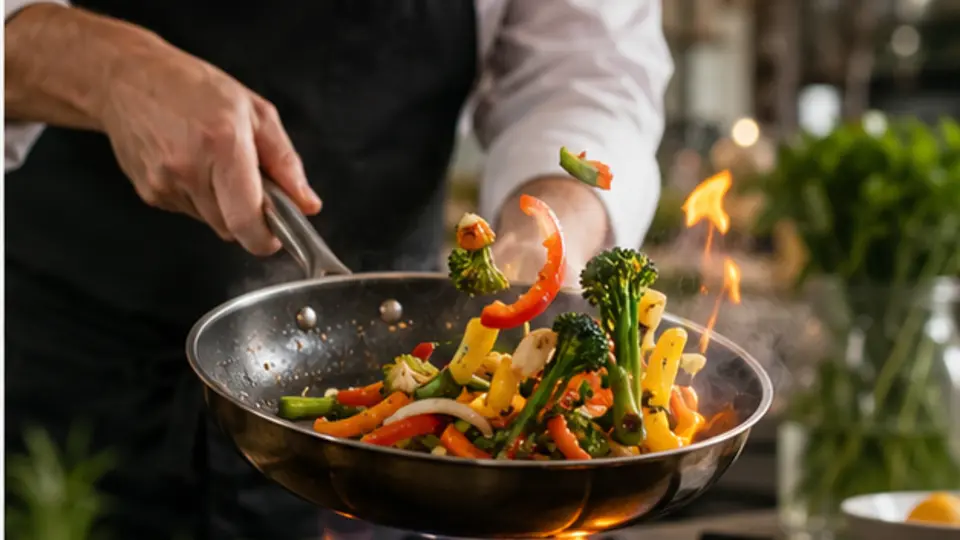
Leave food in contact long enough to colour, then toss or turn for even exposure. Add garlic, herbs and finishing sauces at a stage where they release aroma without scorching or making the dish watery.
ChefLock Professional Method
- Cut, dry and organise every ingredient before heating.
- Preheat the correct pan and add suitable cooking fat.
- Add the main ingredient in a controlled single layer.
- Allow contact colour, then turn or toss deliberately.
- Add ingredients in order of required cooking time.
- Season, finish and serve immediately while texture is at its best.
Common Mistakes and Corrections
Constantly shaking the pan
Correction: Allow enough contact time for browning before moving food.
Adding a large cold batch
Correction: Use smaller batches and let the pan recover.
Pouring watery sauce too early
Correction: Reduce or add it near the finish so the food does not boil.
Practice Drill
Sauté equal vegetables in one crowded batch and two controlled batches. Compare colour, liquid, time and texture. Repeat while changing only the ingredient order and record which sequence gives the best finish.
Service-Ready Checklist
- Ingredients uniform, dry and ready.
- Pan and oil suitable for the heat.
- Sizzle maintained after loading.
- Food moved only with purpose.
- Finished dish served without holding.
Chef’s Note
A hot pan is a limited resource; every cold or wet ingredient spends some of its heat.
Key Takeaway
Fast pan cooking succeeds when preparation, batch size, heat recovery and ingredient sequence work together.
This lesson provides general culinary education. Follow local food-safety rules, workplace procedures and the manufacturer’s instructions for your equipment.