
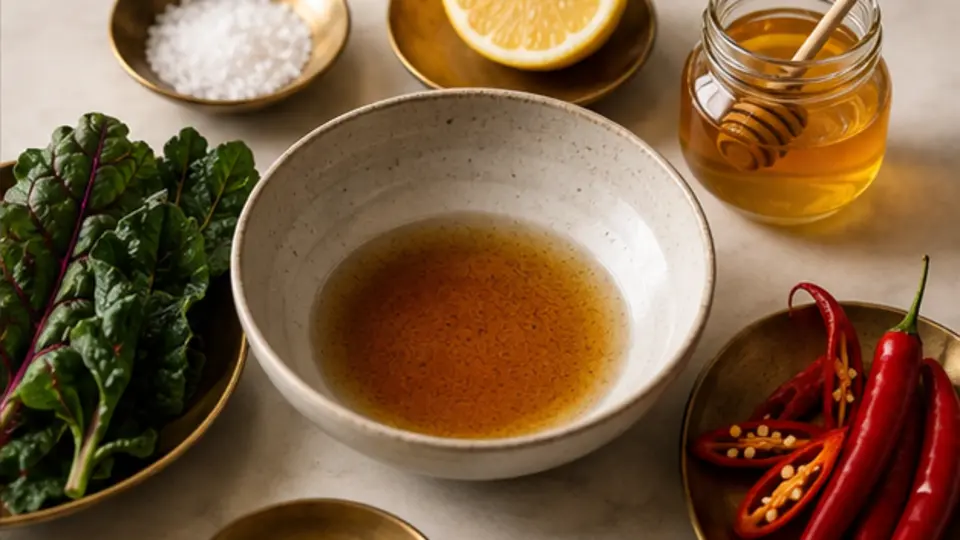
Lesson 32: Balance does not mean every taste has equal strength. It means the dominant flavour is clear, supporting tastes create contrast and no accidental note overwhelms the dish.
What You Will Learn
- Describe the role of five major taste sensations.
- Distinguish intensity from imbalance.
- Correct a dish through small controlled trials.
Why This Matters in a Professional Kitchen
A chef who can name the imbalance can correct it with a small targeted change. Adding everything at once often creates a louder but less coherent result.
Salt reveals and shapes flavour
Salt can reduce the perception of bitterness and make aromas more noticeable, but excess salt cannot be balanced indefinitely with sugar or acid. Dilution or batch correction may be the honest solution.
Acid and sweetness create contrast
Acid can brighten rich or flat food, while sweetness can round harsh acidity or chilli. The source matters: lemon, vinegar, tomato, fruit or cultured dairy also adds aroma and texture.
Bitterness and heat need context
Pleasant bitterness gives length and complexity; accidental burnt bitterness usually needs removal or rebuilding. Chilli heat can be softened by fat, dairy, starch or dilution, but the recipe’s identity should remain clear.
ChefLock Professional Method
- Taste at a suitable serving temperature.
- Name the dominant flavour and intended contrast.
- Decide whether the issue is low intensity, excess intensity or imbalance.
- Remove a spoonful into a test cup.
- Add one correction in a measured amount and compare with the original.
- Scale the successful adjustment carefully into the full batch and retaste.
Common Mistakes and Corrections
Adding sugar to every acidic dish
Correction: First ask whether salt, dilution, fat or cooking time would produce a cleaner balance.
Using acid to rescue burnt bitterness
Correction: Remove scorched material and rebuild; burnt flavour spreads through the batch.
Adjusting a boiling-hot sample
Correction: Cool a tasting portion to a safe representative serving temperature.
Practice Drill
Make a neutral tomato or vegetable base and divide it into five cups. Create one controlled imbalance in each, then ask a partner to diagnose and correct it using small test portions. Record what changed aroma, texture and aftertaste as well as taste.
Service-Ready Checklist
- Dish tasted at representative temperature.
- Dominant and supporting flavours named.
- Test correction made in a small sample.
- Adjustment measured before scaling.
- Final dish still expresses its main ingredient.
Chef’s Note
The best correction often makes the ingredient taste more like itself, not more like the correcting ingredient.
Key Takeaway
Balance flavour by diagnosing the specific relationship between dominant and supporting tastes.
This lesson provides general culinary education. Follow local food-safety rules, workplace procedures and the manufacturer’s instructions for your equipment.