
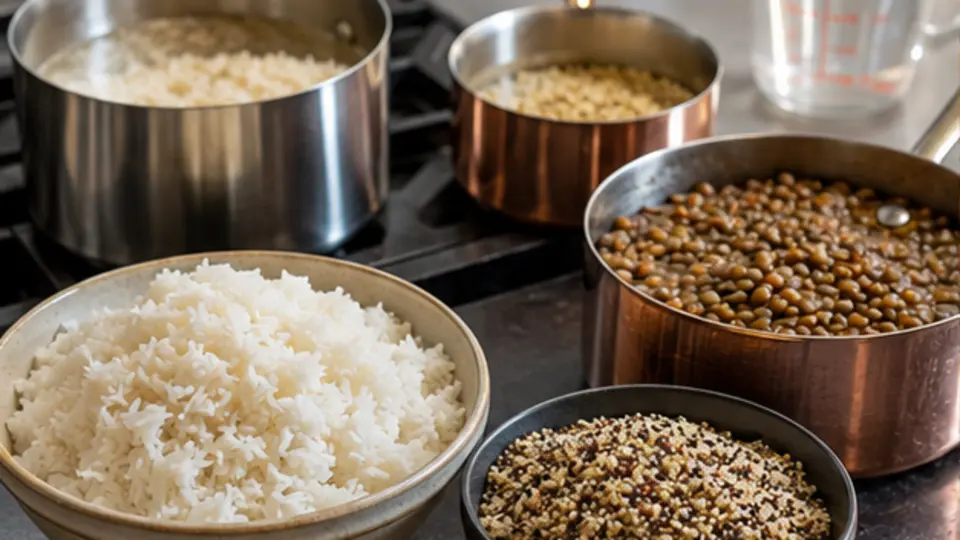
Lesson 47: Rice, grains and pulses are not interchangeable dry goods. Variety, age, processing and starch structure change water absorption and cooking behaviour.
What You Will Learn
- Choose absorption, boiling, steaming or pilaf methods.
- Manage rinsing, soaking and water ratio.
- Test doneness, rest and cool cooked grains safely.
Why This Matters in a Professional Kitchen
Consistent results begin with a tested ratio and pan, then use observation and records to adapt when the ingredient or batch changes.
Method follows the ingredient and result
Absorption suits measured rice and grains, excess-water boiling offers control for some products, and pilaf coats grains in fat before liquid. Pulses may need soaking and longer gentle cooking depending on type and age.
Water ratio is a starting system
Pan width, lid fit, batch size, heat and rinsing all affect evaporation. Use a standard vessel and method, record the actual yield and adjust gradually rather than copying a universal ratio.
Resting finishes absorption
After heat stops, covered rest can equalise moisture and firm grain structure. Fluff gently rather than crushing. If holding or cooling, follow a strict approved time-temperature process.
ChefLock Professional Method
- Identify the variety, condition and required finished texture.
- Sort, rinse or soak according to the ingredient and recipe.
- Measure dry product, liquid and suitable pan capacity.
- Bring to the required heat, then control simmer or steam without unnecessary opening.
- Test several grains or pulses for centre texture.
- Rest, fluff and serve, hold or cool through the approved food-safety plan.
Common Mistakes and Corrections
Using one water ratio for every rice
Correction: Test by variety, batch and equipment and keep a kitchen record.
Stirring absorption rice repeatedly
Correction: Leave the structure undisturbed unless making a style that requires released starch.
Cooling a deep pot slowly
Correction: Divide into suitable shallow containers and use the approved rapid-cooling method.
Practice Drill
Cook two small batches of the same rice in pans of different widths using equal ratios. Record time, evaporation and yield. Repeat the preferred pan with a larger batch and calculate whether the ratio needs adjustment.
Service-Ready Checklist
- Ingredient variety identified.
- Rinsing or soaking method correct.
- Ratio and pan recorded.
- Doneness tested at the centre.
- Resting and safe holding or cooling planned.
Chef’s Note
Consistency comes from repeating a measured system and recording what the real ingredient did.
Key Takeaway
Match grain type, method, vessel and water ratio, then rest and handle the cooked batch safely.
This lesson provides general culinary education. Follow local food-safety rules, workplace procedures and the manufacturer’s instructions for your equipment.