
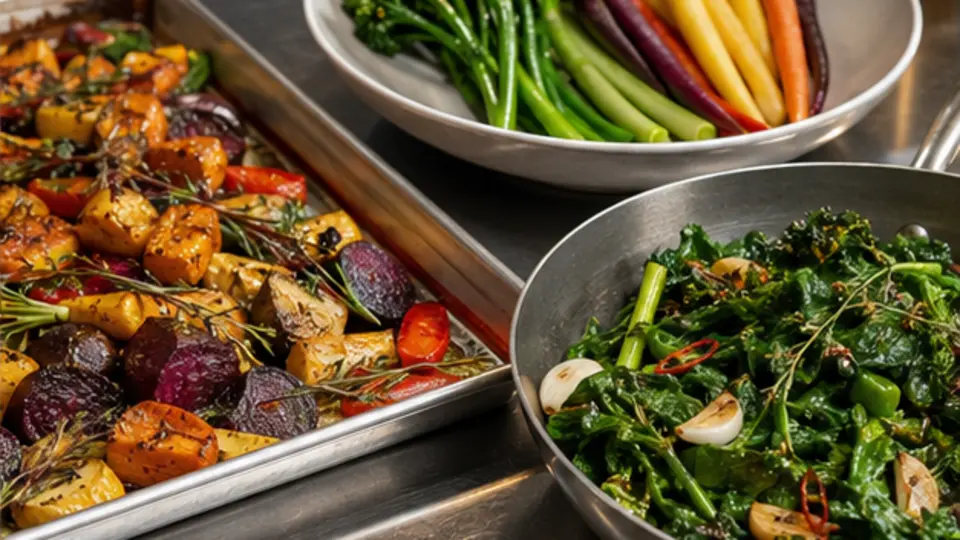
Lesson 48: Vegetables are not supporting decoration. Their cell structure, pigments, water and natural sugars respond distinctly to cut size, heat, acid and cooking time.
What You Will Learn
- Relate vegetable structure to cooking method.
- Protect green, red, white and orange pigments.
- Use texture and seasonality as menu decisions.
Why This Matters in a Professional Kitchen
Seasonal produce often needs less intervention because freshness provides flavour and texture. The chef’s job is to select a method that reveals those strengths.
Cell walls control tenderness
Heat softens pectin and releases water, but acid can slow softening while alkaline conditions damage texture and nutrients. Dense roots need more time than leafy vegetables and benefit from consistent cuts.
Colour is sensitive to environment
Green vegetables lose freshness through prolonged heat and holding; red pigments can shift with acidity; pale vegetables show browning quickly. Use correct water volume, pan loading and prompt finishing instead of chemical shortcuts.
Seasonality changes the required technique
Young tender produce may need only brief heat, while mature vegetables can benefit from roasting, pureeing or braising. Taste before choosing the method and design trim use at the same time.
ChefLock Professional Method
- Inspect and taste the raw vegetable when suitable.
- Identify density, pigment and desired final bite.
- Cut consistently and choose moist or dry heat.
- Preheat water, pan or oven before loading.
- Cook in batches and test the densest piece.
- Season, glaze or cool immediately, then serve without unnecessary holding.
Common Mistakes and Corrections
Adding baking soda to keep greens bright
Correction: Use sufficient boiling water, small batches and prompt cooling or service to protect colour and texture.
Roasting vegetables of different density together
Correction: Stagger additions or cut them to compatible cooking sizes.
Holding cooked vegetables in hot liquid
Correction: Drain and finish promptly so colour and bite do not continue deteriorating.
Practice Drill
Cook one green vegetable by blanching, steaming and roasting. Use equal finished seasoning and compare colour, bite, aroma and water loss. Choose the method that best expresses the ingredient rather than the brightest photo alone.
Service-Ready Checklist
- Produce freshness and season considered.
- Cut size matches density.
- Cooking medium fully ready before loading.
- Doneness tested by texture.
- Vegetable served or cooled promptly.
Chef’s Note
Respecting vegetables means choosing the method after tasting the ingredient, not before.
Key Takeaway
Control cut, heat, pigment and holding so seasonal vegetables keep their own identity.
This lesson provides general culinary education. Follow local food-safety rules, workplace procedures and the manufacturer’s instructions for your equipment.