
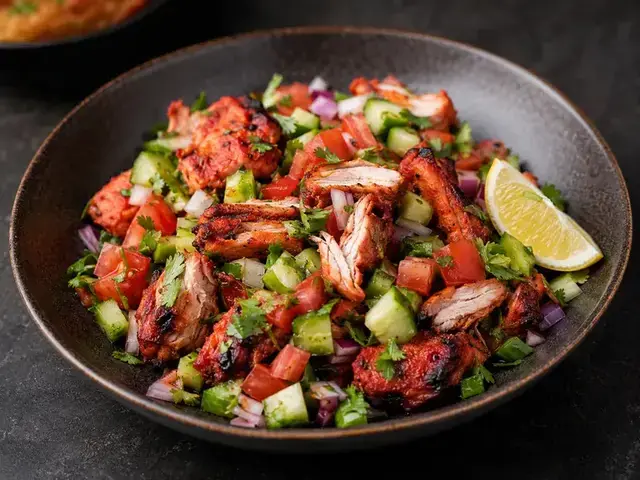
 Chicken
Tandoori Chicken Kachumber Salad
Tandoori chicken kachumber salad combines warmly spiced cooked chicken with a crisp tomato-cucumber-onion mixture. The yogurt marinade supplies the coating, while fresh lemon and…
Chicken schnitzel has a thin, evenly cooked centre surrounded by a crisp crumb coating. Flattening the chicken to a consistent thickness helps the crumbs brown in the same time the meat cooks. Lemon cuts through the richness of the shallow-fried crust.

Follow the measured ingredients, numbered method, substitutions, safety notes and cooking mode below.
Use plain flour, beaten egg and dry breadcrumbs in separate dishes. Shake off excess flour before dipping into egg so the coating adheres rather than peeling away. Season the chicken and coating deliberately instead of relying on salt added only after frying.
Fry in a broad pan with enough oil for consistent contact, working in batches. Lower the pieces away from you and turn carefully when the underside is set. Drain on a rack and check the chicken centre reaches 74°C; crumb colour alone is insufficient.
If the coating falls off, check for wet chicken, excess flour or handling before the crust sets. Dark crumbs with an undercooked centre mean the oil is too hot or the chicken too thick. Pale greasy crumbs suggest the oil cooled excessively.
Chicken schnitzel has a thin, evenly cooked centre surrounded by a crisp crumb coating. Flattening the chicken to a consistent thickness helps the crumbs brown in the same time the meat cooks. Lemon cuts through the richness of the shallow-fried crust.
1. Read firstRead every step once before switching on the cooker.
2. MeasureWeigh and prepare all ingredients in the order listed.
3. Control heatLow means a gentle bubble, medium cooks steadily, and high is for quick browning.
4. Check donenessUse the texture, timing and safe-temperature checks written in the method.
Complete one numbered step before moving to the next. Keep the heat and timing exactly as written.
A wire rack keeps both sides crisp; paper towels trap steam against the underside.
Ingredient choices: Use plain flour, beaten egg and dry breadcrumbs in separate dishes. Shake off excess flour before dipping into egg so the coating adheres rather than peeling away. Season the chicken and coating deliberately instead of relying on salt added only after frying.
Cooking control: Fry in a broad pan with enough oil for consistent contact, working in batches. Lower the pieces away from you and turn carefully when the underside is set. Drain on a rack and check the chicken centre reaches 74°C; crumb colour alone is insufficient.
If something goes wrong: If the coating falls off, check for wet chicken, excess flour or handling before the crust sets. Dark crumbs with an undercooked centre mean the oil is too hot or the chicken too thick. Pale greasy crumbs suggest the oil cooled excessively.
Keep raw poultry separate from ready-to-eat food and do not wash it. Check the thickest flesh and any stuffing reach at least 74°C with a food thermometer; colour and timing alone are not reliable.
Serve immediately with lemon and a fresh salad. Keep sauce beside the schnitzel so the crisp surface stays intact.
Refrigerate promptly in shallow covered containers at 4°C or below and use within 3 days. Reheat only the portion needed to at least 74°C throughout. Discard food left unrefrigerated for more than 2 hours, or 1 hour above 32°C.
Chicken
Tandoori chicken kachumber salad combines warmly spiced cooked chicken with a crisp tomato-cucumber-onion mixture. The yogurt marinade supplies the coating, while fresh lemon and…
 Chicken
Chicken coconut curry combines a ginger-garlic tomato base with coconut milk and tender thigh pieces. Cumin and coriander provide warm spice, while lime keeps…
 Chicken
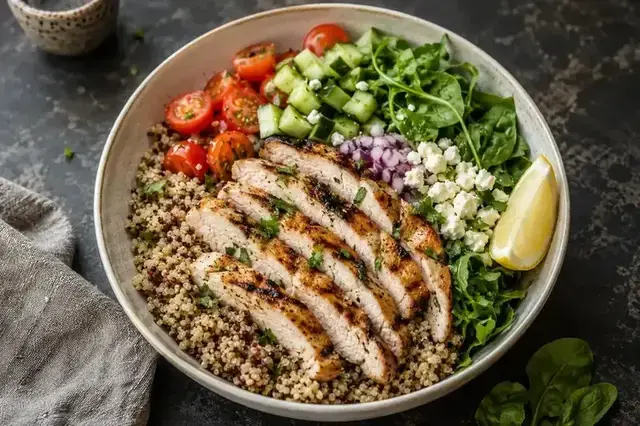
This grilled chicken quinoa bowl combines lean sliced chicken, fluffy grains and crisp raw vegetables with a lemon-herb dressing. The quinoa should remain loose…
No reviews yet. Be the first to rate this recipe.