Lesson 39: A soup is a complete composition of liquid, solids, seasoning and texture. Body can come from reduction, starch, legumes, vegetables, dairy or emulsion—each gives a different finish.
What You Will Learn
- Select a soup structure for the ingredient and service.
- Build body without masking flavour.
- Blend, strain, cool and reheat safely.
Why This Matters in a Professional Kitchen
Adding thickener without understanding the base can make soup heavy while leaving flavour weak. A professional method develops the main ingredient first, then adjusts liquid and body.
Choose the source of body deliberately
Potato, rice, lentils, roux, cream and vegetable puree all thicken differently. Use the source that supports the soup’s identity and remember that blending can release additional starch.
Liquid is easier to add than remove
Begin with enough stock to cook ingredients without flooding them. Add more during blending or finishing; excessive early liquid demands long reduction and may overcook fresh flavour.
Garnish should complete the bowl
Use garnish for contrast in texture, aroma, colour or temperature. Keep it edible, portioned and suitable for holding, and never let a decorative oil replace proper soup seasoning.
ChefLock Professional Method
- Define the main ingredient and desired clear, chunky or smooth style.
- Sweat or brown aromatics to the appropriate level.
- Cook the main ingredient with measured stock until tender.
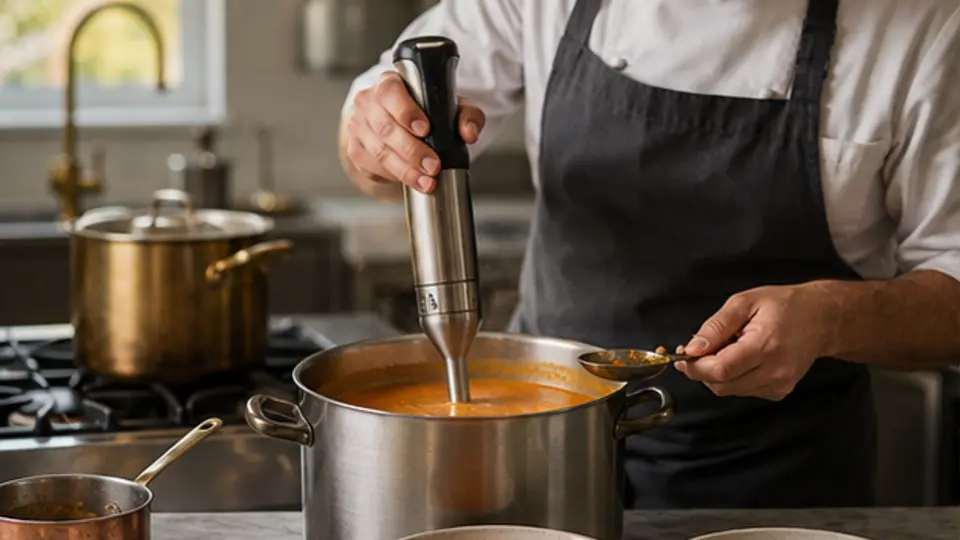
- Blend or strain safely in controlled batches if required.
- Adjust body with stock, reduction or a suitable thickening system.
- Balance seasoning, portion hot or cool safely, and add garnish at service.
Common Mistakes and Corrections
Adding all stock at the start
Correction: Reserve some liquid and adjust after the ingredients reveal their own water and starch.
Overfilling a hot blender
Correction: Blend small vented batches with equipment designed for hot liquid.
Using cream to hide weak flavour
Correction: Develop and season the ingredient base before enriching.
Practice Drill
Make one vegetable soup base and divide it. Create body in separate samples by reduction, potato or blending, and a small dairy finish. Compare flavour clarity, mouthfeel and how each sample changes after cooling and reheating.
Service-Ready Checklist
- Main ingredient clearly expressed.
- Liquid amount controlled.
- Thickening method suits the style.
- Hot blending procedure safe.
- Garnish adds purposeful contrast.
Chef’s Note
A successful soup tastes complete before garnish reaches the bowl.
Key Takeaway
Build flavour first, choose the source of body intentionally and adjust liquid near the finish.
This lesson provides general culinary education. Follow local food-safety rules, workplace procedures and the manufacturer’s instructions for your equipment.