
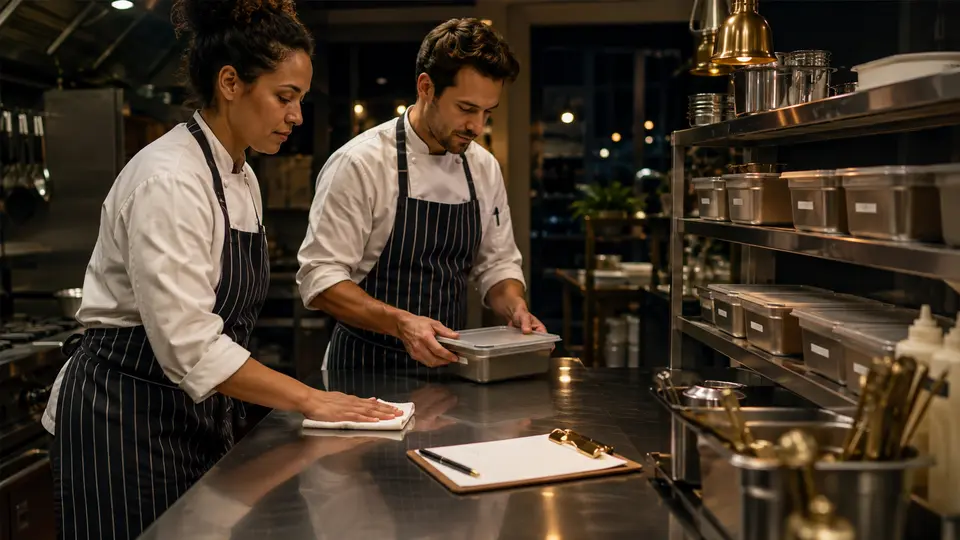
Lesson 10: Closing is the preparation of tomorrow’s first safe service. The aim is not simply to make surfaces look clean, but to leave food, equipment, records and responsibilities in a controlled state.
What You Will Learn
- Follow a safe clean-down sequence without contaminating food.
- Protect, cool, label and store remaining stock.
- Write a concise handover that tells the next shift what matters.
Why This Matters in a Professional Kitchen
A weak close transfers hidden problems to the next team: unlabelled food, unsafe cooling, pests, broken equipment and missing stock. A structured close makes those risks visible and assigns action.
Clean from controlled areas toward dirtier work
Remove or protect food, switch off and cool equipment safely, dispose of waste, wash removable parts and clean from high to low. Use the correct chemical, dilution and contact time before reassembling dry equipment.
Food decisions come before cosmetic cleaning
Check remaining batches for identity, condition, approved cooling, cover, date and planned use. Do not combine old and new batches merely to save containers, and record genuine waste so production can improve.
A handover needs facts and ownership
State low stock, prepared quantities, cooling items, reservations, equipment faults and unfinished actions. Name the responsible person or next step; “someone should check it” is not a handover.
ChefLock Professional Method
- Confirm last orders and begin only tasks that will not disrupt service.
- Assess every food item: use, cool, store, transfer or discard safely.
- Remove waste and clean tools, equipment and surfaces in an ordered sequence.
- Check temperatures, labels, storage and pest-control points.
- Restock essential items without hiding shortages.
- Record waste, faults and unfinished actions, then brief the next responsible person.
Common Mistakes and Corrections
Spraying cleaner beside uncovered food
Correction: Remove or fully protect food before chemicals are used and follow the product instructions.
Leaving hot food in deep covered containers
Correction: Use the kitchen’s approved rapid-cooling method and verify that the process is working.
Sending a photo instead of a clear handover
Correction: Add quantities, times, faults, owners and required actions in an agreed written format.
Practice Drill
Close one training station with a partner. The closer follows a checklist; the receiver inspects without being told what was done. Record every item the receiver cannot verify, then improve labels, placement or handover language and repeat.
Service-Ready Checklist
- Food safely assessed, covered, labelled and stored.
- Equipment isolated and cleaned according to instructions.
- Waste removed and recorded accurately.
- Stock shortages and faults documented.
- Next shift understands every unfinished action.
Chef’s Note
A professional close leaves no mystery for the person opening the kitchen.
Key Takeaway
Cleaning, stock control and handover form one closing system that protects the next service.
This lesson provides general culinary education. Follow local food-safety rules, workplace procedures and the manufacturer’s instructions for your equipment.