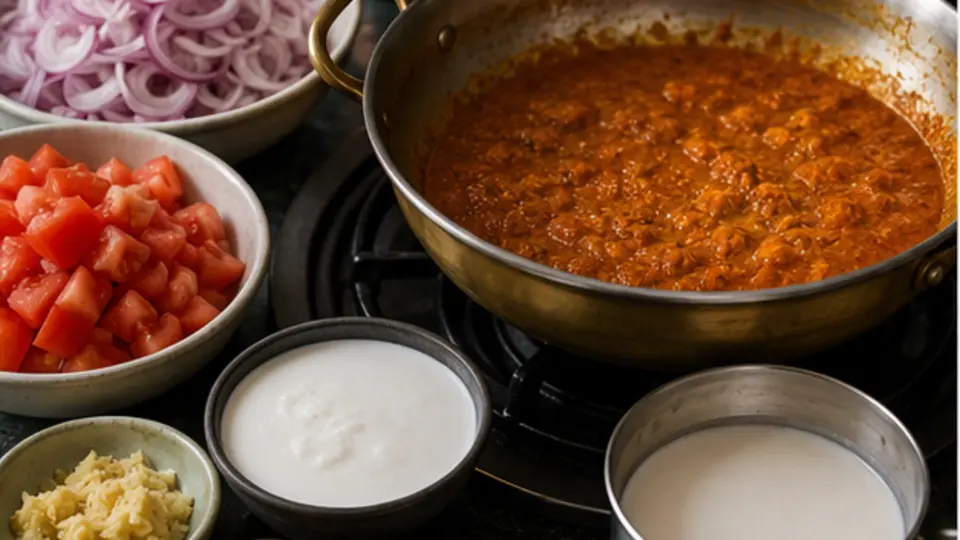
Lesson 37: Curry texture develops through several linked stages. Onions provide body and sweetness, tomatoes bring water and acidity, spices need controlled fat, and dairy or coconut responds differently to heat.
What You Will Learn
- Control onion colour for different curry styles.
- Reduce tomatoes until the base loses rawness.
- Add yogurt, cream or coconut without destabilising the sauce.
Why This Matters in a Professional Kitchen
Rushing one stage often appears later as raw spice flavour, watery sauce or a split finish. Understanding each ingredient’s role makes correction easier.
Onion treatment sets the foundation
Even cuts cook at the same rate. Gentle sweating produces sweetness and pale body; deeper browning creates richer roasted flavour. Burnt edges will remain bitter after liquid is added.
Tomato needs concentration
Tomato releases water and acidity before sugars and solids concentrate. Cook until the raw aroma changes and the base reaches the recipe’s intended oil, colour and thickness cues.
Dairy and coconut require temperature control
Smooth yogurt can be tempered with warm sauce and added gradually at controlled heat. Coconut milk can separate under rough boiling, although some styles intentionally cook until oil releases. Know the intended texture before correcting it.
ChefLock Professional Method
- Cut onions evenly and cook them to the colour required by the style.
- Add garlic, ginger and spices at heat that releases aroma without burning.
- Cook tomatoes and other wet ingredients until rawness and excess water reduce.
- Adjust with stock or water only after the concentrated base is established.
- Temper and add dairy gradually, or add coconut according to the intended finish.
- Simmer gently, taste for spice maturity and balance salt, acid and richness.
Common Mistakes and Corrections
Adding water before onions develop
Correction: Complete the onion stage first so the base has flavour and body.
Adding cold yogurt to a violently boiling pan
Correction: Lower heat, smooth and temper the yogurt, then add gradually.
Burning powdered spices in dry heat
Correction: Use controlled fat, lower the heat or add a small amount of liquid before they scorch.
Practice Drill
Prepare two small onion-tomato bases: one rushed and one cooked through clear sensory stages. Add tempered yogurt to one portion and untempered cold yogurt to another at high heat. Compare aroma, body and stability.
Service-Ready Checklist
- Onions evenly coloured, not burnt.
- Spices aromatic without scorching.
- Tomato rawness cooked out.
- Liquid added after concentration.
- Dairy or coconut added at suitable heat.
Chef’s Note
A curry becomes easier to troubleshoot when you can identify which foundation stage was incomplete.
Key Takeaway
Build curry in stages: controlled onions, bloomed spices, reduced tomato and carefully managed finishing liquids.
This lesson provides general culinary education. Follow local food-safety rules, workplace procedures and the manufacturer’s instructions for your equipment.