
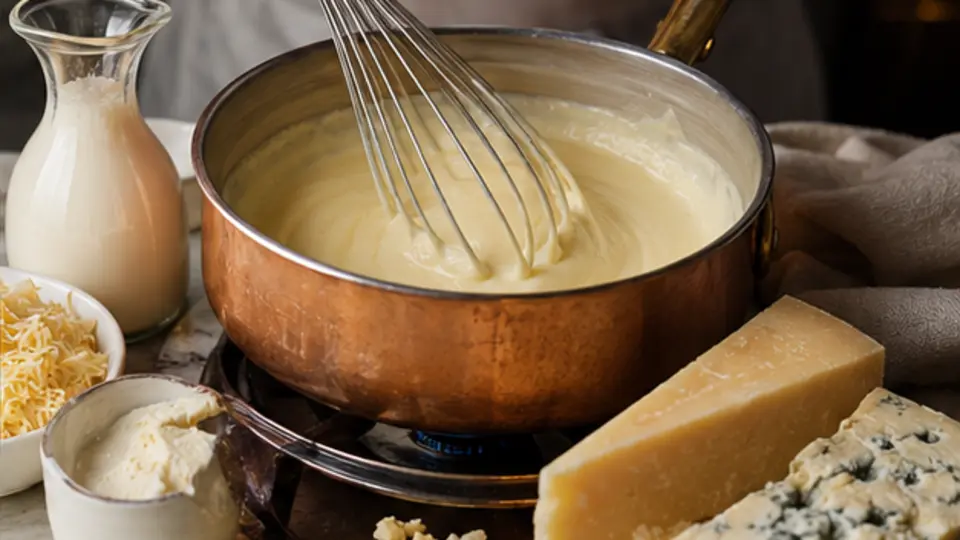
Lesson 46: Dairy combines water, fat, protein and milk sugar, each responding differently to heat and acid. A stable sauce depends on respecting that balance.
What You Will Learn
- Select dairy products for cooking and reduction.
- Prevent scorching and curdling.
- Add cheese at a heat that creates a smooth emulsion.
Why This Matters in a Professional Kitchen
High heat can scorch milk solids, split cream or tighten cheese protein into strings and oil. Sauce control improves when the base is stable before cheese or acid is added.
Pan and heat affect milk directly
Use a clean heavy pan, moderate heat and regular scraping across the base. Dried residue can burn and seed off-flavour through the entire batch.
Acid and heat can destabilise protein
Cultured dairy, low-fat milk and acidic ingredients may curdle more easily. Temper additions, reduce heat and add acid at a controlled stage according to the recipe.
Cheese needs a prepared sauce base
Grate evenly, remove sauce from aggressive boiling and add in portions while stirring. Mature, fresh and processed cheeses melt differently; select one that delivers the intended flavour and texture.
ChefLock Professional Method
- Choose dairy and cheese suited to the sauce.
- Use a clean heavy pan and moderate controlled heat.
- Build and cook out the base before final enrichment.
- Reduce cream gently while scraping the pan.
- Lower heat and add cheese gradually.
- Taste, adjust flow and serve without prolonged boiling.
Common Mistakes and Corrections
Boiling after cheese is added
Correction: Lower or remove heat and let residual warmth melt it into the base.
Using pre-shredded cheese without testing
Correction: Check additives and melting behaviour; grate suitable block cheese when a smooth finish is required.
Adding cold acidic liquid quickly
Correction: Temper and add slowly at reduced heat, then observe stability before continuing.
Practice Drill
Make three small cheese-sauce samples at low, moderate and boiling heat after cheese addition. Compare smoothness and oil release. Reheat the best sample gently and record how holding changes consistency.
Service-Ready Checklist
- Dairy and cheese chosen for the method.
- Pan base scraped regularly.
- Acid and cold additions tempered.
- Cheese added below aggressive boil.
- Finished sauce held only as long as quality allows.
Chef’s Note
Most cheese sauces split because the chef keeps cooking after the sauce has already become complete.
Key Takeaway
Stable dairy sauces come from clean pans, moderate heat, controlled acid and gentle cheese melting.
This lesson provides general culinary education. Follow local food-safety rules, workplace procedures and the manufacturer’s instructions for your equipment.