
Lesson 19: Fish is fragile, highly perishable and structurally different from meat. A sharp flexible knife, cold clean workflow and knowledge of the skeleton protect both safety and yield.
What You Will Learn
- Recognise practical freshness and condition cues.
- Follow the skeleton to remove a fillet with minimal flesh loss.
- Find and remove pin bones without tearing the portion.
Why This Matters in a Professional Kitchen
A damaged fillet loses presentation value and cooks unevenly. Poor bone checks or slow warm preparation can also create a serious guest and quality risk.
Begin with condition and traceability
Confirm source information and suitable storage, then assess clean smell, firm resilient flesh and species-appropriate appearance. Reject fish that fails the kitchen’s receiving standard rather than trying to disguise decline.
The skeleton is the cutting guide
Use long shallow strokes close to the bones and let the blade follow natural structure. Excess pressure and sawing leave flesh on the frame and create ragged surfaces.
Pin bones need patient removal
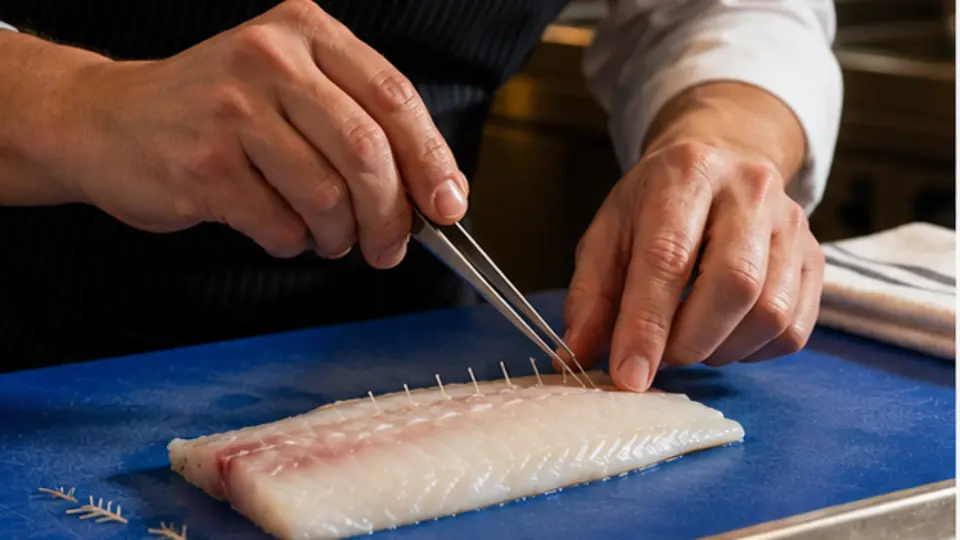
Run clean fingers lightly across the fillet to locate the line, grip each bone with clean fish tweezers and pull in its natural direction. Recheck under good light without overhandling the flesh.
ChefLock Professional Method
- Prepare a cold clean station with dedicated board, sharp knife, tweezers and trays.
- Inspect and, if required, scale and clean the fish using the approved method.
- Make controlled cuts around the head and along the backbone.
- Lift the fillet while following ribs and frame with shallow strokes.
- Trim neatly, locate pin bones and remove them in their direction.
- Portion, cover, label and return fish to suitable cold storage immediately.
Common Mistakes and Corrections
Cutting deeply to find the backbone
Correction: Use surface landmarks and shallow strokes until the blade contacts the skeleton.
Pulling pin bones sideways
Correction: Pull along their natural angle to reduce tearing.
Leaving all fillets on the warm bench
Correction: Work one fish or batch at a time and return finished portions to cold storage.
Practice Drill
Use a suitable whole fish under supervision. Weigh it before preparation, then weigh fillets, usable trim and waste. Check each fillet for bones, compare left and right yield, and identify where unnecessary flesh remained on the frame.
Service-Ready Checklist
- Fish condition and traceability accepted.
- Station cold, clean and dedicated.
- Knife follows the frame without sawing.
- Pin bones removed and fillet rechecked.
- Portions promptly covered, labelled and chilled.
Chef’s Note
Good filleting is quiet work: the blade follows the fish rather than forcing it.
Key Takeaway
Protect fish quality with cold handling, skeletal awareness, shallow cuts and a complete bone check.
This lesson provides general culinary education. Follow local food-safety rules, workplace procedures and the manufacturer’s instructions for your equipment.