
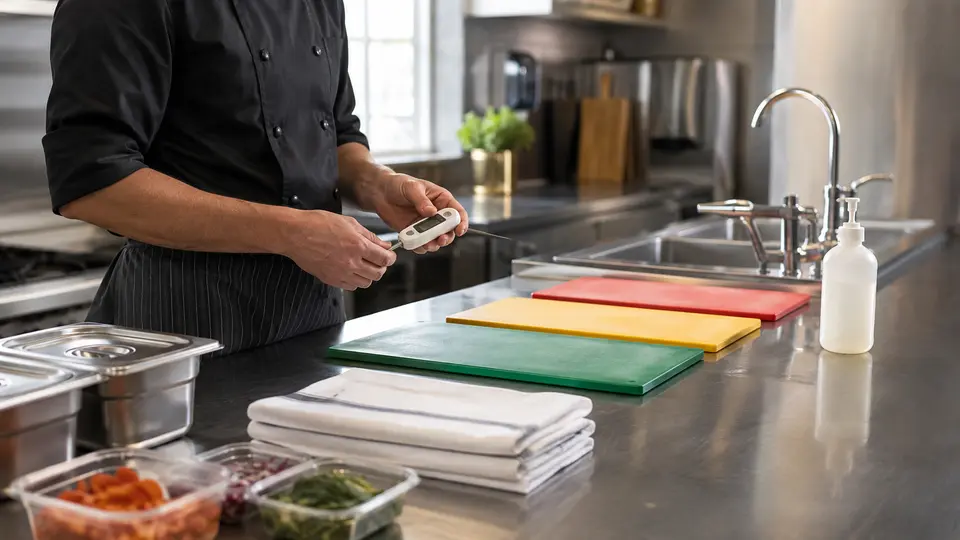
Lesson 3: Food safety is not a single cleaning task; it is a chain of decisions from receiving ingredients to serving the final plate. This lesson turns that chain into repeatable daily habits.
What You Will Learn
- Identify biological, chemical, physical and allergen hazards.
- Build safe receiving, storage, preparation, cooking and cooling routines.
- Use cleaning records and temperature checks as working tools rather than paperwork.
Why This Matters in a Professional Kitchen
A professional kitchen must protect guests even when service is busy. Clear controls reduce foodborne illness, prevent avoidable waste and give every team member the same standard to follow.
Hazard control from delivery to service
Inspect packaging, freshness and delivery condition before accepting food. Separate raw and ready-to-eat items immediately, store them at suitable conditions and keep a traceable label. At each later stage, ask what could contaminate the food and what control prevents it.
Time and temperature discipline
Food can look and smell normal while unsafe microorganisms multiply. Use a clean calibrated probe where a temperature check is required, measure the thickest or slowest-heating part, record the result and take corrective action instead of guessing.
Clean first, then sanitise
Cleaning removes grease and food soil; sanitising reduces microorganisms on an already clean surface. Follow the chemical label for dilution and contact time, use separate clean tools and never spray chemicals close to exposed food.
ChefLock Professional Method
- Begin with clean uniform, washed hands and a sanitised station.
- Check deliveries and move chilled, frozen and dry goods promptly to correct storage.
- Separate raw food, allergens and ready-to-eat food with dedicated containers and tools.
- Monitor the controls required by the kitchen plan during preparation, cooking, cooling and reheating.
- Label food clearly, rotate stock and remove anything that is unsafe or cannot be identified.
- Complete closing checks, cleaning records and a clear handover of unresolved issues.
Common Mistakes and Corrections
Using appearance as the only safety test
Correction: Use approved time, temperature, traceability and storage checks; appearance alone cannot confirm safety.
Wiping every area with the same cloth
Correction: Use clean, task-specific cloths or disposable paper and change sanitising solution as required.
Recording a result without acting on it
Correction: A failed check needs an immediate correction, such as continued cooking, rapid chilling, rejection or safe disposal.
Practice Drill
Choose one menu item and draw its journey from delivery to service. Mark each point where contamination, allergen contact or unsafe temperature could occur. Beside every hazard, write the control, the person responsible and the action to take if the control fails.
Service-Ready Checklist
- Hands, uniform and workstation are clean before food handling.
- Raw and ready-to-eat food remain separated.
- Required probe checks use a clean, calibrated thermometer.
- Food labels, rotation and traceability are clear.
- Cleaning chemicals are correctly diluted and stored away from food.
Chef’s Note
When the safe method feels automatic during a quiet shift, it is far more likely to survive the pressure of a busy service.
Key Takeaway
Food safety becomes reliable when every important hazard has a clear control, a check and a corrective action.
This lesson provides general culinary education. Follow local food-safety rules, workplace procedures and the manufacturer’s instructions for your equipment.