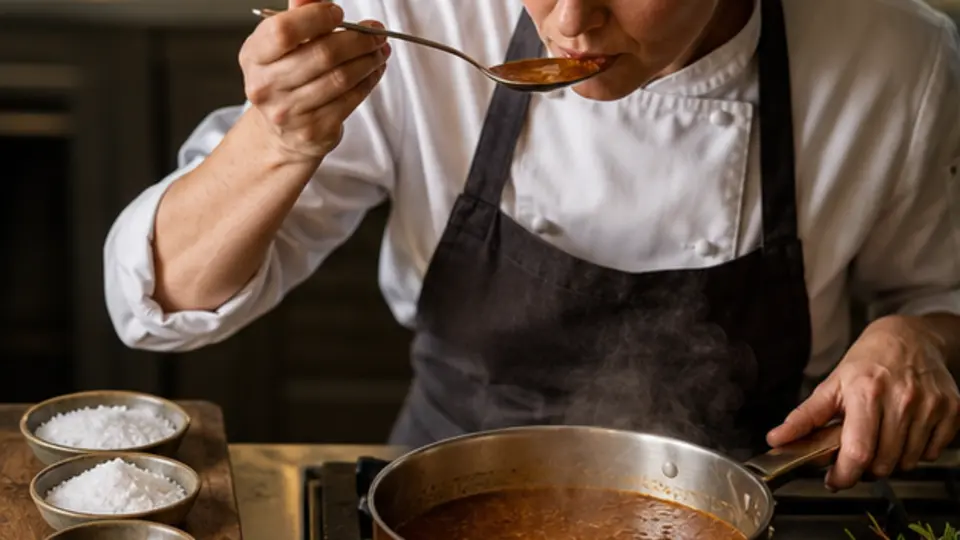
Lesson 31: Seasoning is the management of flavour across time. Salt added early can penetrate or draw moisture; finishing salt changes surface impact; acids and aromatics behave differently depending on heat.
What You Will Learn
- Identify useful tasting checkpoints.
- Season progressively without losing control during reduction.
- Separate problems of salt, aroma, acidity, texture and concentration.
Why This Matters in a Professional Kitchen
Professional tasting is not random snacking. The chef tastes at useful decision points, compares the result with the dish’s goal and changes one variable deliberately.
Seasoning should follow the process
Start with a modest foundation when appropriate, then taste after major changes such as sweating aromatics, adding stock, reducing or combining components. Remember that reduction concentrates existing salt.
Taste with a question
Ask whether the dish needs more intensity, brightness, aroma, sweetness, bitterness control or simply better temperature and texture. “It needs something” is not a useful diagnosis.
Palate needs a neutral reference
Use clean spoons, taste at a safe representative temperature and reset with water or a plain food when judging several strong dishes. Compare with the intended style, not with your last spicy mouthful.
ChefLock Professional Method
- Define the flavour goal and dominant ingredient.
- Taste the unseasoned or early base to establish a reference.
- Add a measured modest amount of seasoning.
- Taste after each major cooking stage.
- Predict concentration before reducing further.
- Make one final adjustment, wait for it to distribute and taste again.
Common Mistakes and Corrections
Adding a large final handful of salt
Correction: Use small measured additions through the process and allow them to dissolve.
Calling every flat dish under-salted
Correction: Check temperature, acidity, aroma and dilution before adding more salt.
Tasting with the same spoon
Correction: Use a clean spoon every time and protect the pot from saliva contamination.
Practice Drill
Prepare one simple soup or sauce in three samples. Season one only at the end, one in controlled layers and one early before heavy reduction. Taste blind, record clarity and salt distribution, and explain the differences.
Service-Ready Checklist
- Flavour goal defined.
- Clean spoon used for every taste.
- Seasoning measured and distributed.
- Reduction considered before final salt.
- One variable adjusted at a time.
Chef’s Note
Tasting is a decision-making skill; the spoon should answer a specific question each time.
Key Takeaway
Layer seasoning at meaningful stages and diagnose flavour before choosing the correction.
This lesson provides general culinary education. Follow local food-safety rules, workplace procedures and the manufacturer’s instructions for your equipment.