
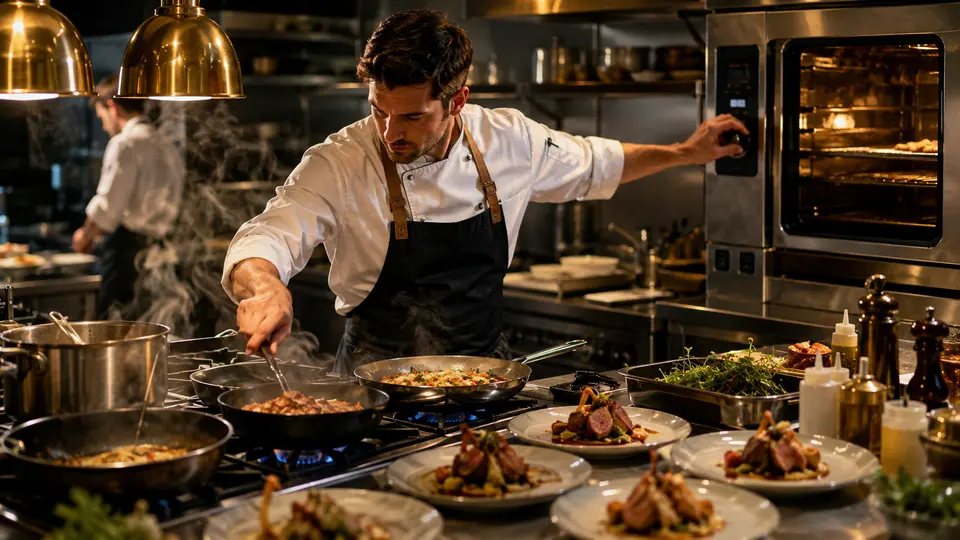
Lesson 9: Multi-tasking in a kitchen is not doing everything at once. It is choosing the right next action while passive processes continue safely and critical processes receive full attention.
What You Will Learn
- Separate active, passive, critical and flexible tasks.
- Group compatible work without confusing orders.
- Recover professionally when the section falls behind.
Why This Matters in a Professional Kitchen
Poor prioritisation causes overcooked food, cold plates and hidden safety risks. A controlled chef sees the whole section, protects the bottleneck and communicates before a delay becomes a crisis.
Prioritise by consequence and finish time
Give immediate attention to safety risks and fast-changing tasks such as frying or final seasoning. Start long processes early, use reliable timers and delay flexible garnish work until the main component’s timing is certain.
Batch intelligently, keep tickets distinct
Shared pans or ovens can improve efficiency when dishes require the same method and timing. Keep portions and modifications identified, especially allergens, doneness requests and table numbers.
Recover by simplifying the queue
When behind, stop accepting invisible delay. Tell the pass, confirm priorities, complete the nearest coherent set of plates and ask for specific help. Randomly starting more pans only increases unfinished work.
ChefLock Professional Method
- Scan all current tickets and identify the longest component.
- Start passive cooking and set labelled timers.
- Group only compatible, clearly identified tasks.
- Protect high-attention cooking from avoidable interruption.
- Update the pass before an expected delay affects the table.
- After each send, reset the station and re-read the full queue.
Common Mistakes and Corrections
Relying on memory for every timer
Correction: Use labelled timers and visible ticket positions, especially when several similar dishes cook differently.
Starting every ticket immediately
Correction: Sequence by coordinated finish time and available equipment instead of creating many half-cooked orders.
Hiding a delay
Correction: Give an honest estimate early so the pass and other sections can adjust.
Practice Drill
Choose three dishes with different cooking times. Write each task on a card and arrange the cards on a fifteen-minute timeline. Cook the simulation using timers, say every priority change aloud and review where attention was wasted or a component waited too long.
Service-Ready Checklist
- Full ticket queue visible and modifications marked.
- Long passive tasks started early with labelled timers.
- Critical pans receive uninterrupted attention.
- Compatible work grouped without mixing orders.
- Delays communicated before plating time.
Chef’s Note
Speed is the result of good decisions repeated; rushing is movement without control.
Key Takeaway
Professional multi-tasking means sequencing tasks by risk, attention and finish time while keeping communication open.
This lesson provides general culinary education. Follow local food-safety rules, workplace procedures and the manufacturer’s instructions for your equipment.