My cooking began with the flavours of Nepal and developed through professional kitchens far from home. Moving to Cyprus did not replace that foundation. It made me examine why familiar combinations work, how local ingredients change technique and how a chef can adapt without turning every dish into an imitation.
The Nepalese foundation
Nepali food taught me to value contrast: the warmth of dal beside sharp achar, simple rice beside deeply seasoned tarkari, fresh herbs against fermented gundruk. Mustard oil, cumin, coriander, timur, ginger and garlic were not isolated ingredients. They were part of a sequence—heat the fat, release aroma, build moisture, simmer patiently and correct the finish.
That sequence still guides me. Even when the ingredient list changes, I ask the same questions: Where is the main flavour? What provides acidity? Which texture is missing? Does the garnish support the dish or only decorate it?
What Cyprus added
Olive oil
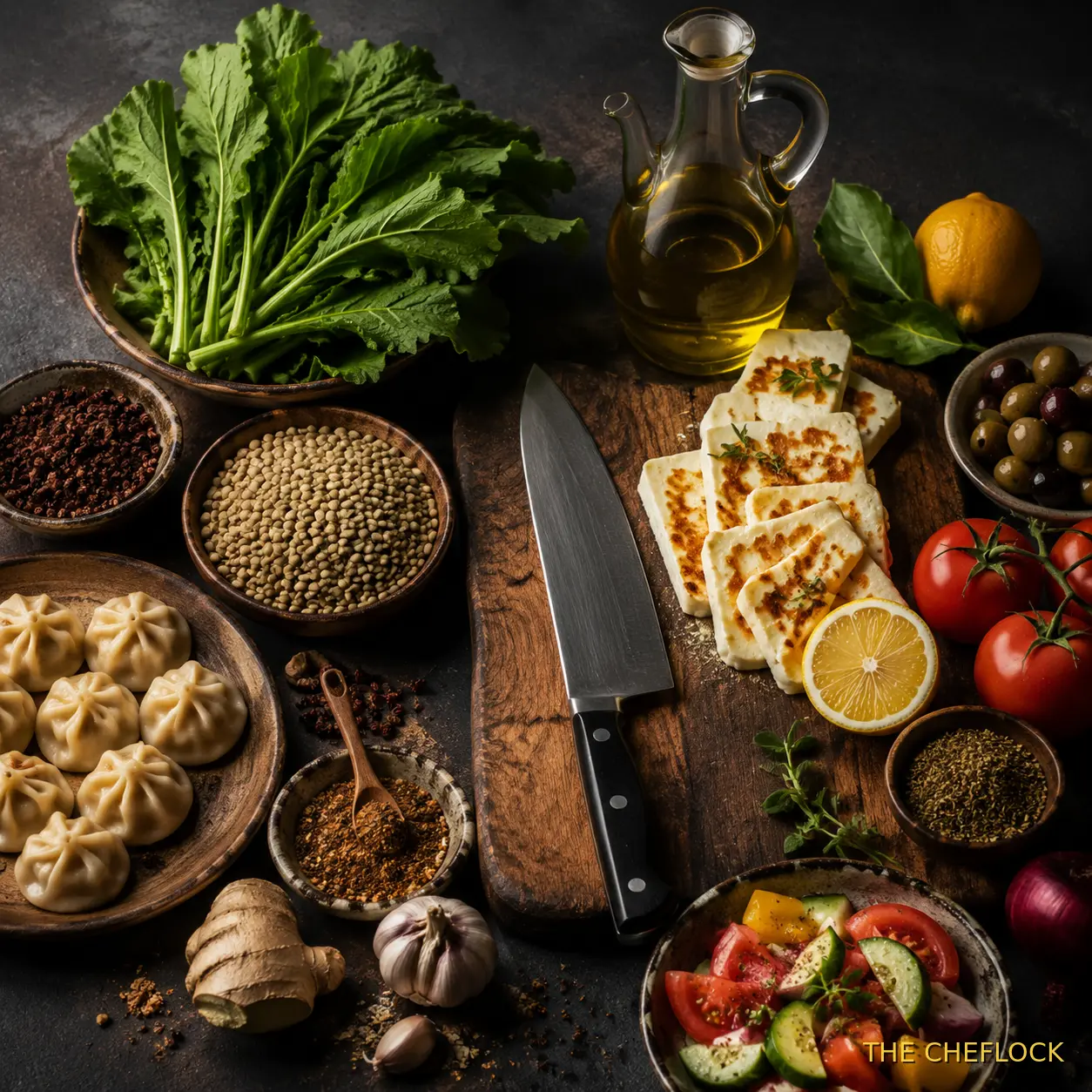
Olive oil taught me to think beyond frying. A good extra-virgin oil can finish soup, carry herbs, enrich legumes and connect raw vegetables. Its flavour is clearest when it is not overheated.
Lemon
Lemon is common to many kitchens, but Cyprus reinforced its role as a structural ingredient. It can lift lentils, balance grilled food and sharpen a herb dressing. Acidity should be adjusted after salt because salt changes how sourness is perceived.
Halloumi
Halloumi behaves differently from soft paneer. Its salt level, firm texture and resistance to melting make it suitable for grilling, searing and adding chew to vegetable dishes. It should be tasted before additional salt is added.
Oregano and Mediterranean herbs
Oregano, mint, parsley and dill encouraged me to use herbs as more than a final green garnish. They can form the identity of a salad, marinade or sauce. Fresh and dried oregano are not interchangeable in equal amounts.
Seasonal vegetables
Tomatoes, aubergines, courgettes, peppers and leafy greens are strongest when the cooking method respects their season and water content. A ripe summer tomato needs less intervention than a winter tomato destined for a slow sauce.
Adaptation without confusion
Fusion succeeds when there is a clear reason for the exchange. Halloumi may replace paneer when a grilled salty element is desirable, but it is a poor replacement in every paneer curry. Olive oil can support a lentil salad, but mustard oil may remain essential to the aroma of a particular Nepali achar.
I use three rules:
- Preserve the defining flavour of the original dish.
- Understand the technical behaviour of the new ingredient.
- Explain the adaptation honestly rather than presenting it as tradition.
Pairings that genuinely work
| Nepali foundation | Cypriot/Mediterranean ingredient | Why it works |
|---|---|---|
| Masoor dal | Lemon and olive oil | Acidity and fruitiness lift earthy lentils |
| Tomato-timur achar | Grilled halloumi | Tingling acidity balances salty richness |
| Roasted aubergine | Mustard-oil temper | Smoke and pungency reinforce each other |
| Chickpeas | Cumin, coriander and fresh herbs | Shared flavour bridge between regions |
| Leafy greens | Garlic, lemon and chilli | Simple seasoning keeps the vegetable central |
Professional kitchens changed the method
Working professionally made consistency as important as inspiration. A dish must work on a quiet day and during a full service. That requires measured recipes, labelled mise en place, controlled storage, reliable cooking temperatures and a final tasting sequence.
Home cooking benefits from the same habits without becoming rigid. Weigh salt while developing a recipe, write down successful timings and prepare garnishes before the pan becomes urgent. Technique creates freedom because it reduces avoidable mistakes.
What I kept unchanged
I kept the Nepali understanding that food is connected to hospitality and memory. Dal bhat is not valuable because it is complicated; it is valuable because balance, nourishment and repetition turn it into a dependable meal. Gundruk carries preservation knowledge. Momo carries patience and shared work. Those meanings should not disappear when presentation becomes modern.
What I continue to learn
Cyprus has made seasonality more visible in my cooking. Nepal keeps fermentation, spice timing and comforting meal structure close to my work. The combination is not a finished style. It is an ongoing practice of tasting, respecting context and recording what works.
Frequently asked questions
Is this fusion cooking?
Sometimes, but not automatically. Using a local ingredient in a Nepali-informed method may be adaptation rather than a new fusion dish. The description should be clear.
Can halloumi replace paneer?
Only in dishes that benefit from its saltiness and firm grilled texture. It does not behave like paneer in every curry.
Which Cypriot ingredient influenced you most?
Olive oil changed how I think about finishing, herb sauces and vegetable-led dishes, while lemon reinforced disciplined acid balance.
What should a home cook learn from professional kitchens?
Prepare before heating the pan, measure while learning, keep food safely and taste in a consistent order.
Chef Balaram Khatiwada
Founder, The ChefLock · Nepalese professional chef based in Cyprus