
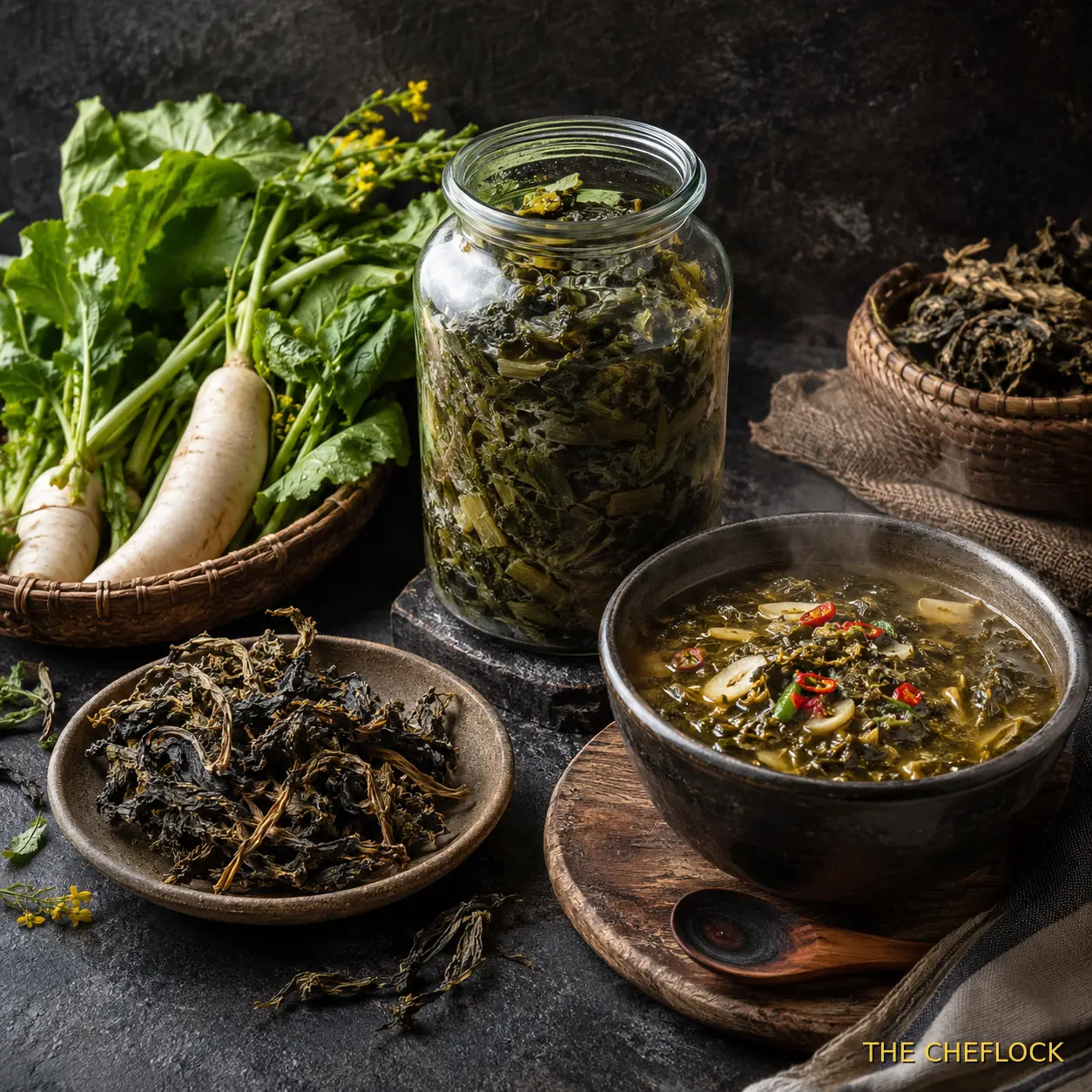
Gundruk is one of Nepal’s most recognisable preserved foods: leafy vegetables are fermented, dried and later rehydrated for soups, pickles and curries. Its sour aroma is not a seasoning added at the end; it is the result of controlled lactic fermentation. Good gundruk should taste pleasantly acidic and deeply vegetal—not rotten, musty or harsh.
This guide explains the traditional logic of the process and the practical controls that make the result more consistent. Home fermentation always requires clean equipment, sound ingredients and careful observation. When the smell, colour or surface growth is suspicious, discard the batch.
Which leaves work best?
Mustard greens, radish leaves and cauliflower leaves are traditional choices. Use mature but fresh leaves with no slime, decay or chemical damage. A mixed batch gives a broader flavour: mustard supplies pepperiness, radish leaves add earthiness and cauliflower leaves provide body.
- Remove roots, thick damaged stems and yellow leaves.
- Wash thoroughly in clean potable water and drain completely.
- Keep the leaves away from raw meat, dirty cloths and unclean cutting boards.
The five-stage process
1. Wilt
Spread the washed leaves in a clean airy place until flexible rather than brittle. Wilting reduces excess surface water and makes the leaves easier to compact. Do not leave wet leaves in a warm heap.
2. Bruise and cut
Slice the leaves into manageable strips, then massage or lightly bruise them. The aim is to release enough plant juice to help create an oxygen-poor environment—not to turn the leaves into paste.
3. Pack firmly
Use a clean food-safe glass or ceramic vessel. Pack the greens in small additions, pressing each layer firmly to remove air pockets. Keep the plant material compressed. Loose leaves exposed to air are more vulnerable to unwanted surface growth.
4. Ferment and observe
Keep the vessel away from direct sun at a stable moderate room temperature. Fermentation speed changes with leaf type and temperature, so use sensory and acidity checks rather than a fixed number of days alone. A clean sour aroma and progressively acidic taste are expected. Foul odour, coloured fuzzy mould, pink or orange slime, or putrid liquid are rejection signs.
5. Dry completely
Once pleasantly sour, spread the fermented leaves thinly on clean food-safe trays. Dry until brittle and free from soft damp pockets. Protect the food from dust, insects and moisture. In humid weather, a controlled dehydrator gives more dependable results than open drying.
Storage quality checks
Cool dried gundruk before packing. Store it in a clean airtight container in a cool, dark and dry cupboard. Condensation inside the container means the product was packed warm or still holds moisture; remove and re-dry it immediately if there are no spoilage signs. Label the container with the production date and use the oldest batch first.
| Acceptable | Reject |
|---|---|
| Dry, brittle leaves | Soft damp pockets |
| Clean acidic, leafy aroma | Putrid, chemical or mouldy smell |
| Olive, brown-green variation | Fuzzy coloured growth or slime |
| Dry storage container | Persistent condensation |
How to prepare dried gundruk for cooking
Sort the dried leaves and remove any foreign matter. Rinse briefly, then soak only as much as the recipe requires. Long soaking can wash away character. Taste the soaking liquid before deciding whether to use a little in the dish; a clean, balanced liquid can add acidity, while an excessively bitter or dusty liquid should be discarded.
Building a balanced gundruk jhol
- Bloom cumin or fenugreek carefully in mustard oil.
- Cook onion, garlic, ginger and chilli until aromatic.
- Add tomato and cook until its raw edge disappears.
- Add rinsed gundruk and fry briefly to concentrate its aroma.
- Add water or light stock and simmer gently until tender.
- Correct salt first, then assess acidity. Add lemon only when genuinely needed.
Potato, soybean, black-eyed peas or fermented bamboo shoots can provide body, but they should support the gundruk rather than hide it. A dark, aggressively fried temper can overpower the fermented fragrance.
Common problems
The gundruk is not sour
The leaves may have been too dry, loosely packed or fermented in a cold place. Do not try to rescue an unsafe-smelling batch with lemon. Improve packing and temperature control next time.
It tastes excessively bitter
Very mature leaves, scorched spices or over-concentrated soaking liquid may be responsible. Rinse once, use fresh cooking liquid and balance with tomato or potato rather than sugar.
The finished soup tastes flat
Flatness is often a seasoning sequence problem. Correct salt, allow it to dissolve, then reassess sourness, chilli and aroma separately.
Frequently asked questions
Is gundruk the same as a pickle?
No. It is a fermented and dried leafy vegetable ingredient. It can be made into a pickle, but it is also used in soups and curries.
Can I ferment damaged leaves?
No. Fermentation does not make spoiled raw material safe. Begin with sound, clean leaves.
Should I add vinegar?
Traditional acidity develops through fermentation. Vinegar changes the flavour and can hide process problems; it is not a substitute for a successful ferment.
How do I know it is fully dry?
The leaves should be brittle throughout, with no cool, flexible or moist centres. Check several thick pieces before storage.
Chef’s note: The best gundruk keeps its identity from jar to bowl. Clean fermentation produces the acidity; careful drying preserves it; restrained cooking lets it speak.
Cook with these ingredients
Put the techniques into practice with our Nepali Gundruk Jhol Soup recipe, which explains how to balance fermented greens, stock and tempering. To explore another traditional sour ingredient, see Nepali Aloo Tama Soup, made with commercially prepared, fully cooked fermented bamboo shoots.