
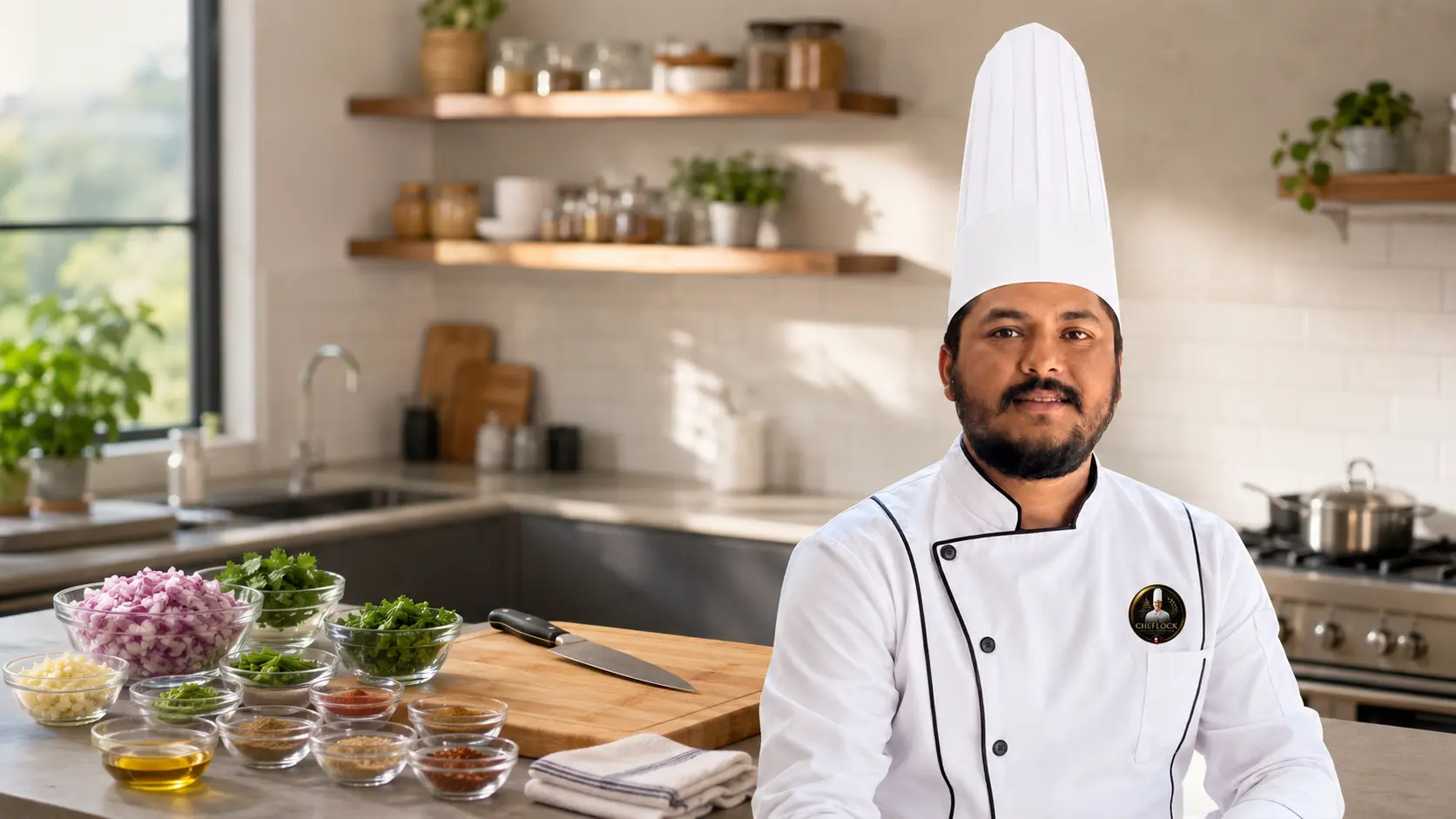
Mise en place means putting everything in its place before cooking begins. It is not about filling a table with dozens of bowls. It is a system for reducing uncertainty: you understand the recipe, prepare in a sensible order and keep the workstation safe and uncluttered.
Professional kitchens depend on this discipline because several dishes may move at once. At home, the same approach prevents burnt aromatics, forgotten ingredients and last-minute cleaning.
Begin with the finished plate
Before chopping, read the full recipe and picture what must be ready at serving time. Identify the longest task, the ingredient that needs marinating or soaking, and anything that must stay crisp or fresh until the end. Work backwards from the moment you want to eat.
Create simple kitchen zones
1. Storage zone
Keep dry goods, chilled ingredients and frequently used seasonings in predictable places. Clear containers are useful, but good labels and rotation matter more than matching jars.
2. Preparation zone
Use a stable board with enough space for the knife and the ingredient. Keep one container for prepared food and another for clean, usable trimmings. A small bowl for unavoidable waste prevents the board from becoming crowded.
3. Cooking zone
Place oil, salt, a heat-safe spoon and the next two ingredients within reach. Keep handles turned safely inward without placing them above another burner.
4. Finishing zone
Reserve a clean area for tasting spoons, herbs, lemon, sauce adjustments and warm serving plates. Raw ingredients should never return to this space.
Prepare in the right order
- Wash your hands and clean the workstation.
- Read the method and collect equipment.
- Start long tasks such as soaking, marinating or preheating.
- Wash produce, then dry ingredients that need browning.
- Prepare vegetables before raw meat or poultry whenever practical.
- Measure small, fast-cooking ingredients such as spices and garlic.
- Keep chilled food refrigerated until it is needed.
- Set out finishing ingredients last so they remain fresh.
Use containers with purpose
You do not need a bowl for every ingredient. Combine items only when they enter the pan at the same time. Keep garlic separate from onions if their cooking times differ. Keep acidic ingredients away from dairy until the recipe calls for them. A tray holding several small containers can move as one unit and makes the bench easier to clean.
Clean while the food cooks
Use natural pauses. While water boils, wash the board. While food roasts, return unused ingredients to storage. Keep a sink or basin of warm soapy water ready, but do not create a pile that blocks handwashing. Professional organisation is not just preparation—it is continuous reset.
A practical 15-minute home setup
- Minutes 1–3: read, collect tools and clear the counter.
- Minutes 4–7: wash, dry and group produce.
- Minutes 8–11: cut ingredients in cooking order.
- Minutes 12–13: measure spices, liquids and garnishes.
- Minutes 14–15: clear scraps, wash hands and preheat.
What not to prepare too early
Some ingredients lose quality after cutting. Apples and potatoes can discolour, herbs can wilt, and dressed salad becomes soft. Mise en place does not mean preparing everything hours in advance. It means knowing exactly when each task should happen.
Your pre-cooking checklist
- Have I read every step?
- Are the pan and knife appropriate?
- Which ingredients enter together?
- What must stay chilled?
- Where will cooked food rest?
- Is there a clean tasting spoon?
A good mise en place should feel quiet. When the pan heats, the decisions have already been made and your attention can stay on the food.
Put it into practice: Choose a recipe from the ChefLock collection, read it once without cooking, then build your workstation in the order described above.