My culinary perspective sits between Nepal and Cyprus. The two food cultures are different, but both taught me to respect ingredients, seasonality, hospitality and the power of a meal shared with other people. Moving between these traditions has not been about creating novelty for its own sake. It has been about becoming a more observant cook.
What Nepal gave my cooking
Nepali food taught me to see balance in everyday ingredients: rice and lentils, seasonal vegetables, pickles, fermented flavours, warming spices and careful tempering. A simple plate can contain softness, heat, acidity, freshness and texture without needing luxury ingredients.
It also taught me that a recipe is never only a list. The cook watches the moisture in the lentils, listens to spices in hot oil and adjusts the final seasoning to the ingredient in front of them.
What Cyprus added
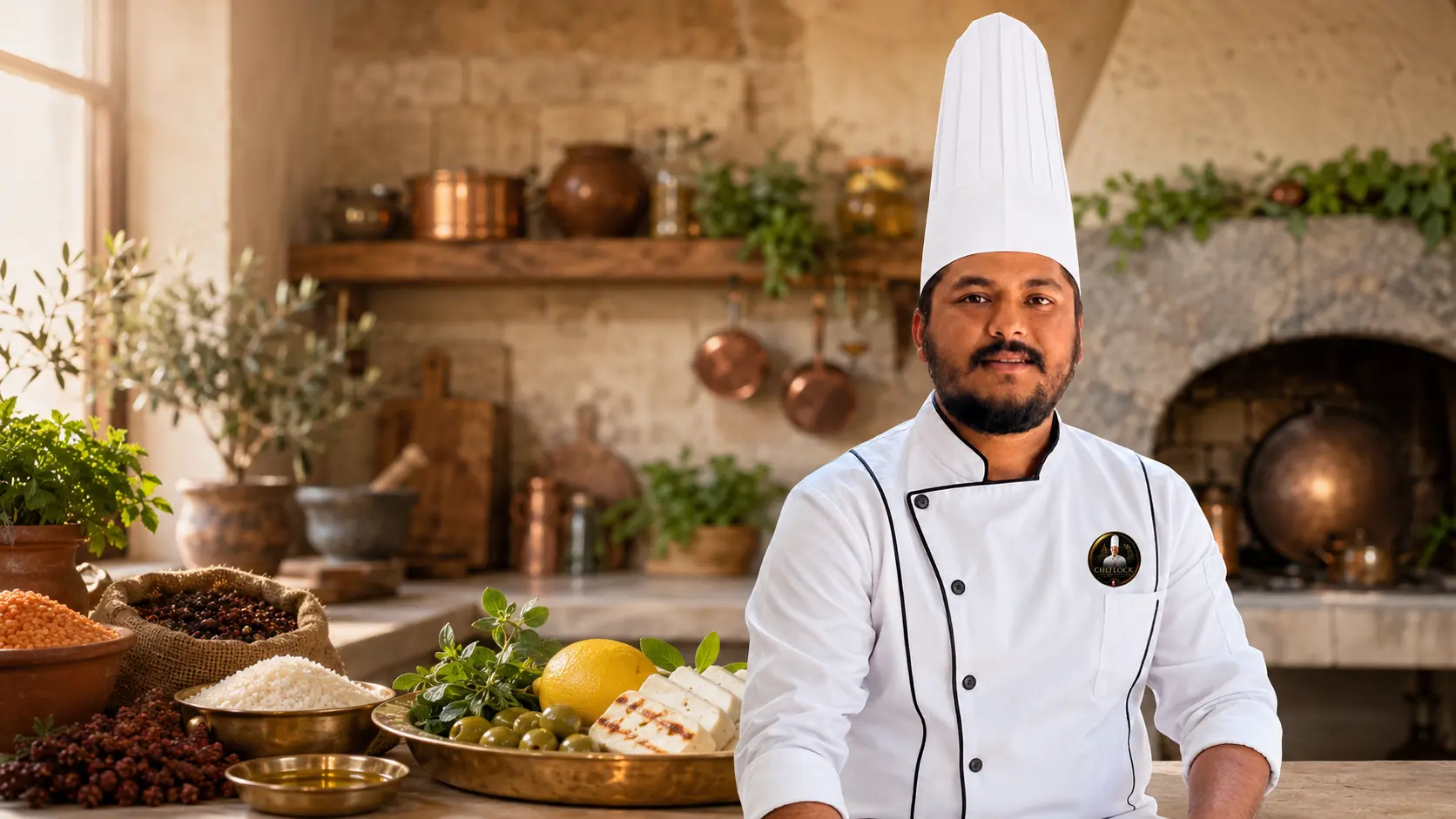
Cyprus expanded my understanding of Mediterranean ingredients and methods: olive oil used with purpose, lemon as a clean finishing flavour, oregano and herbs, legumes, grilled foods, fresh vegetables and cheeses with strong character. The cuisine showed me another way to create generosity through direct, recognisable flavours.
Professional kitchens changed the question
Home cooking can rely on memory and instinct. A professional kitchen must make good results repeatable. Measurements, preparation lists, storage, timing, communication and food safety turn an idea into a dish that can be produced consistently.
That discipline did not replace intuition. It gave intuition a structure. When I develop a recipe now, I ask both questions: Does it carry the character of the food, and can another cook follow it successfully?
Connections without confusion
Nepali and Cypriot ingredients can meet naturally when their roles are understood. Lemon can brighten a lentil dish. Timur can add a citrus-like dimension to grilled food. Olive oil can carry herbs in a dressing, while a Nepali-style achar can provide sharper contrast. But not every dish needs fusion.
I prefer to protect the identity of a traditional dish when that identity matters. Creative adaptation should be explained honestly: what changed, why it changed and what the cook should expect.
Five principles I carry between both cuisines
- Respect the main ingredient. Spice and sauce should support it, not hide poor quality.
- Build flavour in stages. Toasting, browning, simmering and finishing have different jobs.
- Use acidity with intention. Lemon, tomato, yoghurt, vinegar and pickles create different effects.
- Let texture matter. A plate becomes memorable through contrast as well as flavour.
- Write for the next cook. Clear measurements and doneness cues make knowledge transferable.
Why I created The ChefLock
The ChefLock is my way of organising recipes and kitchen knowledge so home cooks can move beyond guesswork. The goal is not to make every dish complicated or restaurant-style. It is to explain the professional thinking that makes a dish dependable: preparation, temperature, timing, seasoning, safety and recovery when something goes wrong.
A living culinary journey
This journey is still developing. Every ingredient, colleague, family table and kitchen problem adds another lesson. I want this website to record those lessons without pretending that food culture is fixed or that one cook knows everything.
For me, the connection between Nepal and Cyprus is not a slogan. It is a practical way of seeing food: honour where a dish comes from, remain curious about where it can go, and give the next cook enough information to succeed.
Explore the journey through food: browse all ChefLock recipes and see how preparation, seasoning and cultural context shape each dish.