
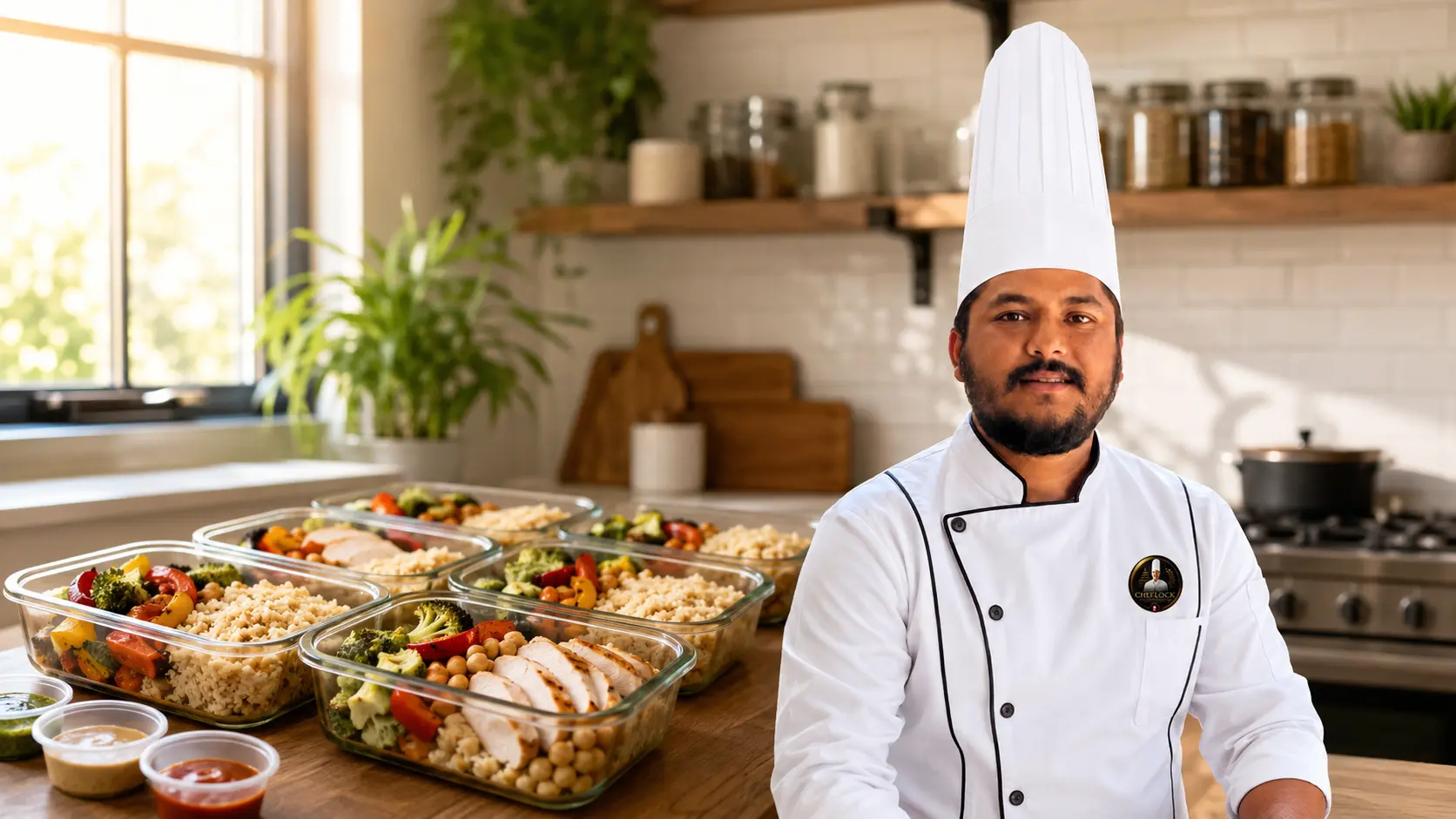
Restaurant-style preparation does not mean cooking a week of identical meals or filling the refrigerator with complicated dishes. It means separating planning from service: prepare versatile components, cool and store them safely, then finish each meal with fresh texture and flavour.
Plan the menu around shared components
Choose ingredients that can move in more than one direction. Roasted vegetables can support a grain bowl, wrap or soup. Cooked chickpeas can become salad, curry or hummus. A herb dressing can finish chicken one day and vegetables the next.
Use the professional sequence
- Write the plan: choose meals, portions and storage days.
- Collect ingredients: check what is already available.
- Prepare the workstation: tools, containers and labels ready.
- Start long cooking: grains, roasting and simmering first.
- Prepare fresh items: herbs, salad and garnishes later.
- Cool safely: use shallow containers and prompt refrigeration.
- Finish at service: add crisp texture, sauce and acidity when eating.
Build a balanced component set
- One grain or starch: rice, quinoa, potatoes or flatbread.
- One or two proteins: lentils, beans, chickpeas, eggs, tofu or safely cooked meat.
- Two vegetable preparations: one cooked and one fresh when practical.
- One sauce: yoghurt-herb, tomato, tahini, chutney or vinaigrette.
- One finishing element: lemon, herbs, toasted seeds or a crisp garnish.
Cook components to the correct endpoint
Meal-prep food will be stored and often reheated, so avoid overcooking on day one. Roast vegetables until tender but structured. Cook grains so they remain separate. Rest cooked meat before slicing and portion sauces separately when they would soften the meal.
Cool and store with discipline
Divide hot food into shallow containers and refrigerate promptly. Keep the refrigerator at 4°C / 40°F or below. Do not seal a very large, steaming pot and leave it to cool slowly on the counter. Date containers and place earlier food where it will be used first.
Keep texture alive
Restaurants protect contrast. Store crunchy toppings, herbs and dressings separately. Reheat grains and cooked components, then add fresh cucumber, herbs, lemon or toasted seeds just before serving. One fresh finish can stop a prepared meal from feeling tired.
A practical 90-minute session
- 0–10 minutes: preheat, organise and start grains.
- 10–25 minutes: cut vegetables and begin roasting.
- 25–45 minutes: cook protein and prepare sauce.
- 45–60 minutes: wash herbs and prepare fresh vegetables.
- 60–75 minutes: check doneness, rest food and clean tools.
- 75–90 minutes: cool in shallow containers, portion, date and refrigerate.
Example combinations from one preparation session
Meal 1: grain bowl
Quinoa, roasted vegetables, chickpeas, herb dressing and lemon.
Meal 2: warm chicken plate
Sliced cooked chicken, rice, roasted vegetables and a separate yoghurt-herb sauce.
Meal 3: quick soup
Vegetable stock, remaining grains, roasted vegetables and fresh herbs added at the end.
Meal 4: wrap
Chickpeas or chicken, crisp vegetables, herbs and a small amount of sauce wrapped just before eating.
Avoid these common meal-prep errors
- Preparing more days of food than you can store safely.
- Mixing dressing into salad too early.
- Reheating the whole batch repeatedly.
- Using one flavour profile for every meal.
- Ignoring labels and storage dates.
- Choosing appearance over safe cooling.
The professional advantage is not complexity. It is readiness. When well-prepared components are waiting, a balanced meal can be finished quickly without tasting like an afterthought.
Build your own plan: browse ChefLock recipes and choose compatible components that share ingredients and preparation steps.