
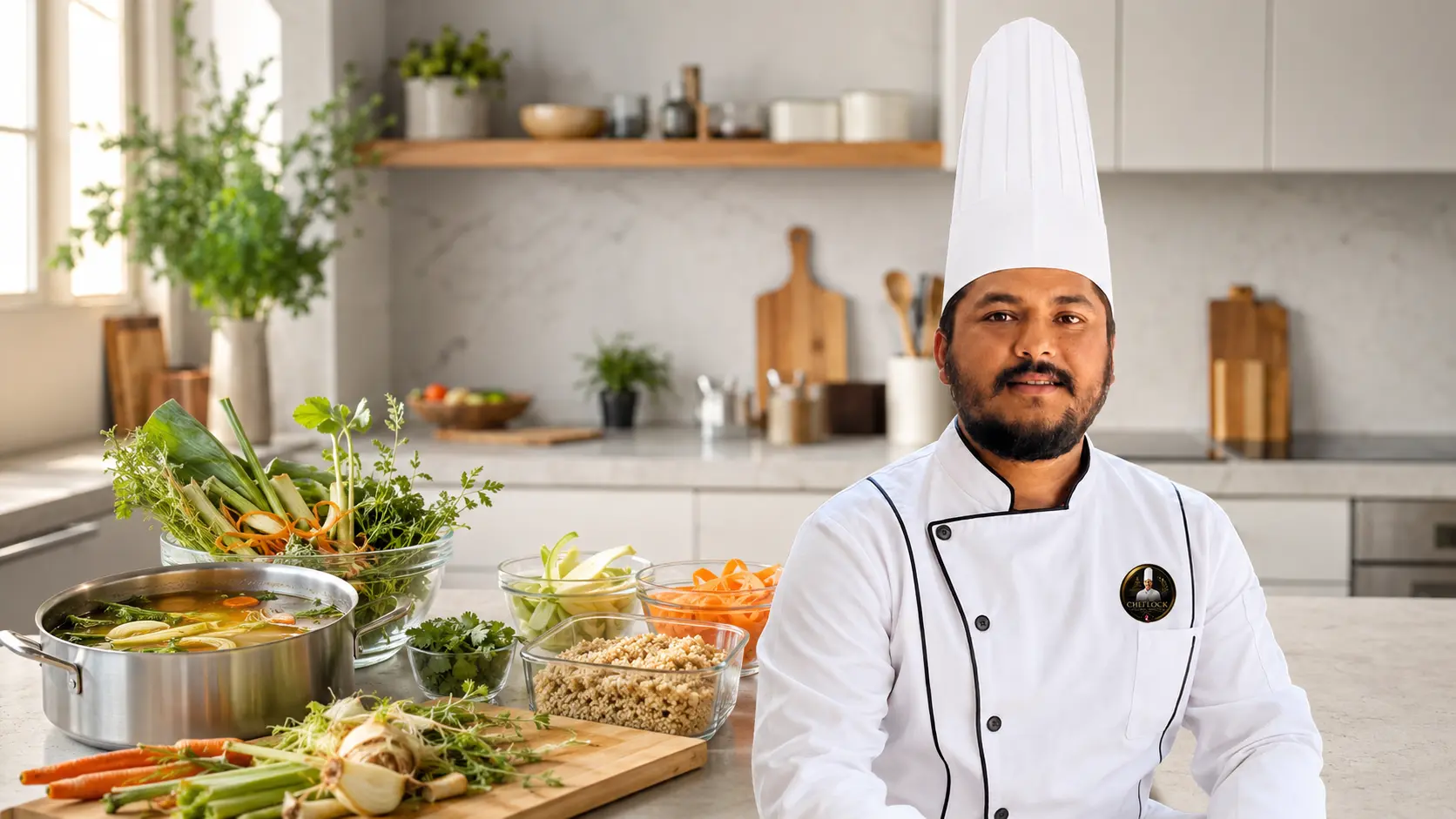
A waste-free kitchen does not mean forcing every scrap into a recipe. It means buying with a plan, storing food so it remains usable, understanding which trimmings are valuable and recognising when safety must come before saving. The most effective changes happen before food reaches the bin.
Begin with an honest inventory
Before shopping, check the refrigerator, freezer and dry store. Group ingredients into three questions: What must be used first? What can be frozen? What can become a component for more than one meal? A visible “use first” area prevents delicate ingredients from disappearing behind new purchases.
Plan components, not ten unrelated meals
A tray of roasted vegetables can become a grain bowl, soup or pasta sauce. Cooked lentils can support dal, salad or filling. Fresh herbs can finish several dishes if they are stored correctly. Plan two main meals and one flexible rescue meal around overlapping ingredients.
Store food in usable portions
Large containers are easy to forget and slow to cool. Divide cooked food into shallow, clearly dated portions. Freeze quantities you will not eat within the safe refrigerator window. Keep sauces separate when they would make grains, vegetables or salads soggy.
Know the useful trimmings
- Clean herb stems can flavour stocks, sauces and chutneys.
- Carrot, celery, leek and onion trimmings can support a vegetable stock when clean and sound.
- Broccoli stems can be peeled and sliced for stir-fries or soup.
- Stale bread can become crumbs or croutons if it is dry—not mouldy.
- Citrus zest can flavour dressings before the fruit is juiced.
- Cooked grains can become fried rice, patties or a warm salad.
Not every peel belongs in stock. Avoid dirty, bitter, waxed or spoiled trimmings. Potato sprouts and green sections, mouldy bread and food with uncertain storage history are not “waste-free” opportunities.
Use a transformation matrix
| Ingredient | Next meal | Useful change |
|---|---|---|
| Roasted vegetables | Soup or pasta sauce | Blend with stock and seasoning |
| Cooked rice | Fried rice or patties | Chill promptly, then reheat thoroughly |
| Cooked lentils | Salad, dal or filling | Change herbs, spice and texture |
| Herb stems | Stock, chutney or flavoured oil | Chop finely or infuse |
| Ripe tomatoes | Sauce or soup | Roast or simmer |
| Small cheese pieces | Frittata, gratin or sauce | Grate and combine |
Build a weekly “rescue meal”
Reserve one meal for ingredients that need attention. Start with the ingredient that will expire first, choose a format—soup, curry, stir-fry, frittata or grain bowl—and add only what improves it. This is not a random mixture; it is a controlled composition.
Practise first-in, first-out
Move older safe food to the front and place new purchases behind it. Date opened jars and cooked items. Use transparent containers or a simple list on the refrigerator. Organisation is often more effective than another recipe.
Respect the safety boundary
Refrigerate perishable food promptly, keep raw and cooked ingredients separate and reheat leftovers thoroughly. If food has mould, an unsafe temperature history or an uncertain storage time, discard it. Saving one ingredient is never worth risking illness.
A seven-day habit
- Take a five-minute inventory before shopping.
- Choose two ingredients that can appear in multiple meals.
- Prepare only the amount you can store safely.
- Freeze an extra portion on the day it is cooked.
- Schedule one rescue meal.
- Review what was discarded and adjust the next shop.
Waste reduction is not about perfection. It is a cycle of planning, storing, transforming and learning. Small repeated improvements save more food than occasional complicated recipes.
Turn what you have into a plan: browse ChefLock recipes, choose a flexible base and adapt it to the safe ingredients you already have.