
 Chicken
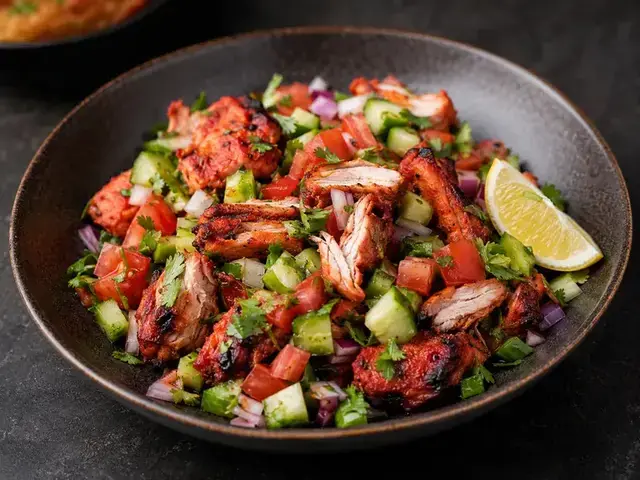
Tandoori Chicken Kachumber Salad
Tandoori chicken kachumber salad combines warmly spiced cooked chicken with a crisp tomato-cucumber-onion mixture. The yogurt marinade supplies the coating, while fresh lemon and…
Chicken coconut curry combines a ginger-garlic tomato base with coconut milk and tender thigh pieces. Cumin and coriander provide warm spice, while lime keeps the finished sauce lively. The sauce should be spoonable and savoury, with coconut supporting the curry rather than making it sweet.
Follow the measured ingredients, numbered method, substitutions, safety notes and cooking mode below.
Use unsweetened coconut milk rather than a coconut drink. Cut the chicken into even pieces and keep the measured water ready, adding only the amount needed for the desired consistency. Tomato moisture varies, especially between seasons.
Cook the onion and tomato-spice base thoroughly before adding coconut milk. Simmer gently with the chicken and verify a 74°C centre temperature. Reduce to the desired thickness before adding the final lime and coriander.
If the sauce is watery, lift out cooked chicken briefly while reducing it. A little separated coconut oil is not the same as spoiled sauce. If the curry tastes heavy, test a few drops of lime in one spoonful before adding more to the pan.
Chicken coconut curry combines a ginger-garlic tomato base with coconut milk and tender thigh pieces. Cumin and coriander provide warm spice, while lime keeps the finished sauce lively. The sauce should be spoonable and savoury, with coconut supporting the curry rather than making it sweet.
1. Read firstRead every step once before switching on the cooker.
2. MeasureWeigh and prepare all ingredients in the order listed.
3. Control heatLow means a gentle bubble, medium cooks steadily, and high is for quick browning.
4. Check donenessUse the texture, timing and safe-temperature checks written in the method.
Complete one numbered step before moving to the next. Keep the heat and timing exactly as written.
A strong rolling boil can make coconut sauce look oily. Keep the heat moderate and add lime after the simmering stage.
Ingredient choices: Use unsweetened coconut milk rather than a coconut drink. Cut the chicken into even pieces and keep the measured water ready, adding only the amount needed for the desired consistency. Tomato moisture varies, especially between seasons.
Cooking control: Cook the onion and tomato-spice base thoroughly before adding coconut milk. Simmer gently with the chicken and verify a 74°C centre temperature. Reduce to the desired thickness before adding the final lime and coriander.
If something goes wrong: If the sauce is watery, lift out cooked chicken briefly while reducing it. A little separated coconut oil is not the same as spoiled sauce. If the curry tastes heavy, test a few drops of lime in one spoonful before adding more to the pan.
Keep raw poultry separate from ready-to-eat food and do not wash it. Check the thickest flesh and any stuffing reach at least 74°C with a food thermometer; colour and timing alone are not reliable.
Serve with rice and a simple green vegetable. Stir gently before portioning to distribute chicken and sauce evenly.
Refrigerate promptly in shallow covered containers at 4°C or below and use within 3 days. Reheat only the portion needed to at least 74°C throughout. Discard food left unrefrigerated for more than 2 hours, or 1 hour above 32°C.
Chicken
Tandoori chicken kachumber salad combines warmly spiced cooked chicken with a crisp tomato-cucumber-onion mixture. The yogurt marinade supplies the coating, while fresh lemon and…
 Chicken
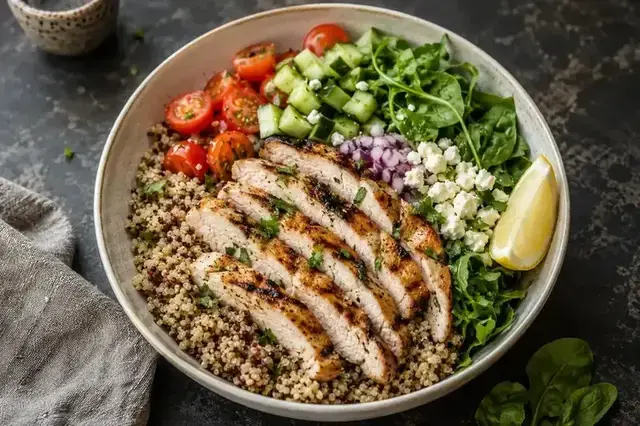
This grilled chicken quinoa bowl combines lean sliced chicken, fluffy grains and crisp raw vegetables with a lemon-herb dressing. The quinoa should remain loose…
 Chicken
Chicken cacciatore is a gentle braise in a tomato, mushroom and pepper sauce. Browning the chicken first gives the gravy depth, while wine, olives…
No reviews yet. Be the first to rate this recipe.