
 Chicken
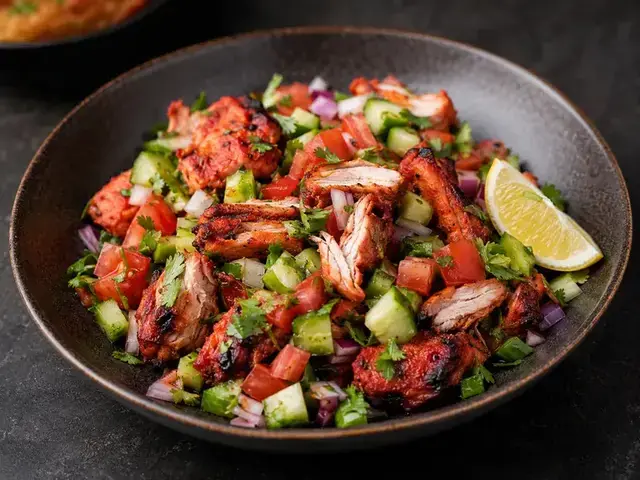
Tandoori Chicken Kachumber Salad
Tandoori chicken kachumber salad combines warmly spiced cooked chicken with a crisp tomato-cucumber-onion mixture. The yogurt marinade supplies the coating, while fresh lemon and…
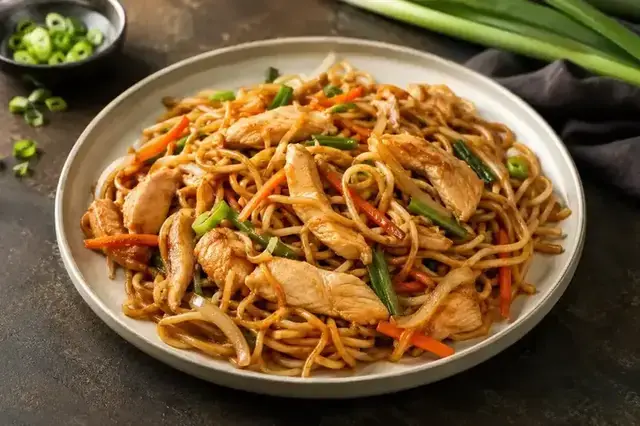
Chicken chow mein combines springy egg noodles, tender chicken and crisp vegetables in a concentrated savoury sauce. The final noodles should be coated rather than submerged. Cabbage, carrot and spring onion contribute different textures, so their cutting and cooking sequence matter.
Follow the measured ingredients, numbered method, substitutions, safety notes and cooking mode below.
Fresh egg noodles vary in preparation requirements; loosen or cook them according to the packet before stir-frying. Mix cornflour with cold water and the sauce ingredients before heating the wok. Oyster and soy sauces supply most of the salt.
Cook chicken in manageable batches and reach 74°C. Add firmer vegetables before delicate spring onion, and cook bean sprouts thoroughly. Toss the prepared noodles through the sauce just long enough to coat and heat them without breaking them.
Clumped noodles may have been insufficiently loosened or left wet in a pile. A gummy sauce can result from too much reduction after the starch thickens; add a little water and toss gently. Overcrowding produces steamed, watery vegetables.
Chicken chow mein combines springy egg noodles, tender chicken and crisp vegetables in a concentrated savoury sauce. The final noodles should be coated rather than submerged. Cabbage, carrot and spring onion contribute different textures, so their cutting and cooking sequence matter.
1. Read firstRead every step once before switching on the cooker.
2. MeasureWeigh and prepare all ingredients in the order listed.
3. Control heatLow means a gentle bubble, medium cooks steadily, and high is for quick browning.
4. Check donenessUse the texture, timing and safe-temperature checks written in the method.
Complete one numbered step before moving to the next. Keep the heat and timing exactly as written.
Drain the noodles thoroughly and keep the wok hot; excess water turns chow mein soft instead of lightly fried.
Ingredient choices: Fresh egg noodles vary in preparation requirements; loosen or cook them according to the packet before stir-frying. Mix cornflour with cold water and the sauce ingredients before heating the wok. Oyster and soy sauces supply most of the salt.
Cooking control: Cook chicken in manageable batches and reach 74°C. Add firmer vegetables before delicate spring onion, and cook bean sprouts thoroughly. Toss the prepared noodles through the sauce just long enough to coat and heat them without breaking them.
If something goes wrong: Clumped noodles may have been insufficiently loosened or left wet in a pile. A gummy sauce can result from too much reduction after the starch thickens; add a little water and toss gently. Overcrowding produces steamed, watery vegetables.
Keep raw poultry separate from ready-to-eat food and do not wash it. Check the thickest flesh and any stuffing reach at least 74°C with a food thermometer; colour and timing alone are not reliable.
Serve immediately in warmed bowls with the vegetables distributed through the noodles. Avoid leaving the finished chow mein covered in the hot wok, where steam softens the texture.
Refrigerate promptly in shallow covered containers at 4°C or below and use within 3 days. Reheat only the portion needed to at least 74°C throughout. Discard food left unrefrigerated for more than 2 hours, or 1 hour above 32°C.
Chicken
Tandoori chicken kachumber salad combines warmly spiced cooked chicken with a crisp tomato-cucumber-onion mixture. The yogurt marinade supplies the coating, while fresh lemon and…
 Chicken
Spinach-stuffed chicken breast has a creamy green filling enclosed in a lean chicken portion. Cream cheese binds the spinach, while Parmesan provides savoury depth.…
 Chicken
Chicken coconut curry combines a ginger-garlic tomato base with coconut milk and tender thigh pieces. Cumin and coriander provide warm spice, while lime keeps…
No reviews yet. Be the first to rate this recipe.