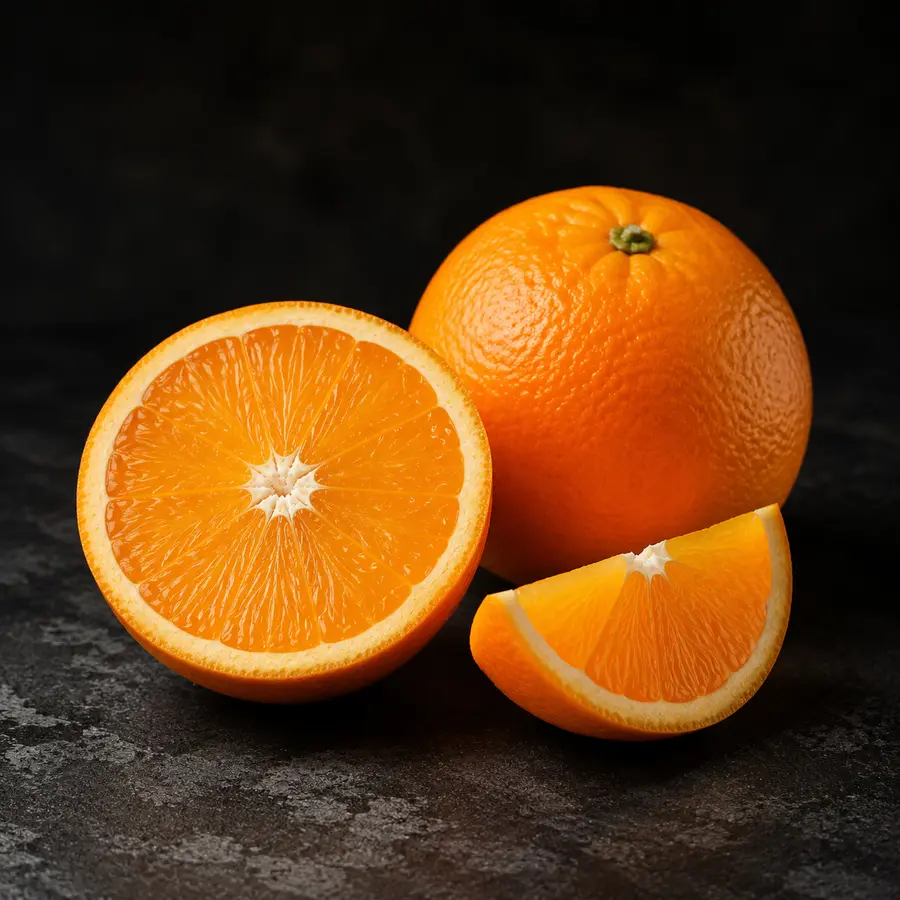
Ingredient at a glance: Orange is a sweet citrus whose aromatic zest, juicy segments and balanced acid work in desserts, salads, sauces, marinades and braises.
Flavour, Aroma and Texture
Zest is floral and intensely aromatic; flesh is sweet-tart; pith and seeds are bitter. Reduction concentrates both sugar and any pith-derived bitterness.
How to Select It
Choose heavy, fragrant fruit with firm skin and no mould, soft leaking areas or fermented smell. Skin colour can be affected by climate and does not alone prove ripeness.
Professional Preparation
Wash and dry before zesting. Remove only coloured zest. For clean segments, cut away peel and membranes over a bowl to capture juice. Strain seeds before reducing.
Best Cooking Methods
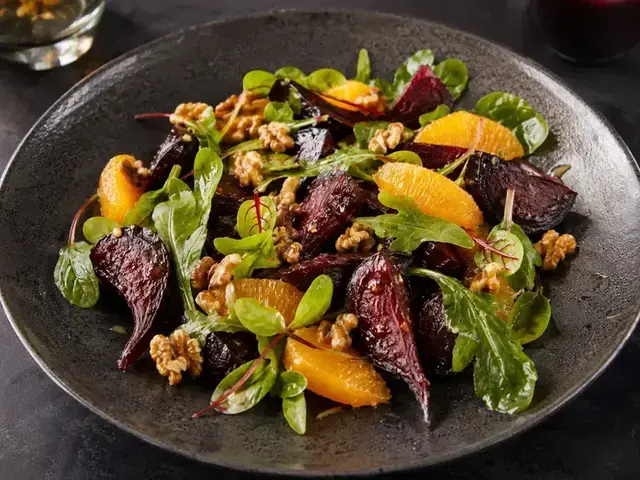
- Use fresh segments in salads and desserts.
- Reduce strained juice carefully for glaze or sauce.
- Roast halves or wedges with poultry and root vegetables.
Flavour Pairings
- Fennel, carrot, beetroot and chicory.
- Duck, pork, chicken and fish.
- Cinnamon, cardamom, vanilla and chocolate.
- Olive oil, yogurt, mint and walnuts.
Practical Substitutions
- Mandarin for sweeter, more perfumed citrus.
- Lemon plus a little honey for sharper acidity.
- Pineapple juice for tropical sweetness in cooked glaze.
Storage and Shelf Life
Store whole oranges at cool room temperature for short use or refrigerate for longer life. Refrigerate cut fruit and fresh juice promptly in covered containers.
Season and Availability
Typically strongest in cooler months in Mediterranean climates, with global varieties extending availability.
Nutrition and Dietary Context
Orange provides vitamin C, carbohydrate and fibre when eaten whole. Juice is easier to consume in larger amounts and contains less intact fibre.
Allergen and Food-Safety Notes
Citrus allergy is possible. Grapefruit-type medicine interactions should not be assumed for all oranges, but people taking medication should follow clinical advice. Discard mouldy fruit.
Zero-Waste Use
Candy sound peel, freeze zest and juice, or simmer clean trimmings into marmalade using a tested formula. Use pulp in smoothies or sauces.
Common Mistakes to Avoid
- Including excessive white pith in zest or reductions.
- Reducing juice without accounting for concentrated sweetness.
- Leaving fresh juice at room temperature for service.
Chef’s Quality Check
Good orange should release fragrant oil from the zest and clean sweet-acid juice without dryness, fermentation or dominant pith bitterness.
This profile provides general culinary education. Product composition, allergens, storage life and safety requirements vary; check the label and follow local guidance.