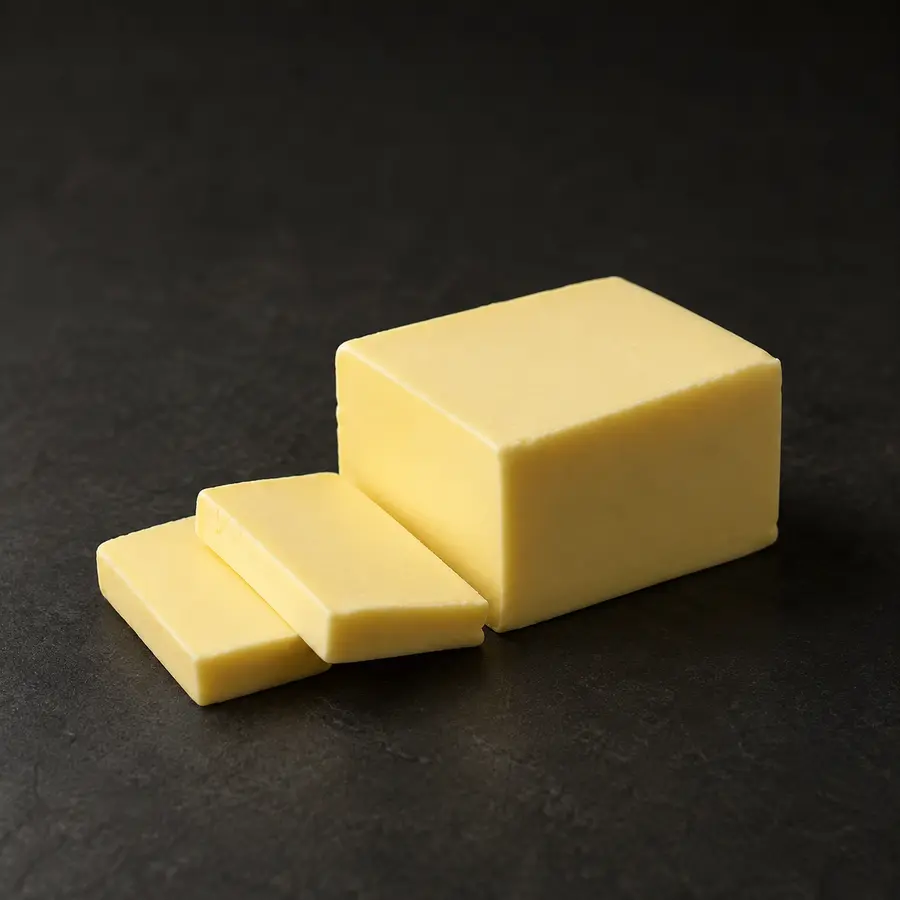
Ingredient at a glance: Butter is a water-in-fat dairy emulsion, usually around eighty percent fat, with milk solids that brown and eventually burn.
Flavour, Aroma and Texture
Sweet-cream butter is rich and lactic; cultured butter is tangier. Brown butter tastes nutty, while blackened milk solids are bitter.
How to Select It
Choose butter with an intact cold package, clean dairy aroma and the salt level required. Reject rancid, refrigerator-tainted or mouldy product.
Professional Preparation
Cut cleanly and bring to the exact temperature the recipe needs: cold for lamination, pliable for creaming, melted for some batters. Clarify when higher heat is required.
Best Cooking Methods
- Cream with sugar to aerate cakes and biscuits.
- Brown slowly until milk solids are hazelnut-coloured.
- Mount cold cubes into sauce off aggressive heat.
Flavour Pairings
- Bread, potato, eggs and mushrooms.
- Garlic, sage, thyme and lemon.
- Chocolate, vanilla, nuts and fruit.
- Fish, chicken, pasta and cheese.
Practical Substitutions
- Ghee for higher heat and no butter water.
- Plant butter formulated for baking, with product-specific behaviour.
- Olive oil for savoury fat with no dairy flavour.
Storage and Shelf Life
Refrigerate wrapped against odours and light. Freeze well-sealed portions for longer storage. Keep service butter cold and avoid repeated warm-cool cycles.
Season and Availability
A year-round dairy product.
Nutrition and Dietary Context
Butter is concentrated milk fat and energy-dense. Salted and unsalted versions differ in sodium and recipe control.
Allergen and Food-Safety Notes
Milk is a major allergen even when lactose is low. Brown butter safely and avoid splatter from residual water.
Zero-Waste Use
Turn clean trimmings into clarified butter or compound butter, and freeze measured pastry portions before quality declines.
Common Mistakes to Avoid
- Using warm greasy butter when a recipe needs plastic creaming consistency.
- Calling burnt black solids brown butter.
- Substituting spreadable blended products without checking water content.
Chef’s Quality Check
Good butter should smell sweet and clean; brown butter should show amber liquid and toasted brown—not black—milk solids.
This profile provides general culinary education. Product composition, allergens, storage life and safety requirements vary; check the label and follow local guidance.