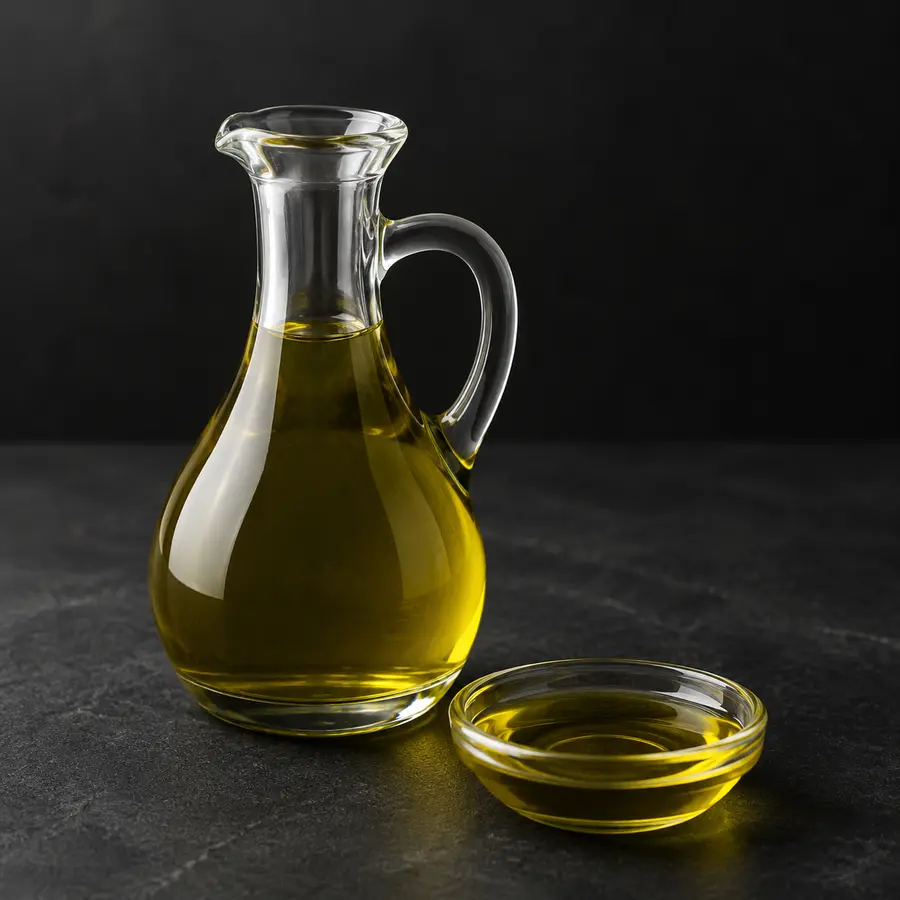
Ingredient at a glance: Extra-virgin olive oil is mechanically extracted olive juice meeting chemical and sensory standards, with quality linked to fruit, milling and storage.
Flavour, Aroma and Texture
Flavour may be grassy, fruity, tomato-like, peppery or bitter; those positive bitter and pungent notes differ from rancid wax, crayons or stale nuts.
How to Select It
Choose a recent harvest or best-before date in dark glass or tin, from a supplier with clear origin. Avoid bottles displayed hot or in strong light.
Professional Preparation
Taste a small amount at room temperature. Use delicate oil for subtle foods and robust oil for bitter greens, beans or grilled meat. Measure rather than pouring blindly.
Best Cooking Methods
- Whisk into dressings and cold sauces.
- Use for moderate-heat sautéing and roasting within quality limits.
- Finish soup, legumes, fish and bread after cooking.
Flavour Pairings
- Tomato, lemon, garlic and herbs.
- Feta, olives, beans and lentils.
- Fish, chicken, aubergine and potato.
- Orange, chocolate, almond and honey.
Practical Substitutions
- Virgin olive oil for a similar but less stringent grade.
- Neutral oil where olive flavour is undesirable.
- Butter for dairy richness at lower heat.
Storage and Shelf Life
Store tightly closed, cool and dark, away from the hob. Buy a container size used within months of opening. Do not keep decorative clear bottles in sunlight.
Season and Availability
New-season oils are harvested mainly in autumn and winter in the Mediterranean; sealed oil is sold year-round.
Nutrition and Dietary Context
Olive oil is almost entirely fat, rich in monounsaturated fatty acids. It remains energy-dense despite its culinary quality.
Allergen and Food-Safety Notes
Olive allergy is rare but possible. Hot oil causes burns; smoking and repeated degradation indicate unsuitable handling.
Zero-Waste Use
Use older but still sound oil for cooking before opening a new bottle, and recycle packaging. Do not pour oil into drains.
Common Mistakes to Avoid
- Judging quality only by green colour.
- Storing beside heat in a clear bottle.
- Keeping a large open tin for years.
Chef’s Quality Check
Oil should smell fresh and fruit-like, taste cleanly bitter or peppery where expected and show no rancid waxy finish.
This profile provides general culinary education. Product composition, allergens, storage life and safety requirements vary; check the label and follow local guidance.