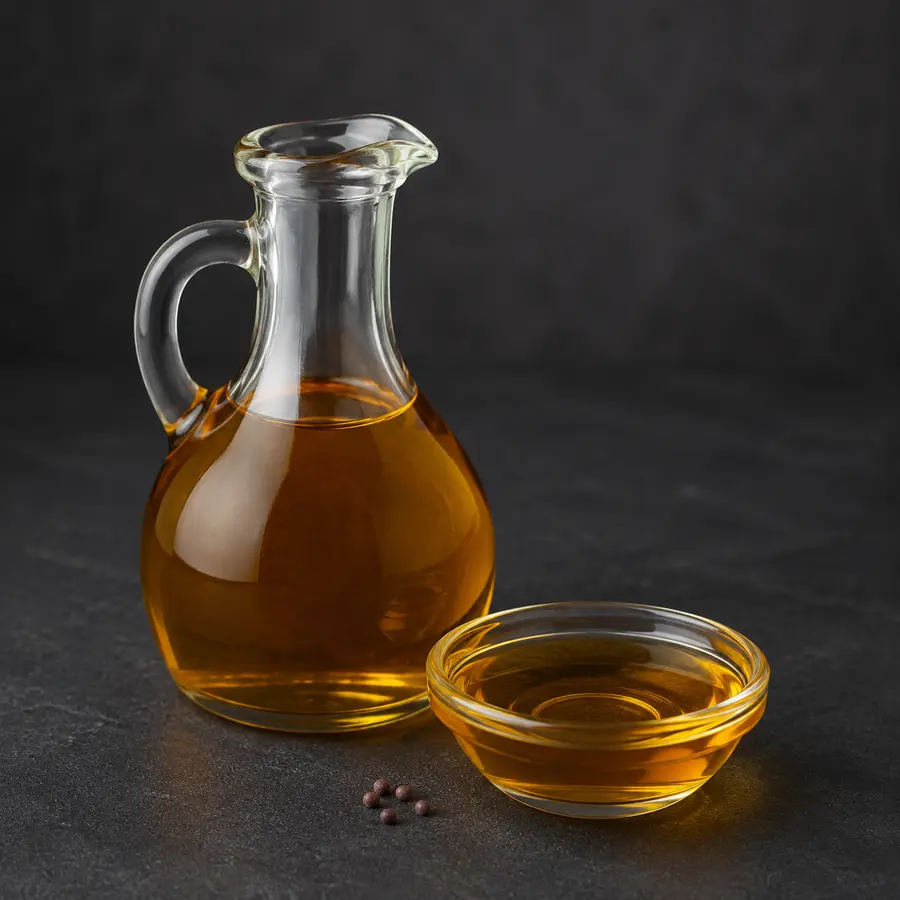
Ingredient at a glance: Mustard oil is pressed from mustard seed and carries sharp allyl-isothiocyanate aroma; edible status and erucic-acid regulation vary by country and product.
Flavour, Aroma and Texture
It is pungent, peppery and nutty. Heating reduces raw sharpness and reveals a deeper seed aroma, while overheating creates acrid smoke.
How to Select It
Buy only a clearly labelled food-grade product permitted for culinary use in the country of sale. Check seal, date and clean pungent aroma without rancidity.
Professional Preparation
Measure carefully. Follow product directions and regional cooking practice for heating. Ventilate and keep aromatics ready so the oil is not left smoking.
Best Cooking Methods
- Temper spices for achar, dal and curry.
- Use a small raw amount in traditional preparations only when labelled for that use.
- Blend with neutral oil when a gentler mustard character is required.
Flavour Pairings
- Mustard seed, turmeric, chilli and fenugreek.
- Fish, potato, leafy greens and aubergine.
- Lemon, coriander, garlic and ginger.
- Black cumin, tomato, radish and rice.
Practical Substitutions
- Neutral oil plus prepared mustard for approximate flavour.
- Rapeseed or canola oil for function without strong pungency.
- Sesame oil for nutty character in a different cuisine.
Storage and Shelf Life
Store sealed, cool, dark and away from heat. Use dry clean utensils and discard rancid or contaminated oil.
Season and Availability
A year-round pressed pantry oil.
Nutrition and Dietary Context
Mustard oil is fat and energy-dense. Erucic-acid limits and permitted uses differ by jurisdiction, so product labelling is essential.
Allergen and Food-Safety Notes
Mustard is a major allergen in some jurisdictions. Some bottles are labelled for external use only and must not be eaten. Hot pungent fumes can irritate.
Zero-Waste Use
Buy a practical bottle size, use sound oil in marinades and pickles within safe recipes, and recycle the container.
Common Mistakes to Avoid
- Cooking with a product labelled for external use.
- Failing to declare mustard allergen.
- Heating unattended until acrid smoke develops.
Chef’s Quality Check
Food-grade mustard oil should smell cleanly sharp and nutty, then taste warm rather than rancid or chemically harsh.
This profile provides general culinary education. Product composition, allergens, storage life and safety requirements vary; check the label and follow local guidance.