
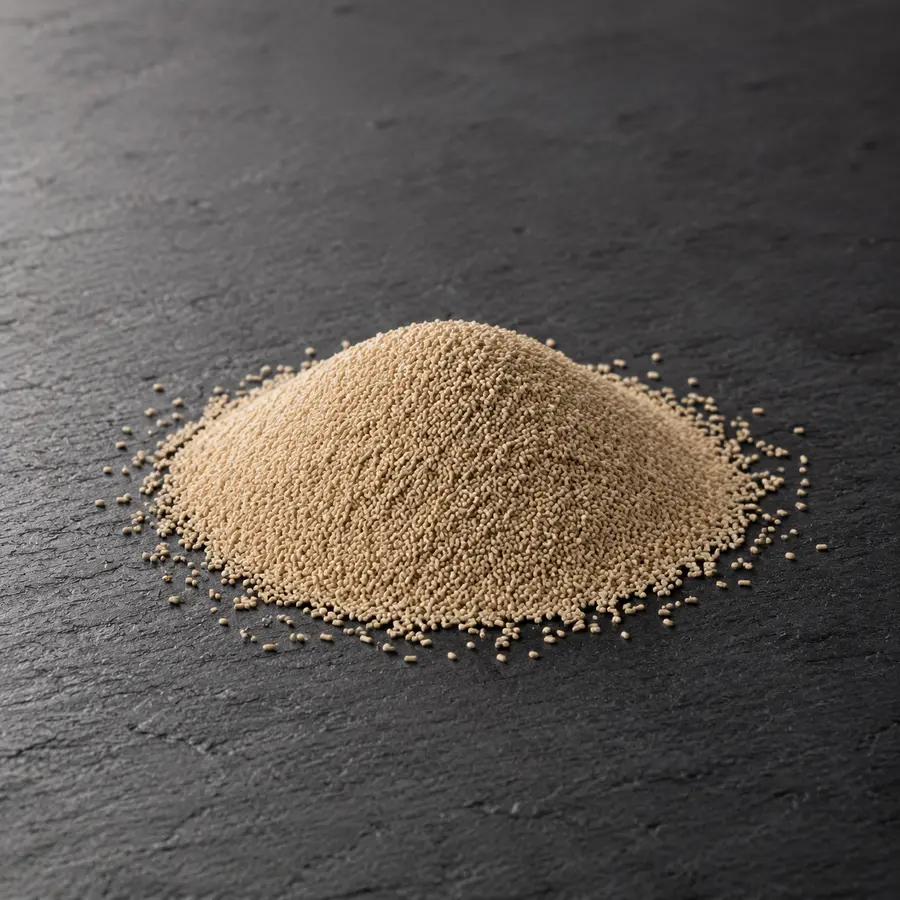
Ingredient at a glance: Baker’s yeast is Saccharomyces cerevisiae sold fresh, active dry or instant; each form has specific handling and conversion requirements.
Flavour, Aroma and Texture
Healthy fermentation smells bready, fruity and lightly alcoholic. Inactive yeast gives no gas; overheated or spoiled yeast can smell unpleasant.
How to Select It
Check type, date and package integrity. Fresh yeast should be moist and cream-coloured, not dark, slimy or dried. Dry yeast should remain free-flowing.
Professional Preparation
Follow the product method: active dry may need hydration, while instant is often mixed with flour. Use accurately warm—not hot—liquid and keep concentrated salt from direct prolonged contact.
Best Cooking Methods
- Ferment lean bread and pizza dough.
- Enrich brioche and sweet dough with adjusted yeast and time.
- Cold-ferment dough under refrigeration for flavour.
Flavour Pairings
- Wheat flour, water, salt and olive oil.
- Milk, butter, egg and sugar in enriched dough.
- Wholegrain flour, seeds, herbs and cheese.
- Potato, beer, honey and spices in selected breads.
Practical Substitutions
- Fresh yeast converted accurately by weight.
- Sourdough starter with a completely different fermentation schedule.
- Chemical leavening only in products designed for it, not yeast bread.
Storage and Shelf Life
Keep unopened dry yeast as labelled; refrigerate or freeze after opening in an airtight container. Fresh yeast requires refrigeration and rapid use.
Season and Availability
A year-round cultured ingredient.
Nutrition and Dietary Context
Yeast contributes little to finished nutrition at normal formula levels. Nutritional yeast is inactive and cannot raise dough.
Allergen and Food-Safety Notes
Yeast allergy is possible. Raw dough may contain pathogens from flour and should not be eaten. Fermentation does not make spoiled ingredients safe.
Zero-Waste Use
Use active surplus in another measured dough, freeze approved dry yeast and compost inactive tested yeast rather than risking a full batch.
Common Mistakes to Avoid
- Using hot liquid that kills yeast.
- Confusing nutritional yeast with baker’s yeast.
- Judging readiness only by the clock instead of dough expansion.
Chef’s Quality Check
A test dough should expand predictably and smell cleanly fermented; dry yeast proofed when required should show active foam within the product’s stated time.
This profile provides general culinary education. Product composition, allergens, storage life and safety requirements vary; check the label and follow local guidance.