
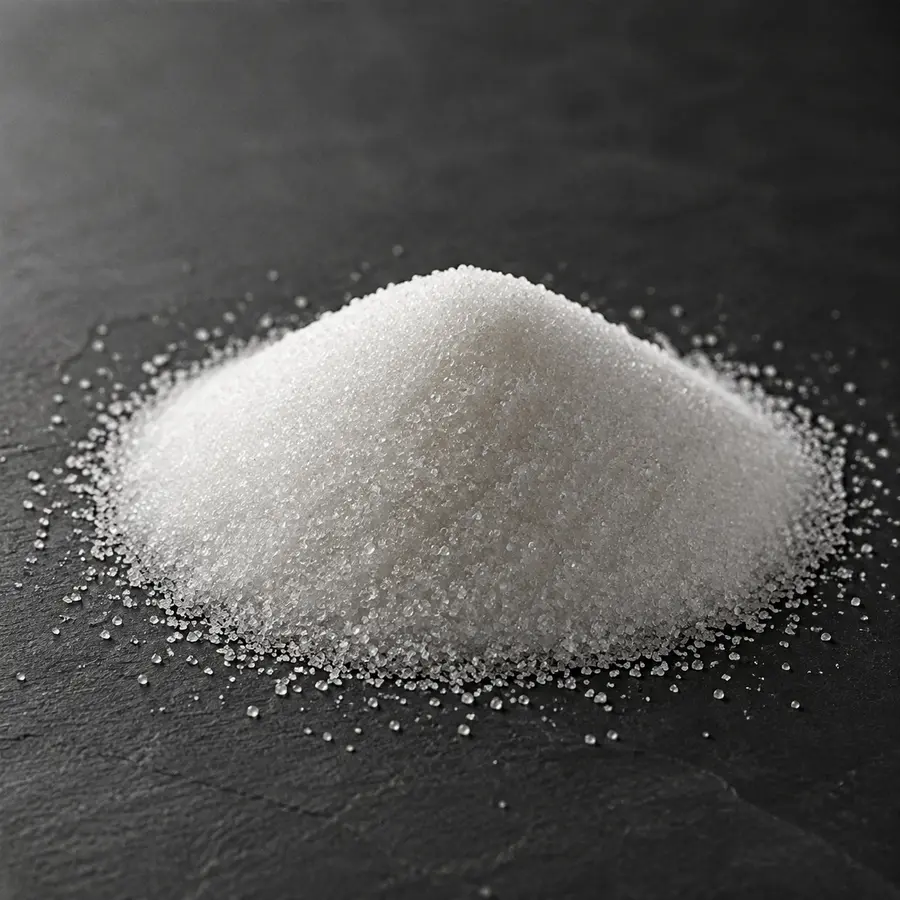
Ingredient at a glance: Granulated sugar is crystalline sucrose whose roles extend beyond sweetness to tenderising, foaming, caramelisation, water binding and controlled preservation.
Flavour, Aroma and Texture
It is cleanly sweet and neutral. Caramelisation produces nutty bitterness as colour deepens; burnt sugar becomes acrid and black.
How to Select It
Choose dry free-flowing crystals without pests, contamination or strong absorbed odours. Crystal size matters in some pastry and confectionery.
Professional Preparation
Weigh accurately. Cream with plastic butter for aeration, dissolve fully in syrup and brush pan sides only with clean water when preventing crystallisation.
Best Cooking Methods
- Cream into cakes and biscuits for structure.
- Cook to measured syrup or caramel stages.
- Balance acid and bitterness in sauces without using it to hide faults.
Flavour Pairings
- Fruit, chocolate, coffee and vanilla.
- Butter, cream, egg and flour.
- Citrus, spice, nuts and coconut.
- Tomato, vinegar and chilli in controlled savoury balance.
Practical Substitutions
- Caster sugar for faster dissolution.
- Honey with reduced liquid and changed flavour.
- Approved non-nutritive sweetener only in a reformulated recipe because structure differs.
Storage and Shelf Life
Store airtight, dry and pest-free. Hard clumps from clean humidity are a quality issue; contaminated sugar should be discarded.
Season and Availability
A year-round refined pantry ingredient.
Nutrition and Dietary Context
Sugar provides carbohydrate and energy with little micronutrient content. Public-health advice generally recommends limiting free sugars.
Allergen and Food-Safety Notes
Sugar itself is not a common allergen, but shared bins and flavoured products may cross-contact. Hot caramel causes severe burns and sticks to skin.
Zero-Waste Use
Turn clean hardened sugar into syrup, make only required garnish quantities and scrape dry measured remnants back only when uncontaminated.
Common Mistakes to Avoid
- Replacing sugar with sweetener without rebuilding structure.
- Touching or tasting hot caramel.
- Adding sugar automatically to correct burnt or excessively salty food.
Chef’s Quality Check
Sugar should dissolve or disperse as the recipe requires; caramel colour must match the target without black smoke or crystallised lumps.
This profile provides general culinary education. Product composition, allergens, storage life and safety requirements vary; check the label and follow local guidance.