
 Botanical
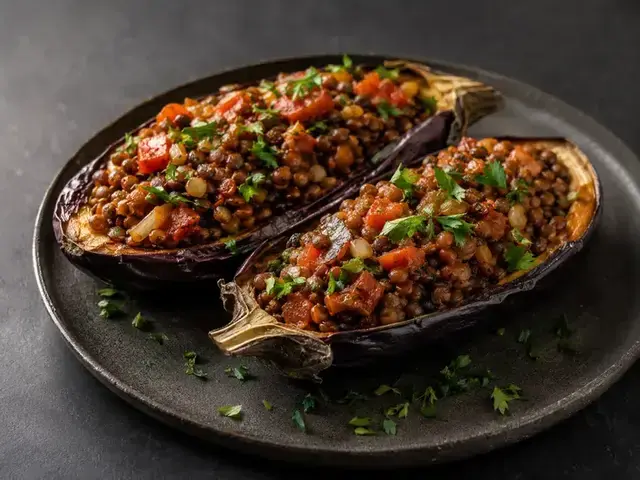
Stuffed Aubergine with Lentils
Lentil-stuffed aubergines combine a soft roasted shell with a tomato, cumin and paprika filling. Green lentils retain some bite against the tender aubergine. Lemon…
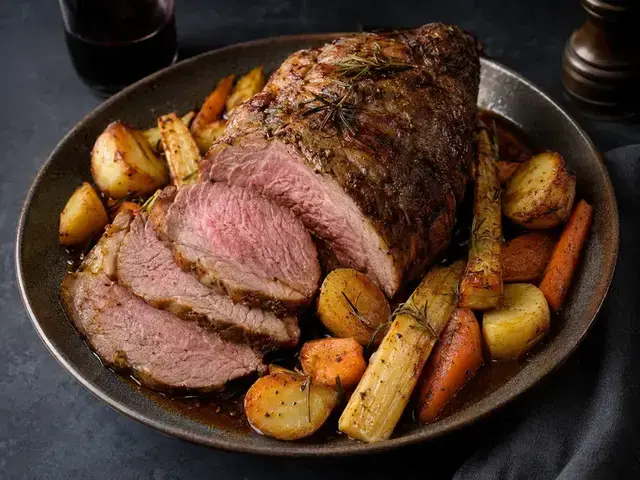
Roast leg of lamb with root vegetables produces carveable meat rather than the pull-apart texture of a slow shoulder braise. Garlic, rosemary and thyme flavour the joint, while vegetables roast in the surrounding juices. Resting is part of the serving sequence.
Follow the measured ingredients, numbered method, substitutions, safety notes and cooking mode below.
A bone-in leg varies in thickness, so check more than one thick area. Cut potatoes, carrots and parsnips for their relative cooking times. Do not assume the shoulder’s long braising method applies to this leaner joint.
Roast with sufficient space for vegetables and check lamb temperature away from bone. Follow the safe whole-lamb temperature and rest guidance. Remove or continue cooking vegetables separately if they finish at a different time from the meat.
Dry slices may come from overcooking or carving without a rest. Pale vegetables can be finished separately while the lamb rests. If the tray dries out, add a small amount of hot stock before the residue scorches.
Roast leg of lamb with root vegetables produces carveable meat rather than the pull-apart texture of a slow shoulder braise. Garlic, rosemary and thyme flavour the joint, while vegetables roast in the surrounding juices. Resting is part of the serving sequence.
1. Read firstRead every step once before switching on the cooker.
2. MeasureWeigh and prepare all ingredients in the order listed.
3. Control heatLow means a gentle bubble, medium cooks steadily, and high is for quick browning.
4. Check donenessUse the texture, timing and safe-temperature checks written in the method.
Complete one numbered step before moving to the next. Keep the heat and timing exactly as written.
Root vegetables need large, even pieces so they brown without collapsing during the lamb cooking time.
Ingredient choices: A bone-in leg varies in thickness, so check more than one thick area. Cut potatoes, carrots and parsnips for their relative cooking times. Do not assume the shoulder’s long braising method applies to this leaner joint.
Cooking control: Roast with sufficient space for vegetables and check lamb temperature away from bone. Follow the safe whole-lamb temperature and rest guidance. Remove or continue cooking vegetables separately if they finish at a different time from the meat.
If something goes wrong: Dry slices may come from overcooking or carving without a rest. Pale vegetables can be finished separately while the lamb rests. If the tray dries out, add a small amount of hot stock before the residue scorches.
For intact lamb chops and roasts, reach at least 63°C and rest for 3 minutes. Shoulder and other braising cuts need longer to become tender. Use separate raw-meat utensils.
Carve across the muscle grain in manageable sections and serve with the vegetables and tasted juices. Account for the bone when judging portions from the raw joint weight.
Refrigerate promptly in shallow covered containers at 4°C or below and use within 3 days. Reheat only the portion needed to at least 74°C throughout. Discard food left unrefrigerated for more than 2 hours, or 1 hour above 32°C.
Botanical
Lentil-stuffed aubergines combine a soft roasted shell with a tomato, cumin and paprika filling. Green lentils retain some bite against the tender aubergine. Lemon…
 Botanical
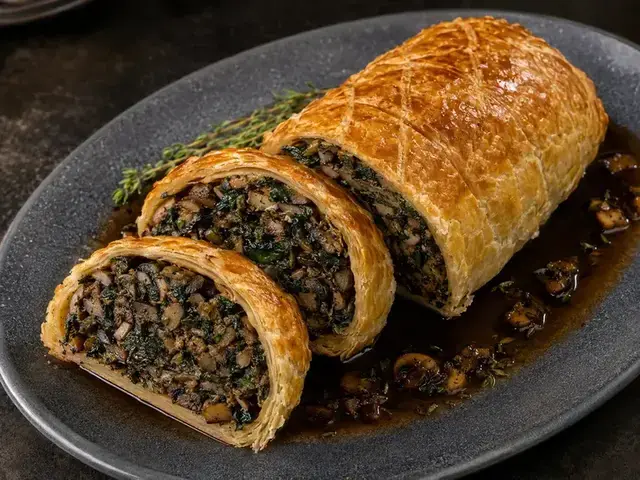
Vegan mushroom Wellington encloses a savoury mushroom-lentil filling in crisp puff pastry. The filling needs enough structure to slice without being a dry paste.…
 Botanical
Chickpea-spinach stuffed peppers combine a soft pepper shell with a tomato-seasoned rice and chickpea filling. The rice absorbs flavour while the chickpeas retain a…
No reviews yet. Be the first to rate this recipe.