
 Botanical
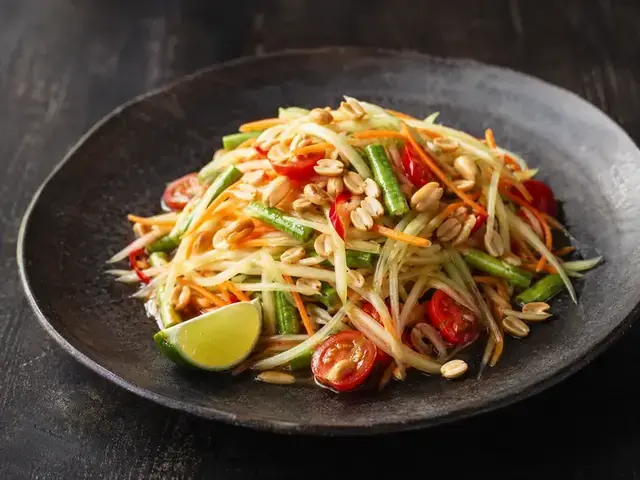
Vegan Thai Green Papaya Salad
Shredded green papaya, beans, tomatoes, peanuts and a lime-chilli dressing create a crisp vegan Thai salad with sweet, sour, salty and spicy balance.
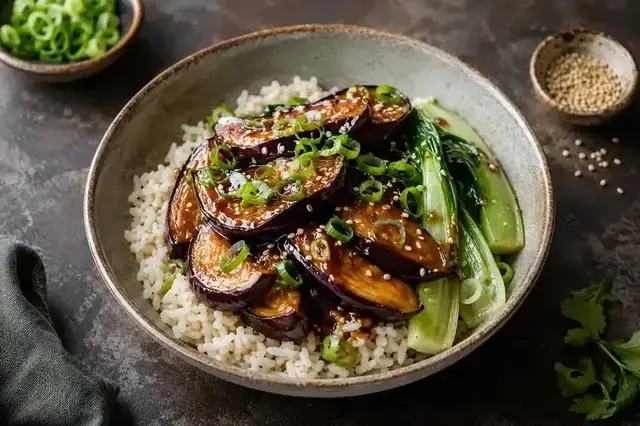
Roasted aubergine, jasmine rice and edamame form a bowl with contrasting soft and firm textures. White miso and soy bring savoury depth, while maple syrup and rice vinegar make a glossy sweet-sour glaze. The aubergine should be fully soft beneath its caramelised coating.
Follow the measured ingredients, numbered method, substitutions, safety notes and cooking mode below.
White miso is generally a gentler starting point than a very dark, strongly fermented paste, but saltiness varies by brand. Use firm aubergines without spongy, dark centres and cook edamame according to the package. Keep rice water separate from the smaller glaze-water measure.
Roast the aubergine until tender before adding the sugary glaze. Reserve part of the glaze for finishing with clean utensils; do not repeatedly dip a brush used on the food into the finishing portion. Rest the cooked rice covered before fluffing it.
If the glaze burns while the aubergine remains firm, it was applied too early or the pieces were too large. A salty bowl needs more plain rice or vegetables, not additional syrup alone. Drain edamame well so water does not dilute the glaze at assembly.
Roasted aubergine, jasmine rice and edamame form a bowl with contrasting soft and firm textures. White miso and soy bring savoury depth, while maple syrup and rice vinegar make a glossy sweet-sour glaze. The aubergine should be fully soft beneath its caramelised coating.
1. Read firstRead every step once before switching on the cooker.
2. MeasureWeigh and prepare all ingredients in the order listed.
3. Control heatLow means a gentle bubble, medium cooks steadily, and high is for quick browning.
4. Check donenessUse the texture, timing and safe-temperature checks written in the method.
Complete one numbered step before moving to the next. Keep the heat and timing exactly as written.
Aubergine should be soft before it is glazed. Firm cubes need more roasting, not more sugary glaze. Rice water absorption varies by brand; use the packet ratio when it differs.
Ingredient choices: White miso is generally a gentler starting point than a very dark, strongly fermented paste, but saltiness varies by brand. Use firm aubergines without spongy, dark centres and cook edamame according to the package. Keep rice water separate from the smaller glaze-water measure.
Cooking control: Roast the aubergine until tender before adding the sugary glaze. Reserve part of the glaze for finishing with clean utensils; do not repeatedly dip a brush used on the food into the finishing portion. Rest the cooked rice covered before fluffing it.
If something goes wrong: If the glaze burns while the aubergine remains firm, it was applied too early or the pieces were too large. A salty bowl needs more plain rice or vegetables, not additional syrup alone. Drain edamame well so water does not dilute the glaze at assembly.
Wash produce and use clean utensils. Keep perishable ingredients refrigerated. Refrigerate cooked food in shallow containers within 2 hours, or within 1 hour when the surroundings exceed 32°C.
Divide rice evenly, add aubergine and edamame, then finish with coriander and a controlled drizzle. Keep leftover rice handling separate from the glaze-making process.
Cool cooked rice quickly in shallow portions, ideally refrigerating within 1 hour. Keep at 4°C or below and use within 24 hours. Reheat only once to at least 74°C throughout. Do not keep a batch already reheated for another reheating cycle.
Botanical
Shredded green papaya, beans, tomatoes, peanuts and a lime-chilli dressing create a crisp vegan Thai salad with sweet, sour, salty and spicy balance.
 Botanical
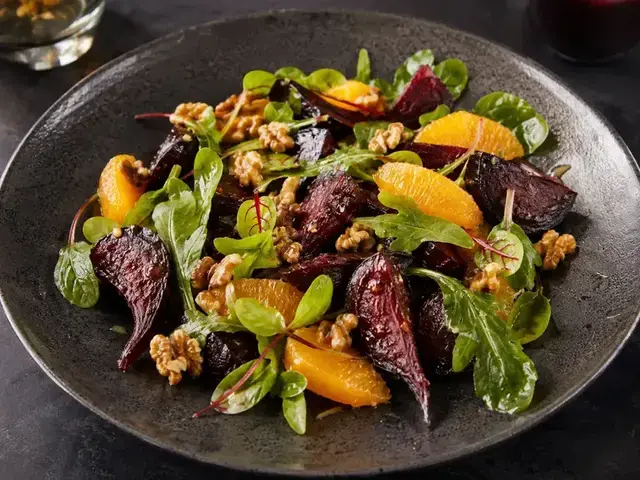
Beetroot, orange and walnut salad balances earthy roasted beetroot with juicy citrus and crisp toasted nuts. Rocket adds a peppery note, while mustard dressing…
 Botanical
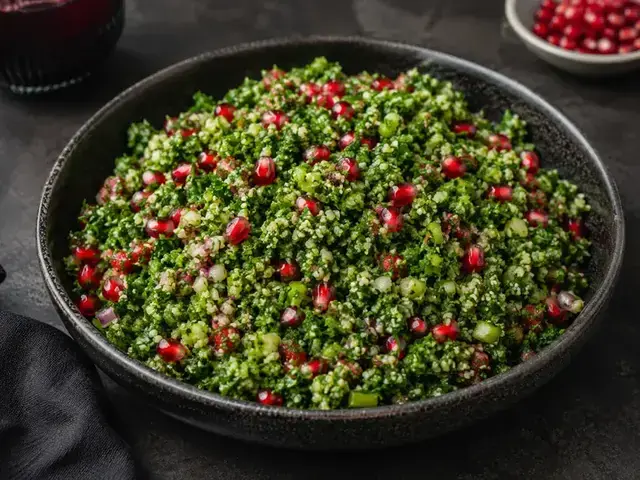
This tabbouleh is herb-led, with finely chopped parsley and mint around a modest amount of bulgur. Tomato, cucumber and pomegranate bring juiciness and small…
No reviews yet. Be the first to rate this recipe.