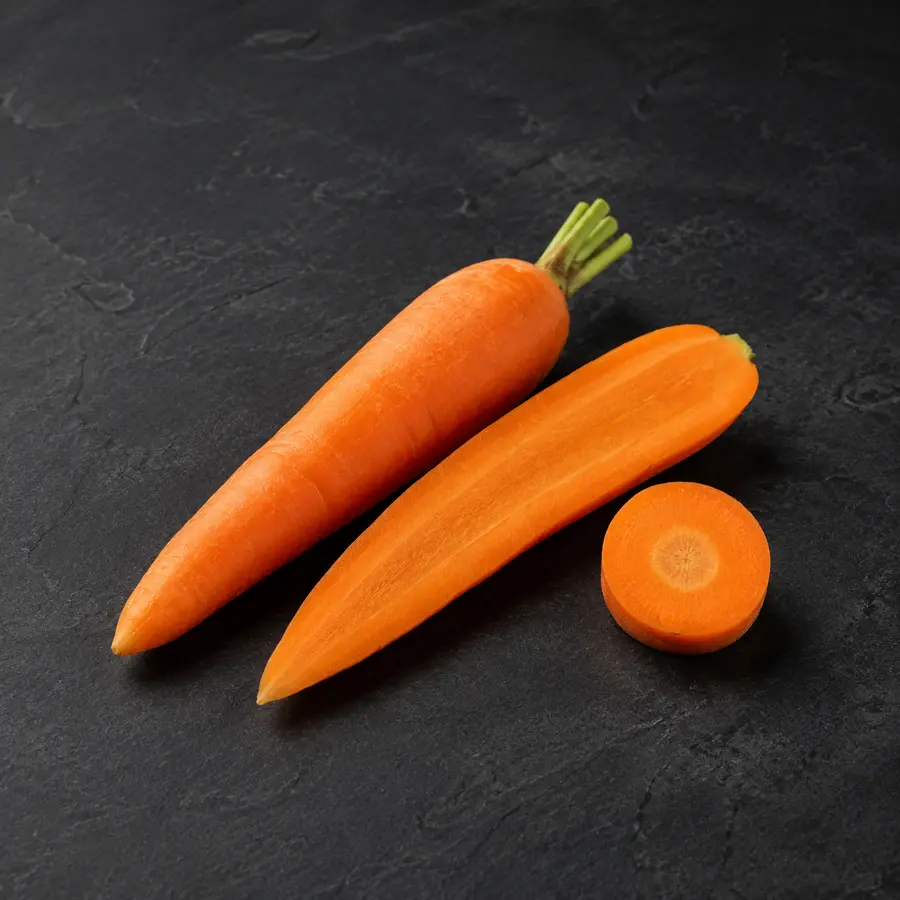
Ingredient at a glance: Carrot is a sweet root vegetable used for structure, colour, aromatic bases, salads, roasting, stocks and purees.
Flavour, Aroma and Texture
Raw carrot is crisp, earthy and mildly sweet. Roasting concentrates sugar and creates caramel notes; simmering softens it and transfers flavour into surrounding liquid.
How to Select It
Choose firm, smooth roots with bright colour and no rubbery bend, black patches or split wet areas. Smaller carrots are not automatically sweeter; freshness and variety matter more.
Professional Preparation
Scrub well and peel only when skin is tough or presentation requires it. Cut to equal thickness. Separate leafy tops before storage because they draw moisture from the root.
Best Cooking Methods
- Roast in a single layer with moderate fat and controlled browning.
- Glaze gently with stock, butter or oil until tender and glossy.
- Steam or blanch for clean flavour and accurate texture.
Flavour Pairings
- Cumin, coriander, ginger and cinnamon.
- Orange, lemon, honey and mustard.
- Butter, yogurt, tahini and lentils.
- Parsley, dill, thyme and mint.
Practical Substitutions
- Parsnip for a sweeter, earthier root flavour.
- Sweet potato for softer texture and deeper sweetness.
- Pumpkin in soups and purees where crisp structure is unnecessary.
Storage and Shelf Life
Remove tops and refrigerate carrots in the crisper, protected from dehydration. Keep prepared carrots covered and cold. Revive slight limpness in ice water only when the carrot remains otherwise sound.
Season and Availability
Available year-round; cool-season carrots often develop pronounced sweetness, while young carrots have delicate skin and faster cooking time.
Nutrition and Dietary Context
Carrot provides fibre and carotenoids. Cooking and a modest amount of fat can improve availability of some carotenoids, while sugary glazes change the overall dish.
Allergen and Food-Safety Notes
Carrot allergy and pollen-related oral reactions can occur. Discard slimy or mouldy roots; do not serve a deteriorated carrot simply because the centre remains firm.
Zero-Waste Use
Use clean peelings and tops in stock or pesto-style preparations after checking bitterness and safety. Ferment, pickle or puree surplus before it dehydrates.
Common Mistakes to Avoid
- Cutting mixed sizes and producing raw centres beside overcooked pieces.
- Boiling aggressively until flavour and texture are lost.
- Overcrowding roasting trays and creating steam.
Chef’s Quality Check
A knife should enter with the resistance required by the dish; colour should remain lively and the flavour sweet, clean and free from woody bitterness.
This profile provides general culinary education. Product composition, allergens, storage life and safety requirements vary; check the label and follow local guidance.