
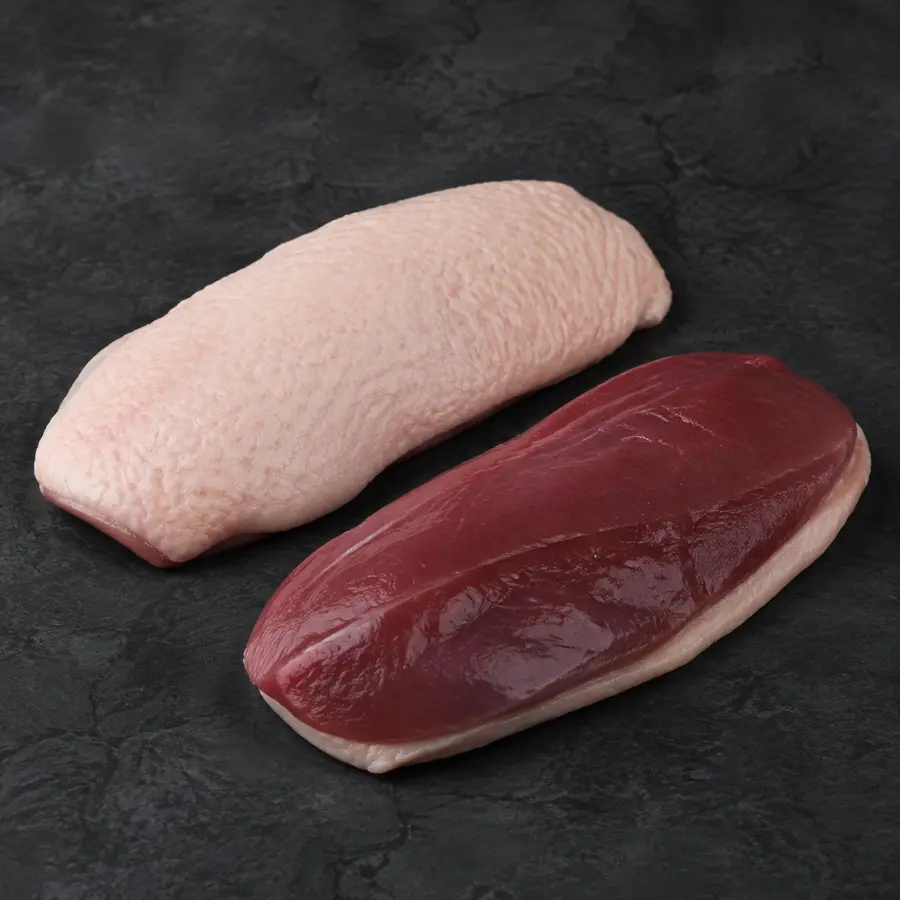
Ingredient at a glance: Duck is dark, flavourful poultry with a substantial fat layer; breast suits controlled searing while legs benefit from slow cooking.
Flavour, Aroma and Texture
Meat is rich, mineral and savoury. Properly rendered skin is crisp; unrendered fat is rubbery, and scorched fat tastes bitter.
How to Select It
Choose cold meat with intact skin, clean dark-red colour and no sour odour or slime. For a whole bird, inspect cavity and packaging.
Professional Preparation
Do not wash. Score breast skin without cutting meat, start in a cool dry pan to render gradually, and reserve clean fat through careful straining.
Best Cooking Methods
- Pan-render duck breast, then finish gently and rest.
- Confit or braise legs until connective tissue softens.
- Roast whole while draining and managing rendered fat.
Flavour Pairings
- Orange, cherry, plum and pomegranate.
- Five-spice, ginger, soy and spring onion.
- Thyme, bay, lentils and cabbage.
- Potato, beetroot, mustard and honey.
Practical Substitutions
- Chicken thigh for accessible dark poultry with less fat.
- Goose for richer larger poultry.
- Pork belly for fat and savoury depth in non-poultry dishes.
Storage and Shelf Life
Store raw poultry cold, covered and below ready-to-eat foods. Refrigerate rendered fat in a clean dated container. Cool cooked duck promptly.
Season and Availability
Availability varies, often strongest around seasonal celebrations.
Nutrition and Dietary Context
Duck provides protein and more fat than lean poultry cuts, especially when skin is eaten.
Allergen and Food-Safety Notes
Raw poultry pathogen controls apply. Local rules differ for serving duck breast below a fully cooked endpoint; vulnerable diners require conservative choices.
Zero-Waste Use
Strain and refrigerate rendered fat, make stock from the carcass and use safely cooled meat in noodles or salads.
Common Mistakes to Avoid
- Starting skin in an extremely hot pan and sealing in unrendered fat.
- Treating breast and leg as if they need the same method.
- Keeping rendered fat with meat juices or crumbs mixed in.
Chef’s Quality Check
Skin should be thin and crisp, fat properly rendered and the thickest meat verified to the intended safe standard.
This profile provides general culinary education. Product composition, allergens, storage life and safety requirements vary; check the label and follow local guidance.