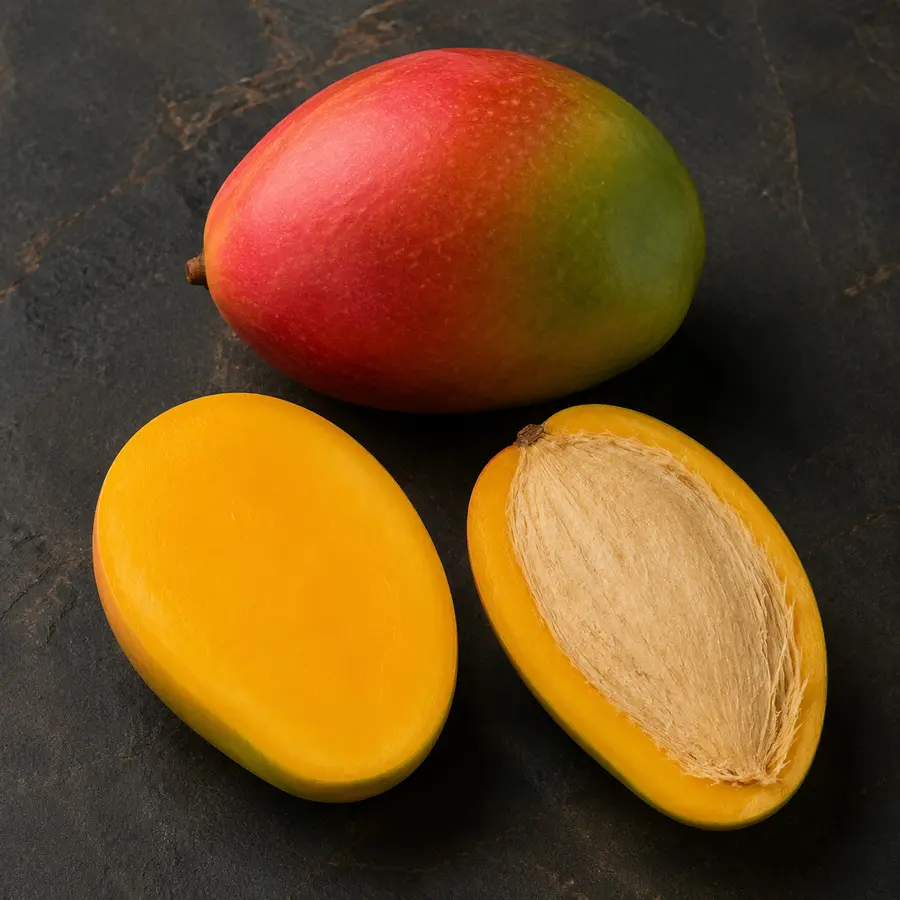
Ingredient at a glance: Mango is a tropical stone fruit with many cultivars that differ in fibre, acidity, perfume, skin colour and mature size.
Flavour, Aroma and Texture
Unripe mango is firm, sour and resinous; ripe fruit becomes juicy, sweet and floral. Some cultivars are nearly fibreless while others have a stringy texture.
How to Select It
Ignore red colour as a universal ripeness test. Choose fruit with cultivar-appropriate aroma near the stem and slight even give, without leaking, deep collapse, black internal spots or sour odour.
Professional Preparation
Wash before cutting because the knife crosses the skin. Slice cheeks around the flat stone, score without piercing skin, and trim flesh from the seed. Use gloves if sap irritates skin.
Best Cooking Methods
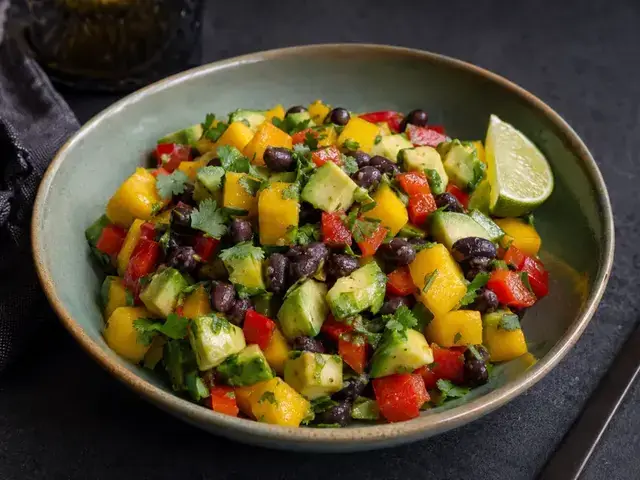
- Serve ripe flesh raw in desserts, salsa and lassi.
- Use firm green mango in pickle, chutney and salad.
- Grill thick ripe cheeks briefly to caramelise the surface.
Flavour Pairings
- Chilli, lime, mint and coriander.
- Coconut, yogurt, cardamom and ginger.
- Prawn, chicken, cucumber and red onion.
- Passion fruit, vanilla, sesame and sticky rice.
Practical Substitutions
- Peach or nectarine for ripe juicy sweetness.
- Pineapple for firmer tropical acidity.
- Green papaya with extra acid for crunchy unripe salads.
Storage and Shelf Life
Ripen whole mangoes at room temperature; refrigerate only after ripening to slow further softening. Refrigerate cut flesh promptly and freeze puree in measured portions.
Season and Availability
Peak seasons depend strongly on origin and cultivar, typically within warmer months rather than a single global period.
Nutrition and Dietary Context
Mango provides carbohydrate, fibre and carotenoids. Portion and preparation matter, particularly when sweetened in drinks or desserts.
Allergen and Food-Safety Notes
Mango can trigger allergy, including reactions to peel or sap related to urushiol compounds. Avoid cross-contact and discard fermented or mouldy fruit.
Zero-Waste Use
Scrape sound flesh from the stone for puree, simmer peels only in recipes designed for them, and freeze surplus before it becomes overripe.
Common Mistakes to Avoid
- Judging ripeness by skin colour alone.
- Cutting an unwashed mango and carrying surface contamination into flesh.
- Using overripe watery mango where clean cubes are required.
Chef’s Quality Check
A ripe mango should yield slightly, smell fragrant at the stem and cut into flesh that is juicy but not fizzy, grey or fermented.
This profile provides general culinary education. Product composition, allergens, storage life and safety requirements vary; check the label and follow local guidance.