
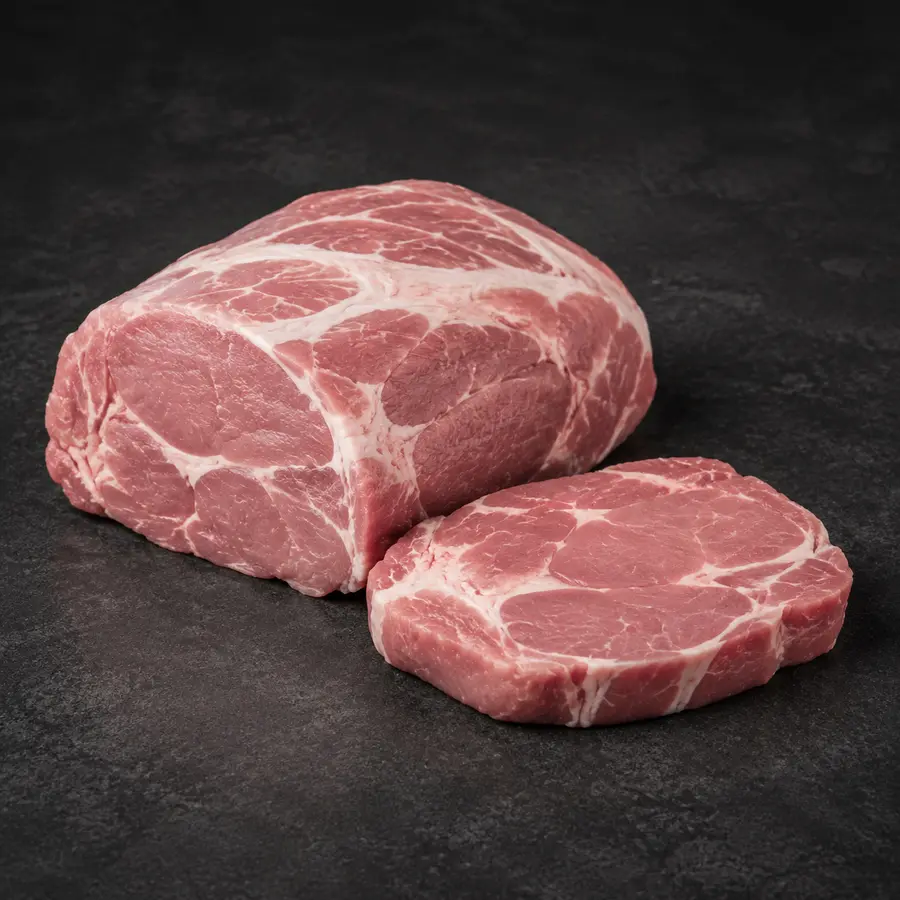
Ingredient at a glance: Pork shoulder is a marbled connective cut, sold bone-in or boned, well suited to roasting, braising and pulled preparations.
Flavour, Aroma and Texture
It is savoury, sweet and rich. Slow heat creates succulent shreddable meat; inadequate time leaves rubbery seams and unrendered fat.
How to Select It
Choose cold firm pork with pink colour, white fat and no slime, grey-green patches or sour odour. Confirm whether rind and bone are present.
Professional Preparation
Score rind only when crackling is intended, keeping cuts out of meat. Season deeply, tie boned roasts evenly and keep raw pork separate.
Best Cooking Methods
- Slow-roast until collagen softens, then crisp exterior.
- Braise in measured liquid and reduce the sauce.
- Pressure-cook safely, followed by roasting or glazing.
Flavour Pairings
- Apple, mustard, sage and onion.
- Garlic, paprika, cumin and oregano.
- Soy, ginger, five-spice and spring onion.
- Cabbage, beans, potato and vinegar.
Practical Substitutions
- Lamb shoulder for richer distinct flavour.
- Beef chuck for a darker braise.
- Jackfruit for plant-based shredded texture without equivalent protein.
Storage and Shelf Life
Store raw pork cold and leak-proof, freeze promptly if needed. Divide cooked shoulder into shallow portions with some juices and cool rapidly.
Season and Availability
Available year-round.
Nutrition and Dietary Context
Pork shoulder provides protein and substantial fat depending on trimming. Cured shoulder products have different sodium and safety requirements.
Allergen and Food-Safety Notes
Raw pork requires hygienic handling and safe cooking verified under local guidance. Minced, injected and whole cuts may have different standards.
Zero-Waste Use
Use bones for stock, chill and separate rendered fat, and turn safely stored leftovers into tacos, noodles or pie.
Common Mistakes to Avoid
- Stopping when safe temperature is reached but collagen remains tough.
- Trying to crisp wet rind at low heat.
- Cooling a whole shoulder in a deep container.
Chef’s Quality Check
A fork should twist easily through connective seams, fat should be translucent and rendered, and meat remain juicy rather than greasy or dry.
This profile provides general culinary education. Product composition, allergens, storage life and safety requirements vary; check the label and follow local guidance.