
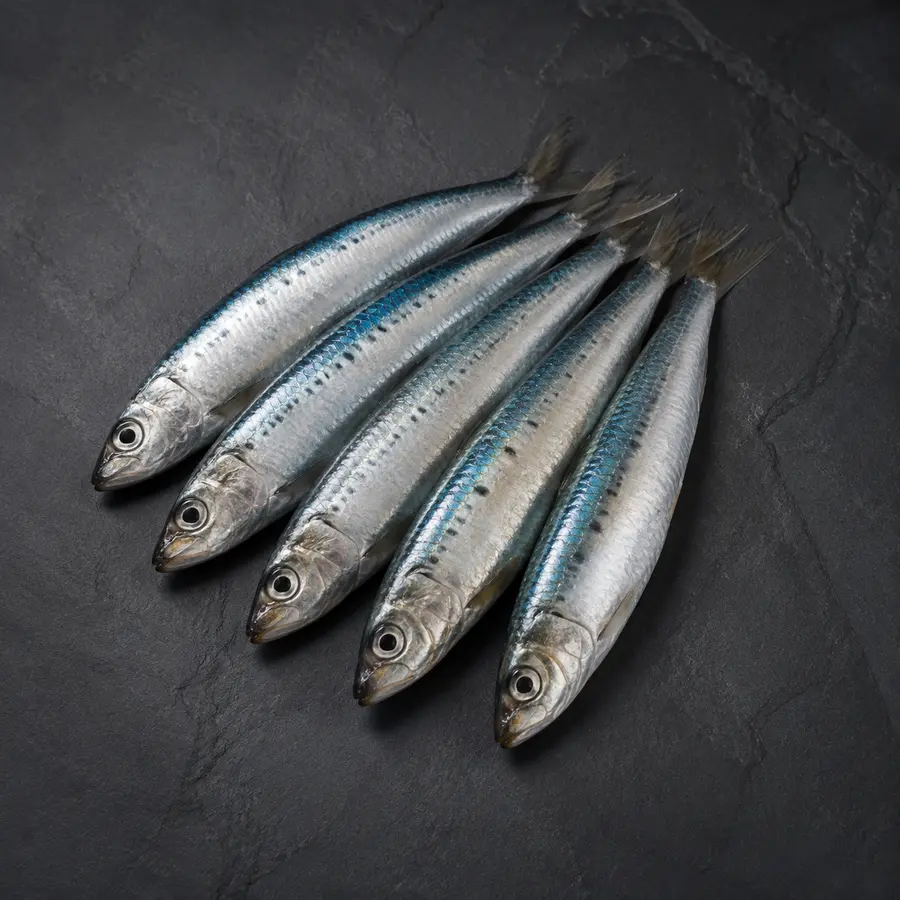
Ingredient at a glance: Sardines are small oily schooling fish sold fresh, frozen, salted and canned, often eaten with their soft cooked bones.
Flavour, Aroma and Texture
They are rich, savoury and distinctly marine. Very fresh sardines taste clean; oxidation quickly creates strong fishy, rancid flavours.
How to Select It
Fresh sardines need bright eyes, shiny skin, red gills and firm bodies. Reject belly burst, slime or ammonia smell. Cans must be intact.
Professional Preparation
Keep extremely cold. Scale only if required, remove guts for many fresh preparations and rinse briefly before drying. Handle gently because flesh is fragile.
Best Cooking Methods
- Grill or pan-fry quickly over high heat.
- Roast with lemon, garlic and herbs.
- Use drained canned sardines in toast, pasta and salad.
Flavour Pairings
- Lemon, parsley, chilli and garlic.
- Tomato, olive, caper and fennel.
- Bread, potato, bean and onion.
- Mustard, vinegar, dill and cucumber.
Practical Substitutions
- Mackerel for stronger oily flesh.
- Anchovy in smaller quantities for concentrated saltiness.
- Trout for a larger, milder oily fish.
Storage and Shelf Life
Use fresh sardines the day of purchase when possible, held very cold. Refrigerate opened canned fish in a clean covered container and use promptly.
Season and Availability
Strongly seasonal in many fisheries, though canned sardines are year-round.
Nutrition and Dietary Context
Sardines provide protein, omega-3 fats, vitamin D and calcium when soft bones are eaten.
Allergen and Food-Safety Notes
Fish is a major allergen. Histamine can form under poor temperature control and is not destroyed by cooking. Small bones may still concern some diners.
Zero-Waste Use
Use heads and bones in strained stock, combine canned oil into dressing when suitable and buy can sizes that match one service.
Common Mistakes to Avoid
- Keeping fresh sardines for several days before cooking.
- Overcooking until oily flesh becomes dry.
- Assuming every bone is soft enough for every diner.
Chef’s Quality Check
Fresh sardines should smell like clean sea air, hold their shape and cook to juicy flesh without ammonia or rancid oil.
This profile provides general culinary education. Product composition, allergens, storage life and safety requirements vary; check the label and follow local guidance.