
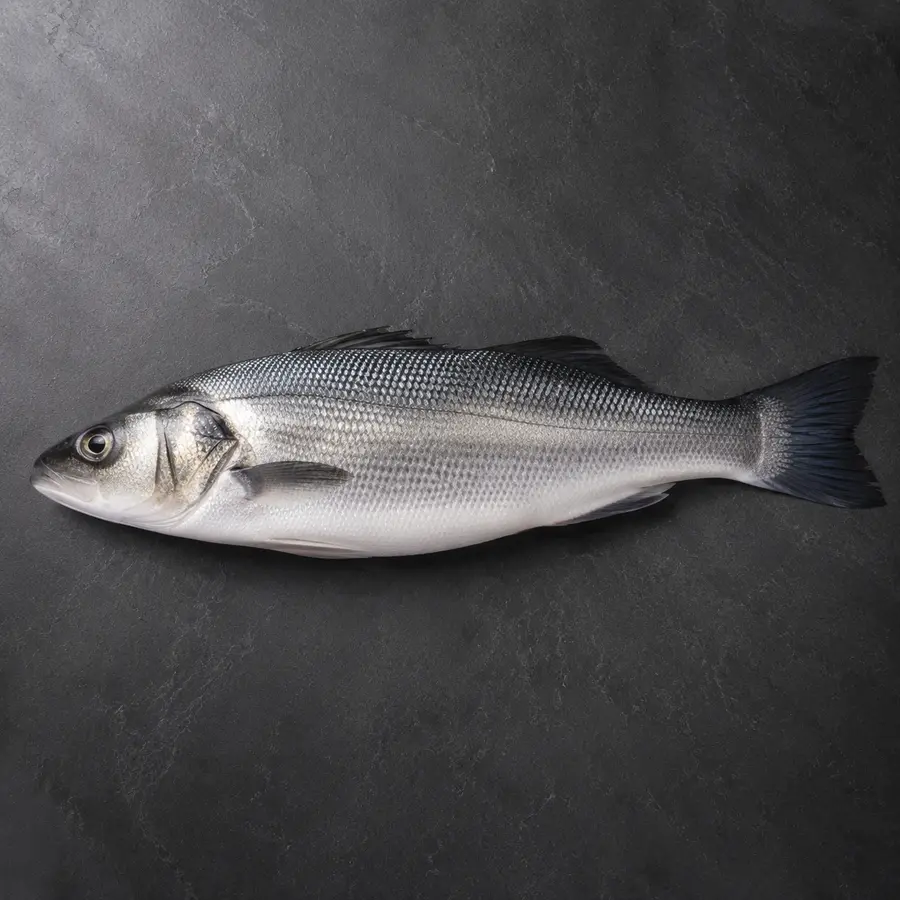
Ingredient at a glance: Sea bass is a moderately lean white fish sold whole or filleted, with delicate flakes and skin that crisps well when properly prepared.
Flavour, Aroma and Texture
It is mild, sweet and clean, with fine moist flakes. Scorched skin tastes bitter; overcooked flesh becomes tight and dry.
How to Select It
Whole fish should have clear convex eyes, red-pink gills, tight scales and resilient flesh. Fillets should be moist and clean-smelling, not slimy or browned.
Professional Preparation
Scale away from other food, remove pin bones, pat skin completely dry and make shallow relief cuts only when needed to prevent curling.
Best Cooking Methods
- Pan-sear skin-side down with steady contact.
- Roast whole with aromatics after cleaning the cavity.
- Steam gently with ginger and spring onion.
Flavour Pairings
- Lemon, olive oil, oregano and parsley.
- Fennel, tomato, caper and white wine.
- Ginger, soy, sesame and chilli.
- Potato, courgette, spinach and garlic.
Practical Substitutions
- Sea bream for a similarly delicate whole fish.
- Snapper for firmer sweet flesh.
- Trout for richer flesh and a similar whole-fish method.
Storage and Shelf Life
Keep fish on ice or at the coldest safe refrigerator temperature without sitting in meltwater. Use promptly and cool cooked portions rapidly.
Season and Availability
Wild and farmed availability varies by region; check legal size and responsible sourcing.
Nutrition and Dietary Context
Sea bass supplies lean protein with modest fat. Exact nutrition depends on species and production.
Allergen and Food-Safety Notes
Fish is a major allergen. Bones remain a physical hazard even after filleting; raw service requires approved controls.
Zero-Waste Use
Simmer bones and head into strained quick stock, crisp clean skin and use safely chilled cooked flakes in salad or fish cakes.
Common Mistakes to Avoid
- Putting damp skin into a cool pan.
- Pressing delicate flesh after it has set and causing breakage.
- Assuming a fillet is completely boneless.
Chef’s Quality Check
Skin should be evenly crisp, flesh moist and opaque to the intended endpoint, and each portion checked for pin bones.
This profile provides general culinary education. Product composition, allergens, storage life and safety requirements vary; check the label and follow local guidance.