
 Chicken
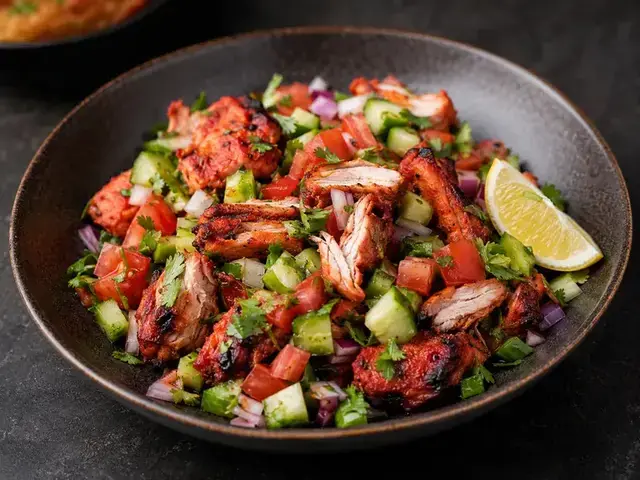
Tandoori Chicken Kachumber Salad
Tandoori chicken kachumber salad combines warmly spiced cooked chicken with a crisp tomato-cucumber-onion mixture. The yogurt marinade supplies the coating, while fresh lemon and…
This chicken biryani layers partly cooked basmati with a spiced chicken masala, herbs and browned onions. The rice should finish in separate grains while absorbing aroma from the sealed pot. Moisture control matters as much as the spice mixture.

Follow the measured ingredients, numbered method, substitutions, safety notes and cooking mode below.
Production target: 4 portions. Treat the chicken masala and rice as two separate preparations until the final assembly.
Soak rice consistently and parboil in a large volume of well-seasoned boiling water. Drain as soon as the grains are about 70% cooked; carryover begins immediately, so do not leave the rice sitting in hot water.
Reduce the chicken base until the masala clings to the meat. Free liquid at the bottom of the pot is the main cause of soggy biryani.
Layer lightly without compressing the rice. Keep herbs, browned onions and finishing liquid ready before assembly so the pot can be sealed promptly.
For service, use a heavy pot and a heat diffuser if the stove is aggressive. Keep the lid closed through the dum stage. Final quality check: chicken at least 74°C, rice fully tender but separate, no burnt base, no visible pool of liquid and clear aroma of browned onion, mint and whole spices.
Lift portions vertically from the side rather than mixing the whole pot; this preserves the layered appearance and grain integrity.
This chicken biryani uses the pakki-style approach: a concentrated spiced chicken masala is built first, then partly cooked basmati is layered over it and finished under a tightly sealed lid. The key is moisture control—rice should enter the pot at about 70% doneness, while the chicken masala should be thick enough to cling to the meat rather than pool underneath it.
1. Read firstRead every step once before switching on the cooker.
2. MeasureWeigh and prepare all ingredients in the order listed.
3. Control heatLow means a gentle bubble, medium cooks steadily, and high is for quick browning.
4. Check donenessUse the texture, timing and safe-temperature checks written in the method.
Complete one numbered step before moving to the next. Keep the heat and timing exactly as written.
The two controls that decide whether biryani succeeds are rice doneness before layering and moisture in the chicken masala. Get those right before worrying about garnish.
Use aged basmati if possible. Fresh soft rice can cook faster and is more likely to break, so begin checking before the stated upper cooking time.
The chicken masala must be thick before the rice goes on top. If you can see a pool of thin liquid around the chicken, reduce it first or the rice will steam in excess water and become sticky.
Parboiled rice should be cooked outside but still slightly firm in the centre. Fully soft rice before dum will become mushy.
Do not stir after layering. Biryani cooks in layers; aggressive mixing breaks the grains and destroys the contrast between rice and masala.
If the rice is slightly hard after dum, add only 1–2 tablespoons of hot water, cover and steam briefly. Large amounts of water will ruin the texture.
If the base begins to smell toasted before the dum time is finished, move the pot onto a heat diffuser or heavy frying pan and lower the heat immediately.
If the biryani is too wet at the end, rest uncovered for 3–5 minutes before serving rather than stirring it repeatedly.
Saffron is optional. Good biryani does not need artificial colour; browned onions, herbs, spices and correct dum cooking provide enough aroma and visual contrast.
Keep raw poultry separate from ready-to-eat food and do not wash it. Check the thickest flesh and any stuffing reach at least 74°C with a food thermometer; colour and timing alone are not reliable.
Lift portions from the side of the pot with a broad spoon so rice and chicken are both included. Cool leftover rice promptly and follow the rice-specific storage instructions.
Cool cooked rice quickly in shallow portions, ideally refrigerating within 1 hour. Keep at 4°C or below and use within 24 hours. Reheat only once to at least 74°C throughout. Do not keep a batch already reheated for another reheating cycle.
Chicken
Tandoori chicken kachumber salad combines warmly spiced cooked chicken with a crisp tomato-cucumber-onion mixture. The yogurt marinade supplies the coating, while fresh lemon and…
 Chicken
Chicken coconut curry combines a ginger-garlic tomato base with coconut milk and tender thigh pieces. Cumin and coriander provide warm spice, while lime keeps…
 Chicken
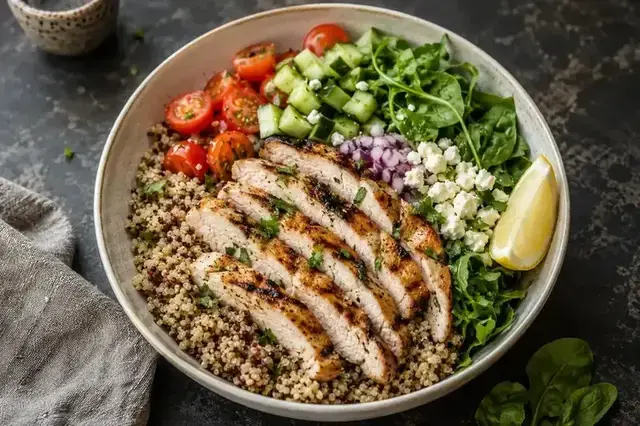
This grilled chicken quinoa bowl combines lean sliced chicken, fluffy grains and crisp raw vegetables with a lemon-herb dressing. The quinoa should remain loose…
No reviews yet. Be the first to rate this recipe.