
 Chicken
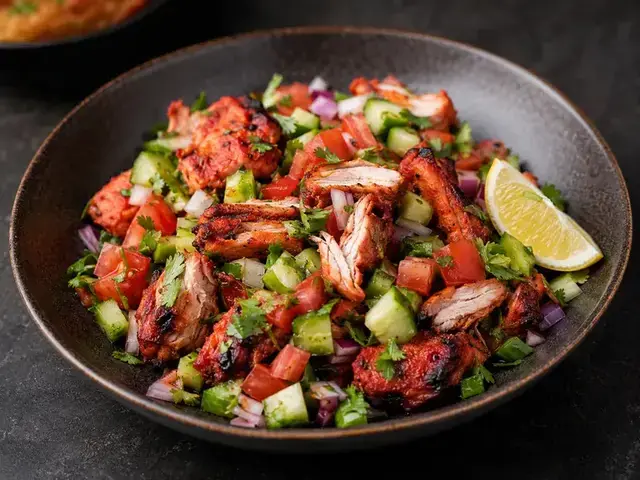
Tandoori Chicken Kachumber Salad
Tandoori chicken kachumber salad combines warmly spiced cooked chicken with a crisp tomato-cucumber-onion mixture. The yogurt marinade supplies the coating, while fresh lemon and…
Chicken tikka masala combines lightly charred, yogurt-marinated chicken with a creamy tomato sauce. Browning the chicken separately creates contrast with the smooth sauce. The finished dish should have warm spice, gentle acidity and tender chicken without a heavy layer of cream masking the tomato.

Follow the measured ingredients, numbered method, substitutions, safety notes and cooking mode below.
Thigh meat tolerates the two cooking stages well. Divide the ginger, garlic and spices as listed so both marinade and sauce receive seasoning. Plain yogurt is needed; flavoured yogurt or sweetened cream would change the sauce significantly.
Keep chicken pieces evenly sized and let excess marinade fall away before browning. Cook in batches so the pan does not fill with liquid. Reduce the tomato base before adding cream, then finish the chicken in the sauce and verify a 74°C centre temperature.
If the sauce tastes raw or sharply tomato-like, simmer the tomato base longer before enriching it. If the chicken becomes dry, shorten the final simmer after safe doneness is reached. Burnt marinade residue should not be scraped into the sauce.
Chicken tikka masala combines lightly charred, yogurt-marinated chicken with a creamy tomato sauce. Browning the chicken separately creates contrast with the smooth sauce. The finished dish should have warm spice, gentle acidity and tender chicken without a heavy layer of cream masking the tomato.
1. Read firstRead every step once before switching on the cooker.
2. MeasureWeigh and prepare all ingredients in the order listed.
3. Control heatLow means a gentle bubble, medium cooks steadily, and high is for quick browning.
4. Check donenessUse the texture, timing and safe-temperature checks written in the method.
Complete one numbered step before moving to the next. Keep the heat and timing exactly as written.
Chicken tikka masala works because the charred chicken and the sauce are cooked as two separate components before they meet. The chicken should keep some roasted edges after it enters the sauce; it should not taste like meat that was simply boiled in tomato cream.
Ingredient choices: Thigh meat handles high-heat charring and a short final simmer better than very lean breast. Plain unsweetened yogurt is important in the marinade. Kashmiri chilli gives colour and mild warmth; ordinary hot chilli powder can be used more cautiously.
Sauce control: This sauce is more onion-and-spice forward than butter chicken. Cook the onion properly, reduce the tomato base, and use cream only to round the edges. If you blend the sauce, vent the blender and handle the hot mixture carefully.
Chicken control: Space the tikka pieces so they roast instead of steam. Dark edges are desirable; black burnt yogurt is not. Finish the largest piece to at least 74°C and stop the final simmer once the chicken is safely cooked.
If something goes wrong: A raw tomato taste needs more reduction, not more cream. A sauce that is too thick can be loosened with hot water. If it is too rich, correct salt and acidity before adding anything else. If the chicken is dry, shorten the oven/grill stage or the final sauce simmer next time.
Keep raw poultry separate from ready-to-eat food and do not wash it. Check the thickest flesh and any stuffing reach at least 74°C with a food thermometer; colour and timing alone are not reliable.
Serve with rice or flatbread and a modest coriander finish. Portion chicken first, then distribute the sauce evenly so each plate receives the same balance.
Refrigerate promptly in shallow covered containers at 4°C or below and use within 3 days. Reheat only the portion needed to at least 74°C throughout. Discard food left unrefrigerated for more than 2 hours, or 1 hour above 32°C.
Chicken
Tandoori chicken kachumber salad combines warmly spiced cooked chicken with a crisp tomato-cucumber-onion mixture. The yogurt marinade supplies the coating, while fresh lemon and…
 Chicken
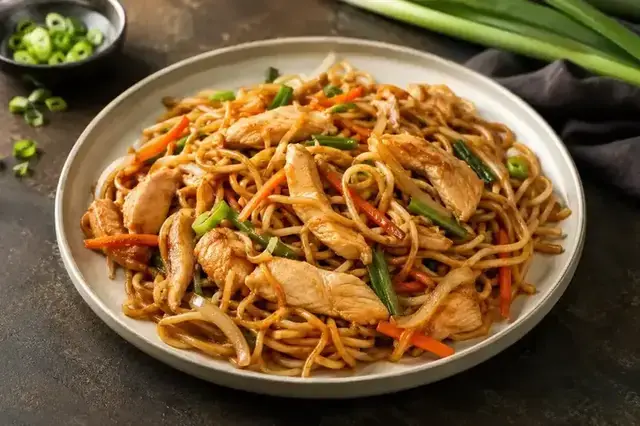
Chicken chow mein combines springy egg noodles, tender chicken and crisp vegetables in a concentrated savoury sauce. The final noodles should be coated rather…
 Chicken
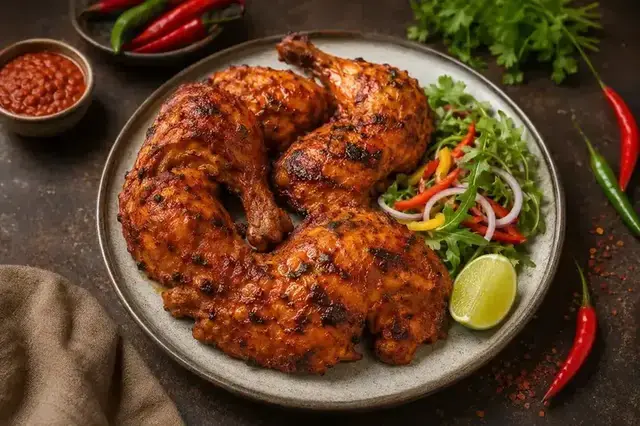
Peri-peri chicken uses a sharp chilli, garlic and pepper sauce to season a butterflied whole bird. Flattening the chicken creates a more even thickness…
No reviews yet. Be the first to rate this recipe.