
 Chicken
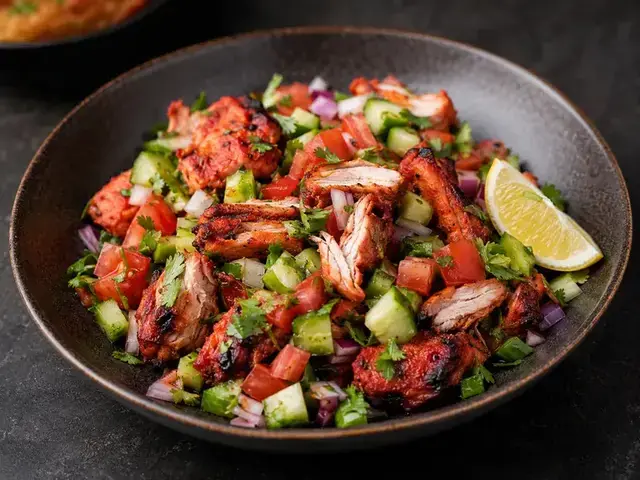
Tandoori Chicken Kachumber Salad
Tandoori chicken kachumber salad combines warmly spiced cooked chicken with a crisp tomato-cucumber-onion mixture. The yogurt marinade supplies the coating, while fresh lemon and…
Honey-garlic chicken uses a sticky, savoury-sweet glaze over small pieces of browned chicken. Rice vinegar prevents the honey from tasting one-dimensional, while garlic and ginger provide a strong aromatic base. Sesame oil belongs in the sauce balance rather than being used as the main frying oil.

Follow the measured ingredients, numbered method, substitutions, safety notes and cooking mode below.
Pat the chicken dry before dusting it with cornflour. Measure honey and soy sauce rather than pouring by eye; both strongly affect the final concentration. The rice listed here is already steamed, so plan additional time if starting with dry rice.
Brown chicken in batches, then briefly cook the garlic without letting it burn. Add the sauce and simmer until it coats the pieces, verifying the chicken reaches 74°C. Stop reducing while the glaze can still flow; it thickens further as it cools.
A hard, sticky glaze has reduced too far and can be loosened with a little hot water. Bitter garlic or scorched honey cannot be balanced reliably with extra sweetness. If the dish is too salty, more plain rice helps serving balance but does not remove salt.
Honey-garlic chicken uses a sticky, savoury-sweet glaze over small pieces of browned chicken. Rice vinegar prevents the honey from tasting one-dimensional, while garlic and ginger provide a strong aromatic base. Sesame oil belongs in the sauce balance rather than being used as the main frying oil.
1. Read firstRead every step once before switching on the cooker.
2. MeasureWeigh and prepare all ingredients in the order listed.
3. Control heatLow means a gentle bubble, medium cooks steadily, and high is for quick browning.
4. Check donenessUse the texture, timing and safe-temperature checks written in the method.
Complete one numbered step before moving to the next. Keep the heat and timing exactly as written.
Add the honey sauce only after the chicken is browned; prolonged high heat can make the sugars catch and taste bitter.
Ingredient choices: Pat the chicken dry before dusting it with cornflour. Measure honey and soy sauce rather than pouring by eye; both strongly affect the final concentration. The rice listed here is already steamed, so plan additional time if starting with dry rice.
Cooking control: Brown chicken in batches, then briefly cook the garlic without letting it burn. Add the sauce and simmer until it coats the pieces, verifying the chicken reaches 74°C. Stop reducing while the glaze can still flow; it thickens further as it cools.
If something goes wrong: A hard, sticky glaze has reduced too far and can be loosened with a little hot water. Bitter garlic or scorched honey cannot be balanced reliably with extra sweetness. If the dish is too salty, more plain rice helps serving balance but does not remove salt.
Keep raw poultry separate from ready-to-eat food and do not wash it. Check the thickest flesh and any stuffing reach at least 74°C with a food thermometer; colour and timing alone are not reliable.
Serve with the measured cooked rice, spring onion and sesame seeds. Add an unsalted vegetable side if a larger meal is wanted.
Cool cooked rice quickly in shallow portions, ideally refrigerating within 1 hour. Keep at 4°C or below and use within 24 hours. Reheat only once to at least 74°C throughout. Do not keep a batch already reheated for another reheating cycle.
Chicken
Tandoori chicken kachumber salad combines warmly spiced cooked chicken with a crisp tomato-cucumber-onion mixture. The yogurt marinade supplies the coating, while fresh lemon and…
 Chicken
This grilled chicken quinoa bowl combines lean sliced chicken, fluffy grains and crisp raw vegetables with a lemon-herb dressing. The quinoa should remain loose…
 Chicken
Chicken cacciatore is a gentle braise in a tomato, mushroom and pepper sauce. Browning the chicken first gives the gravy depth, while wine, olives…
No reviews yet. Be the first to rate this recipe.