
 Fish
Fish
Garlic Butter Fish with Crushed Potatoes
Garlic-butter fish pairs moist white fish with roughly crushed potatoes that catch the lemony pan sauce. The potatoes retain small pieces rather than becoming…
Thai coconut fish curry combines firm white fish, green beans and peppers in a red-curry coconut broth. Fish sauce brings salt and savouriness, while lime and basil freshen the finish. The broth should remain aromatic and fluid rather than thick like a flour-based gravy.

Follow the measured ingredients, numbered method, substitutions, safety notes and cooking mode below.
Curry pastes vary in chilli strength and may contain shrimp or other allergens. Use unsweetened coconut milk and firm fish pieces. Makrut lime leaves, if used, flavour the broth but are normally removed or left uneaten.
Cook the paste gently before adding coconut milk and water. Let beans and peppers approach tenderness before adding the fish. Simmer quietly until the fish reaches safe doneness, then add lime and basil off strong heat.
If the curry is too hot, increase the unsalted coconut-and-vegetable base. If it is too salty, more sugar will not remove salt. Fish breaking apart signals overcooking or excessive stirring.
Thai coconut fish curry combines firm white fish, green beans and peppers in a red-curry coconut broth. Fish sauce brings salt and savouriness, while lime and basil freshen the finish. The broth should remain aromatic and fluid rather than thick like a flour-based gravy.
1. Read firstRead every step once before switching on the cooker.
2. MeasureWeigh and prepare all ingredients in the order listed.
3. Control heatLow means a gentle bubble, medium cooks steadily, and high is for quick browning.
4. Check donenessUse the texture, timing and safe-temperature checks written in the method.
Complete one numbered step before moving to the next. Keep the heat and timing exactly as written.
Curry paste may contain shrimp as well as chilli and salt. Check its label and use a smaller amount initially if the brand is especially strong.
Ingredient choices: Curry pastes vary in chilli strength and may contain shrimp or other allergens. Use unsweetened coconut milk and firm fish pieces. Makrut lime leaves, if used, flavour the broth but are normally removed or left uneaten.
Cooking control: Cook the paste gently before adding coconut milk and water. Let beans and peppers approach tenderness before adding the fish. Simmer quietly until the fish reaches safe doneness, then add lime and basil off strong heat.
If something goes wrong: If the curry is too hot, increase the unsalted coconut-and-vegetable base. If it is too salty, more sugar will not remove salt. Fish breaking apart signals overcooking or excessive stirring.
Keep raw fish refrigerated and check for bones. Cook fish to at least 63°C in the thickest part. Keep raw-fish tools separate from ready-to-eat garnishes.
Serve with rice separately so diners can control how much broth it absorbs. Identify fish, paste ingredients and fish sauce in the dietary description.
Refrigerate promptly in shallow covered containers at 4°C or below and use within 3 days. Reheat only the portion needed to at least 74°C throughout. Discard food left unrefrigerated for more than 2 hours, or 1 hour above 32°C.
Fish
Garlic-butter fish pairs moist white fish with roughly crushed potatoes that catch the lemony pan sauce. The potatoes retain small pieces rather than becoming…
 Fish
Fish
Swordfish souvlaki uses firm fish cubes with lemon, oregano and grilled vegetables. Swordfish holds its shape on skewers better than very delicate white fish,…
 Fish
Fish
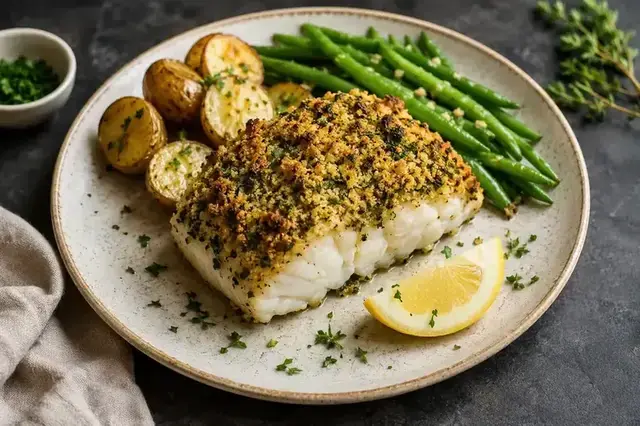
Herb-crusted cod has a light mustard-bound breadcrumb topping over moist, flaky fish. Parsley, chives and lemon give the crust freshness. The topping should be…
No reviews yet. Be the first to rate this recipe.