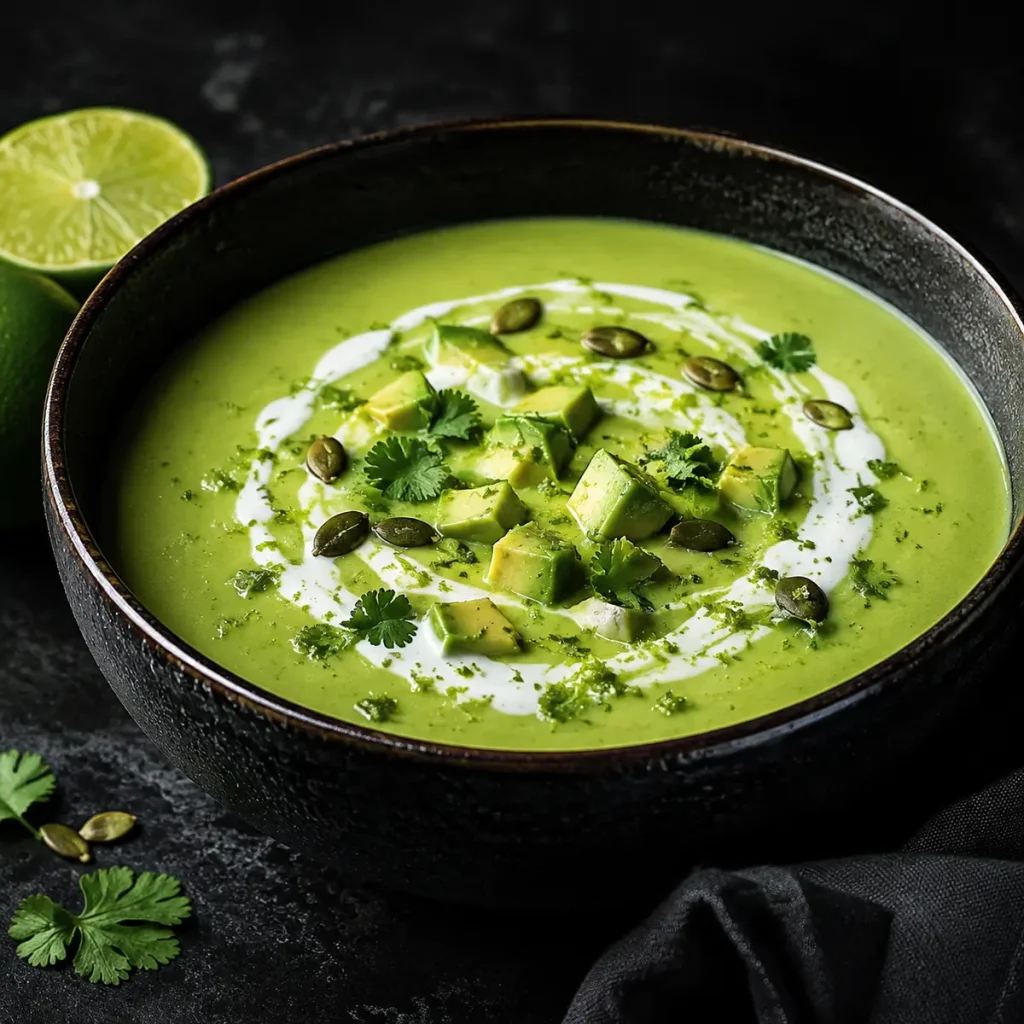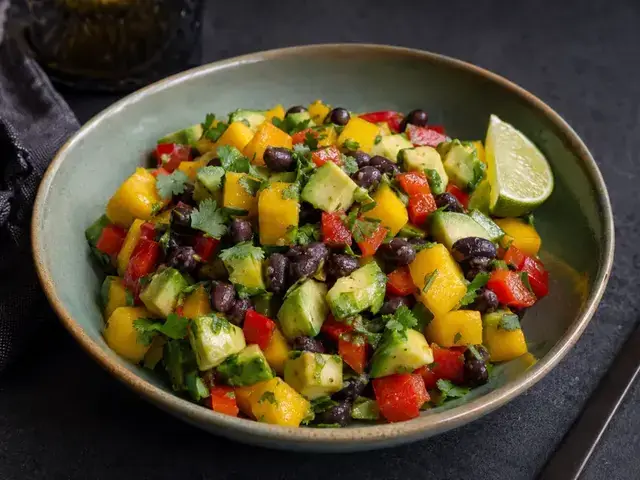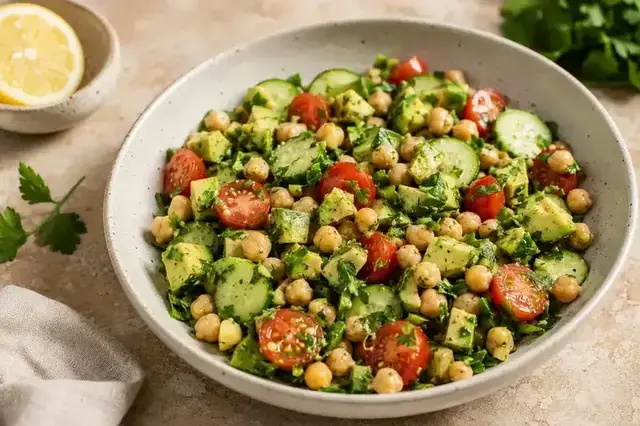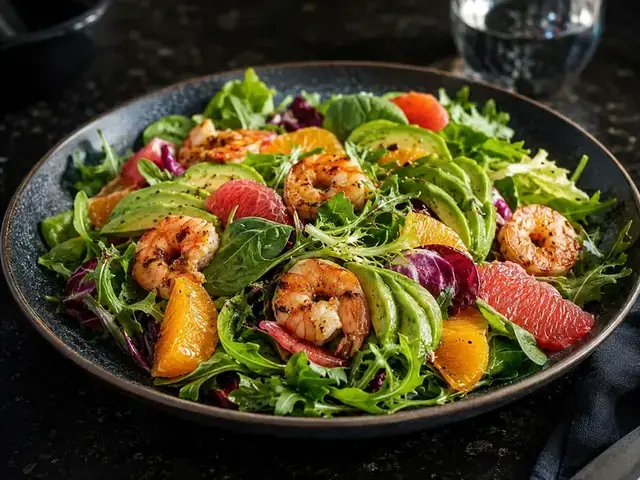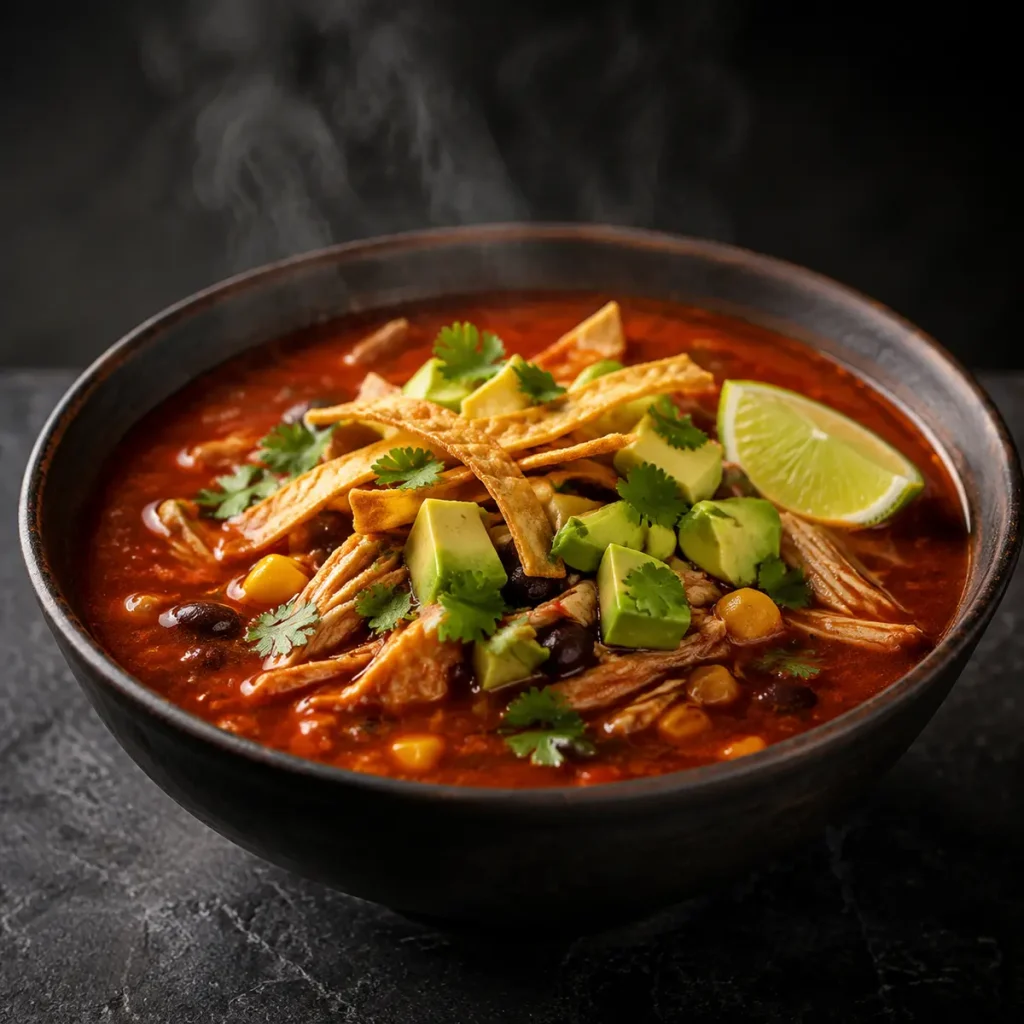
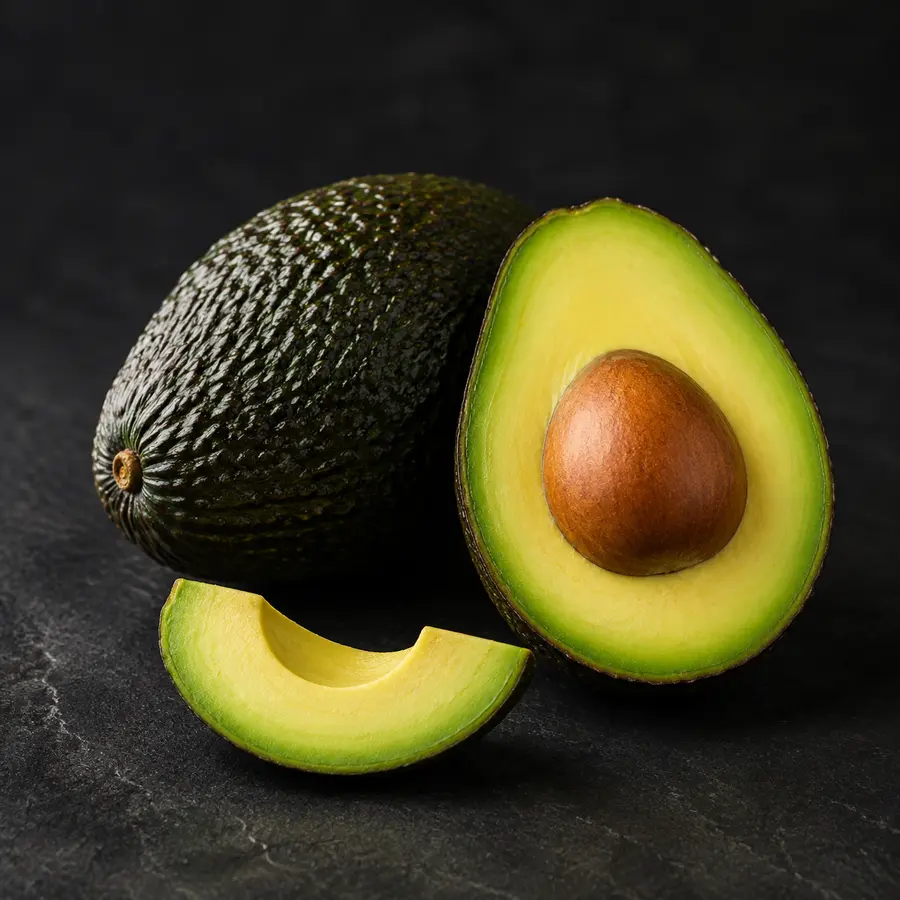
Ingredient at a glance: Avocado is a high-fat fruit used for creamy body in salads, spreads, sauces and cold preparations, with cultivars that differ in skin and water content.
Flavour, Aroma and Texture
Ripe flesh is buttery, mild and slightly nutty. Underripe avocado is rubbery and grassy; overripe flesh becomes watery, stringy, grey or rancid.
How to Select It
Choose fruit based on planned use. It should yield gently at the neck when ripe without deep dents. Skin colour is cultivar-specific. Avoid loose stones, leaking cracks or mould at the stem.
Professional Preparation
Wash before cutting, stabilise on the board and cut around the stone. Twist open, remove the stone with a safe spoon method rather than striking toward the hand, and scoop flesh cleanly.
Best Cooking Methods
- Mash cold for guacamole and spreads.
- Slice at the last moment for salads and toast.
- Blend into chilled sauces; avoid prolonged high heat that can emphasise bitterness.
Flavour Pairings
- Lime, chilli, coriander and tomato.
- Eggs, smoked fish, chicken and beans.
- Sesame, soy, cucumber and radish.
- Corn, feta, yogurt and pumpkin seeds.
Practical Substitutions
- Hummus for a creamy savoury spread.
- Mashed peas with olive oil for green freshness.
- Tahini or nut butter for fat and body without avocado flavour.
Storage and Shelf Life
Ripen at room temperature, then refrigerate ripe whole fruit briefly. Cover cut surfaces directly, add acid and refrigerate, but treat colour control separately from food safety.
Season and Availability
Availability is year-round through multiple origins; individual cultivar seasons vary.
Nutrition and Dietary Context
Avocado contains mostly unsaturated fat, fibre and potassium. It is energy-dense compared with many fruits, so portion context matters.
Allergen and Food-Safety Notes
Avocado allergy and latex-fruit cross-reactivity occur. Discard flesh with mould, fermented smell or extensive dark watery decay. The stone and skin are not normal edible components.
Zero-Waste Use
Mash surplus ripe flesh with acid and freeze for sauces. Use slightly bruised but sound flesh immediately after generous trimming.
Common Mistakes to Avoid
- Testing ripeness by squeezing the middle repeatedly and bruising it.
- Using a knife strike to remove the stone while holding fruit in the hand.
- Assuming lemon prevents unsafe storage because it slows browning.
Chef’s Quality Check
Ripe flesh should scoop smoothly, hold a clean slice when required and taste buttery without fibrous, watery or rancid notes.
This profile provides general culinary education. Product composition, allergens, storage life and safety requirements vary; check the label and follow local guidance.