◆ ChefLock Verified↻ Tested 1 timev1.0◎ Origin: Tikka masala is associated with British-South Asian restaurant cuisine, with its exact origin widely debated. This cauliflower version is a modern plant-based adaptation that replaces traditional meat tikka with spice-marinated roasted cauliflower while preserving the creamy tomato-masala style of the dish.
Follow the measured ingredients, numbered method, substitutions, safety notes and cooking mode below.
Professional Kitchen View
Standard Yield4 servings
Mise en Place / Production Schedule
Day Before
Prepare masala sauce if required.
Measure dry spices.
Prepare vegetable stock.
2 Hours Before Service
Cut cauliflower.
Prepare marinade.
Marinate cauliflower.
Dice onion.
Prepare ginger and garlic.
45 Minutes Before Service
Roast cauliflower.
Reheat or prepare masala sauce.
15 Minutes Before Service
Add coconut milk and kasuri methi.
Fold roasted cauliflower into sauce.
Adjust seasoning.
During Service
Maintain appropriate hot holding.
Stir gently to avoid breaking cauliflower.
Finish each portion with coriander and optional coconut cream.
Professional Chef Notes
Standardise cauliflower floret size for consistent roasting.
Roast in a single layer rather than steaming in overcrowded trays.
Cook spices briefly without scorching.
Reduce tomato masala sufficiently before adding liquid.
Keep cauliflower slightly firmer during roasting if it will be held for buffet service.
Combine sauce and cauliflower as close to service as practical.
Keep the sauce slightly looser for buffet holding because it will continue to th
About This Recipe
Cauliflower tikka masala combines roasted, spiced florets with a creamy tomato sauce. Roasting gives the cauliflower browned edges and a firmer texture than simmering it from raw. Coconut yogurt and coconut milk keep this version plant-based while balancing the chilli and aromatic spices.
Before You Start
1. Read firstRead every step once before switching on the cooker.
2. MeasureWeigh and prepare all ingredients in the order listed.
3. Control heatLow means a gentle bubble, medium cooks steadily, and high is for quick browning.
4. Check donenessUse the texture, timing and safe-temperature checks written in the method.
Equipment
✓ Baking tray
✓ Parchment paper or baking mat
✓ Large mixing bowl
✓ Heavy saucepan
✓ Chef’s knife
✓ Chopping board
✓ Wooden spoon or silicone spatula
✓ Kitchen scale
✓ Measuring jug
✓ Serving ladle
Ingredients
For the Cauliflower Tikka
For the Masala Sauce
To Finish
Easy Step-by-Step Method
Complete one numbered step before moving to the next. Keep the heat and timing exactly as written.
Marinate the Cauliflower
Place the coconut yogurt, lemon juice, oil, ginger, garlic, garam masala, cumin, coriander, paprika, turmeric and salt in a mixing bowl.
Add the cauliflower and toss until evenly coated.
Leave to marinate for approximately 20 minutes.
Roast the Cauliflower
Preheat the oven to 220°C conventional / 200°C fan.
Arrange the cauliflower in a single layer on a lined baking tray.
Roast for 20–25 minutes, turning once halfway, until tender with lightly charred edges.
Cook the Cumin and Onion
Heat the oil in a heavy saucepan over medium heat.
Add the cumin seeds and cook for 20–30 seconds until fragrant.
Add the onion and cook for 5–6 minutes until soft and lightly golden.
Add the Ginger and Garlic
Add the ginger and garlic and cook for approximately 1 minute, stirring continuously.
Cook the Ground Spices
Add coriander, cumin, garam masala, turmeric and Kashmiri chilli powder.
Cook for approximately 30 seconds, stirring continuously. Add a small splash of water if the spices begin to catch.
Cook the Tomato Masala
Add the tomato passata.
Cook over medium-low heat for 8–10 minutes, stirring regularly, until the sauce thickens and the raw tomato flavour disappears.
Build the Sauce
Add the vegetable stock and stir well.
Simmer for approximately 5 minutes.
Reduce the heat and stir in the coconut milk, kasuri methi and optional sugar.
Add the Cauliflower
Add the roasted cauliflower to the sauce.
Fold gently until coated and simmer for another 4–5 minutes so the cauliflower absorbs the masala flavour.
Adjust the Seasoning
Taste and adjust salt, chilli and sauce consistency.
Add a little hot vegetable stock if the sauce becomes too thick.
Finish the Curry
Remove from high heat and stir in the lemon juice.
Finish with chopped fresh coriander and optional coconut cream.
Serve
Serve immediately with basmati rice, roti or vegan naan.
Chef Notes & Tips
Keep cauliflower florets similar in size for even cooking.
Do not overcrowd the roasting tray.
Roasting gives better colour and texture than boiling the cauliflower.
Cook the tomato masala properly before adding coconut milk.
Crush kasuri methi between your palms before adding it.
Add roasted cauliflower only near the end to prevent it becoming too soft.
The finished sauce should be creamy and coating, not watery.
Ingredient choices: Cut florets to similar sizes and include small pieces of tender stem rather than wasting them. Use unsweetened yogurt, because sweetened coconut products can dominate the sauce. Kasuri methi is potent; crush it and add it in controlled amounts.
Cooking control: Coat the cauliflower without leaving thick pools of marinade on the tray. Roast until the stems are tender and edges coloured, while making the tomato sauce separately. Combine near the end and fold carefully so the florets keep their shape.
If something goes wrong: If the outside darkens before the stems soften, reduce the oven heat and continue cooking rather than adding raw florets to the finished sauce. If the sauce tastes chalky, the ground spices may not have cooked through. Give the tomato-spice base time before the coconut finish.
Ingredient Substitutions
↔ Cauliflower → broccoli
↔ Coconut yogurt → unsweetened soy yogurt
↔ Coconut milk → plant-based cooking cream
↔ Tomato passata → crushed canned tomatoes
↔ Kashmiri chilli powder → mild paprika
↔ Kasuri methi → omit if unavailable
↔ Fresh coriander → parsley
↔ Vegetable stock → water with appropriate seasoning
↔ Lemon juice → lime juice
Food Safety & Doneness
Wash cauliflower and fresh herbs thoroughly.
Keep plant yogurt refrigerated before use.
Roast cauliflower until tender in the centre and thoroughly heated.
Cook the tomato sauce sufficiently before finishing the curry.
Keep cooked curry hot for immediate service or cool promptly.
Refrigerate leftovers promptly.
Reheat stored curry until piping hot throughout.
Serving & Plating
Serve in a warm shallow bowl.
Arrange cauliflower pieces so some remain visible above the sauce.
Finish with coriander and a light drizzle of coconut cream.
Serve basmati rice alongside or underneath.
Add a lemon wedge and optional fresh chilli.
Serve with rice or flatbread and spoon sauce around the cauliflower so some roasted surfaces remain visible. Add fresh coriander shortly before taking it to the table.
Storage
Cool promptly and refrigerate in a covered food-safe container.
Use within 3 days.
Reheat gently until piping hot throughout.
Add a small amount of vegetable stock or coconut milk if the sauce thickens during storage.
The finished curry can be frozen for approximately 2 months, although the cauliflower may soften slightly after thawing.
Nutrition & Dietary Information
Carbohydrates: 35 g
Fat: 25 g
Allergens: No major allergen is inherently required when coconut yogurt is used.
Soy may be present if soy yogurt or soy-based cooking cream is substituted.
Approximate nutrition per serving:
Calories: ~390 kcal
Protein: ~10 g
Carbohydrates: ~35 g
Fat: ~25 g
Fibre: ~9 g
Values are approximate and vary according to coconut yogurt, coconut milk and portion size.
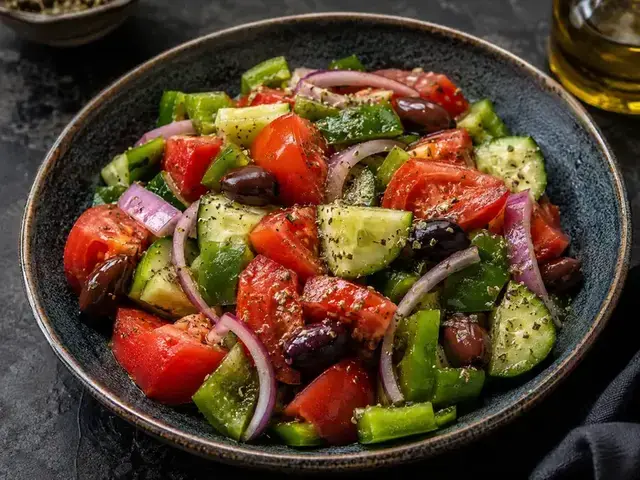
This vegan village-style salad brings together ripe tomatoes, cucumber, green pepper, onion and olives with oregano dressing. Optional vegan feta adds a salty accent.…


 Botanical