
 Botanical
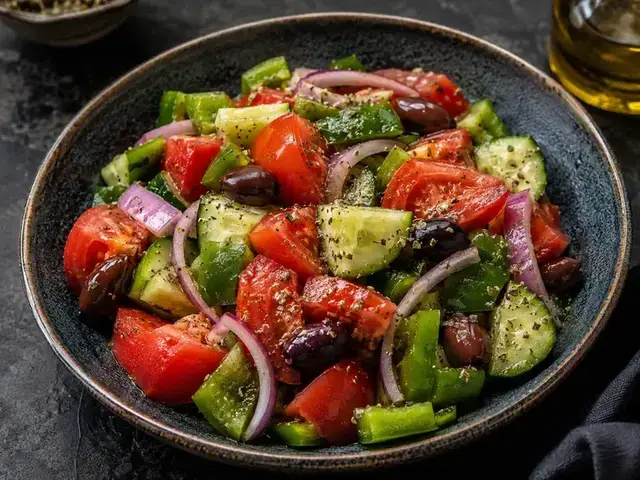
Vegan Greek Village Salad
This vegan village-style salad brings together ripe tomatoes, cucumber, green pepper, onion and olives with oregano dressing. Optional vegan feta adds a salty accent.…
Aloo tama with black-eyed peas combines potato, fully cooked fermented bamboo shoots and tender beans in a tangy Nepali-style broth. Fermented bamboo gives the dish its characteristic sour aroma; cumin, ginger and tomato support that flavour rather than covering it with heavy cream.

Follow the measured ingredients, numbered method, substitutions, safety notes and cooking mode below.
Use commercially prepared, fully cooked fermented bamboo shoots and follow their packet guidance. Fresh raw bamboo is not a direct substitute. The black-eyed peas must already be cooked, while waxy potatoes hold their shape better during simmering.
Cook the onion-tomato spice base before adding potatoes and liquid. Simmer until the potatoes are tender, then allow the cooked bamboo and peas to share their flavour with the broth. Taste before adding extra salt because fermented shoots vary.
If the broth is too sour, increase the unsalted potato, bean and liquid portion rather than adding large amounts of sugar. If it is thin, gently crush a few cooked potato pieces into the liquid. Avoid breaking all the peas while stirring.
Aloo tama with black-eyed peas combines potato, fully cooked fermented bamboo shoots and tender beans in a tangy Nepali-style broth. Fermented bamboo gives the dish its characteristic sour aroma; cumin, ginger and tomato support that flavour rather than covering it with heavy cream.
1. Read firstRead every step once before switching on the cooker.
2. MeasureWeigh and prepare all ingredients in the order listed.
3. Control heatLow means a gentle bubble, medium cooks steadily, and high is for quick browning.
4. Check donenessUse the texture, timing and safe-temperature checks written in the method.
Complete one numbered step before moving to the next. Keep the heat and timing exactly as written.
Aloo tama is built around contrast: soft potato, tender beans and the distinctive sour aroma of fermented bamboo. The broth should feel light enough to eat with rice but strong enough that every spoonful tastes of the tama.
Ingredient choices: Use commercially prepared, fully cooked fermented bamboo shoots and follow the package guidance. The black-eyed peas must also already be fully cooked. Waxy potatoes are useful because they soften without collapsing completely into the broth.
Cooking control: Give the onion-tomato masala enough time to lose its raw smell before adding water. Add the tama after the potatoes have begun to soften so its acidity does not dominate the early cooking. Stir gently once the beans are in the pan.
Flavour balance: Taste before adding the final salt. Some fermented bamboo products are much saltier and more sour than others. The goal is tangy, savoury and aromatic—not sweet, creamy or aggressively acidic.
If something goes wrong: If the broth is too thin, crush a few potato cubes and simmer uncovered. If it is too thick, add hot water a little at a time. If the tama is overpoweringly sour, increase the unsalted potato, beans and liquid rather than adding large amounts of sugar. If the fenugreek burns, remake that small tempering stage rather than carrying the bitterness into the whole pot.
Use commercially prepared, fully cooked bamboo shoots and follow package instructions. Fresh raw bamboo shoots or uncertain homemade fermented shoots are not a direct substitute. Use fully cooked black-eyed peas.
Serve hot with rice and fresh coriander. Keep the bamboo, potatoes and peas evenly distributed so each bowl reflects the full dish.
Refrigerate promptly in shallow covered containers at 4°C or below and use within 3 days. Reheat only the portion needed to at least 74°C throughout. Discard food left unrefrigerated for more than 2 hours, or 1 hour above 32°C.
Botanical
This vegan village-style salad brings together ripe tomatoes, cucumber, green pepper, onion and olives with oregano dressing. Optional vegan feta adds a salty accent.…
 Botanical
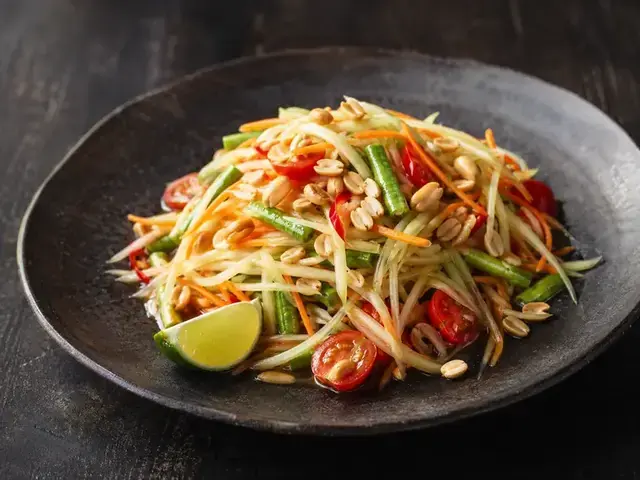
Shredded green papaya, beans, tomatoes, peanuts and a lime-chilli dressing create a crisp vegan Thai salad with sweet, sour, salty and spicy balance.
 Botanical
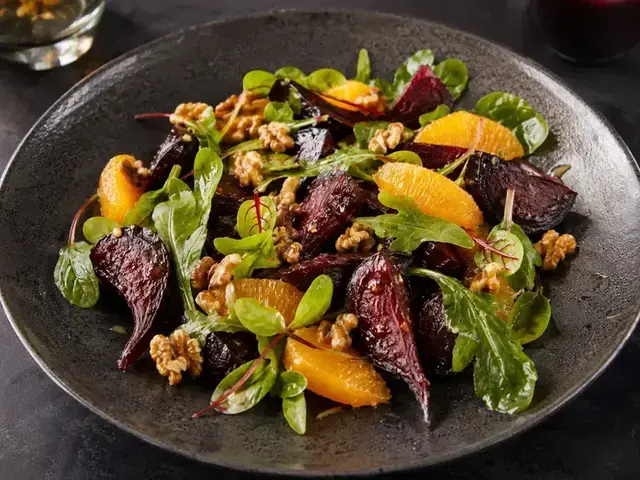
Beetroot, orange and walnut salad balances earthy roasted beetroot with juicy citrus and crisp toasted nuts. Rocket adds a peppery note, while mustard dressing…
Nice dish