
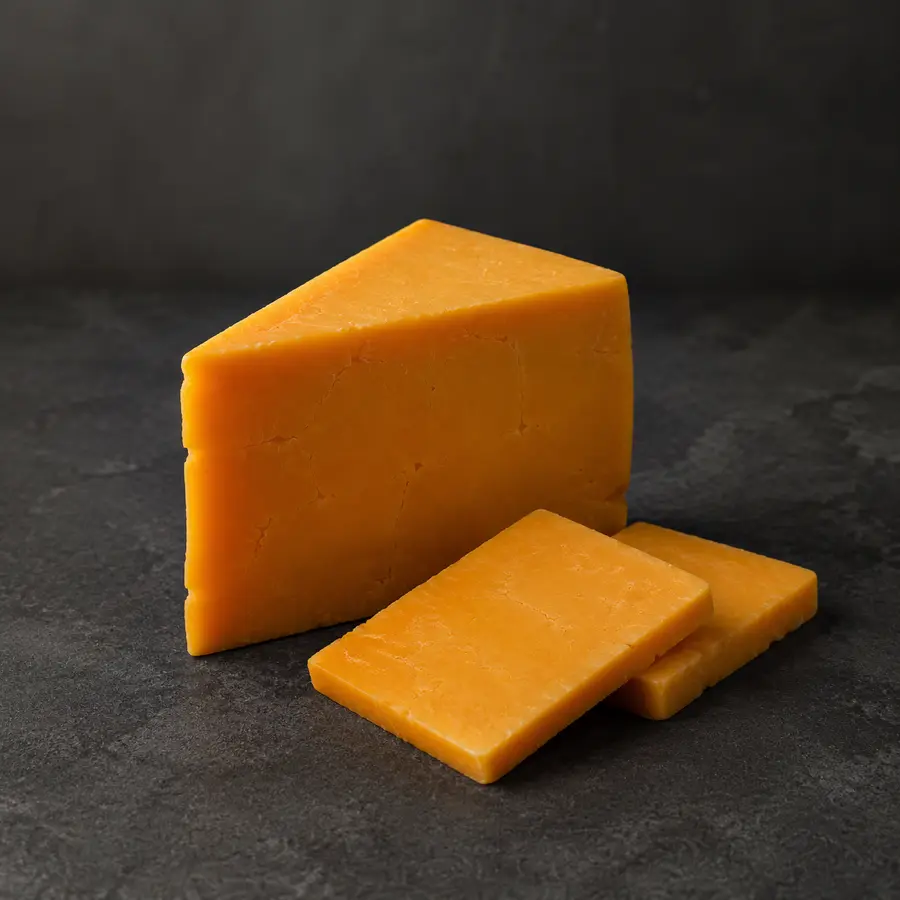
Ingredient at a glance: Cheddar is a firm cow’s-milk cheese ranging from mild and elastic to mature, crumbly and intensely savoury.
Flavour, Aroma and Texture
Young cheddar is milky and mellow; aged cheddar is sharp, nutty and sometimes crystalline. High heat tightens protein and releases fat.
How to Select It
Choose a sealed block with the maturity required. Reject ammonia smell, slime or unintended mould; surface crystals on aged cheddar can be normal.
Professional Preparation
Grate cold cheese finely for even melting. Add to completed sauce off boiling heat. For slices, use uniform thickness and moderate heat.
Best Cooking Methods
- Melt gently into béchamel or soup.
- Grate over gratin, pie and baked vegetables.
- Use sliced in sandwiches, burgers and omelettes.
Flavour Pairings
- Apple, onion, mustard and pickle.
- Potato, cauliflower, broccoli and leek.
- Beef, egg, bread and mushroom.
- Beer, black pepper, thyme and tomato.
Practical Substitutions
- Gruyère for nuttier, smoother melting.
- Gouda for milder sweetness.
- A formulated plant cheese for dairy-free use with different melting behaviour.
Storage and Shelf Life
Refrigerate tightly wrapped while allowing the block to avoid trapped surface moisture. Freeze grated cheddar only for cooked use because texture becomes crumbly.
Season and Availability
A year-round matured dairy product.
Nutrition and Dietary Context
Cheddar provides protein, fat, calcium and sodium; maturity changes flavour more than basic serving size.
Allergen and Food-Safety Notes
Milk is a major allergen. Some cheeses contain added ingredients or non-vegetarian rennet; verify requirements. Trim mould only under authoritative hard-cheese guidance.
Zero-Waste Use
Grate dry edges into sauce, freeze cooking portions and turn mixed safe cheese pieces into a clearly labelled bake.
Common Mistakes to Avoid
- Boiling cheese sauce after cheddar is added.
- Using pre-shredded coated cheese and expecting identical melting.
- Ignoring the salt already supplied by mature cheese.
Chef’s Quality Check
Melted cheddar should form a smooth cohesive layer or sauce with no rubbery strands or orange oil pool.
This profile provides general culinary education. Product composition, allergens, storage life and safety requirements vary; check the label and follow local guidance.
