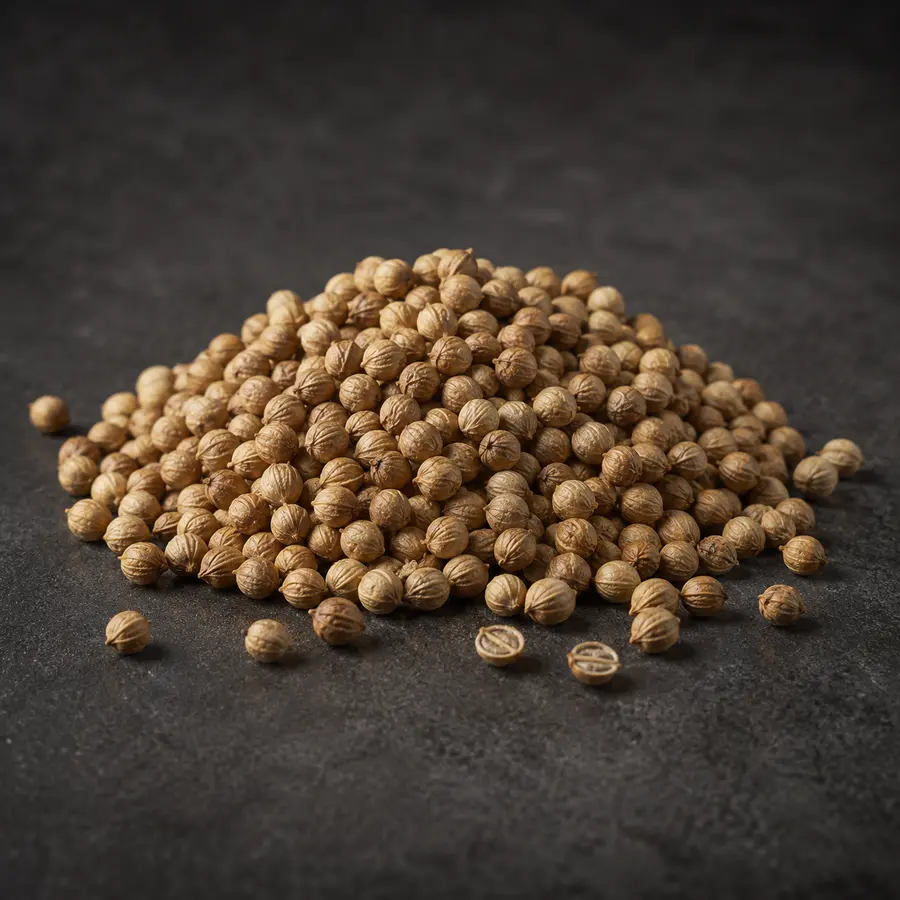
Ingredient at a glance: Coriander seed is the dried fruit of the coriander plant and has a flavour very different from fresh coriander leaves.
Flavour, Aroma and Texture
Whole seed is citrusy, floral, warm and lightly nutty. Toasting makes it rounder and sweeter; stale powder tastes woody.
How to Select It
Select evenly coloured whole seeds with strong lemony aroma when crushed. Avoid damp clumps, insect damage, mould or powder with no fragrance.
Professional Preparation
Inspect and toast over moderate heat until aromatic, not dark. Cool completely before grinding so trapped heat does not dull volatile oils.
Best Cooking Methods
- Grind with cumin for curry bases and masala.
- Crack coarsely for pickles, sausages and vegetable rubs.
- Bloom ground spice in fat followed quickly by moist ingredients.
Flavour Pairings
- Cumin, fennel, cardamom and chilli.
- Citrus, ginger, garlic and coconut.
- Lentils, chicken, fish and lamb.
- Carrot, beetroot, cabbage and potato.
Practical Substitutions
- Cumin plus lemon zest for earthy citrus warmth.
- Fennel seed for a sweeter profile.
- Caraway for darker anise character in savoury dishes.
Storage and Shelf Life
Keep whole seed airtight and dark; grind in small batches. Moisture ruins texture and can support mould, so use dry spoons.
Season and Availability
Available year-round as a dried spice; recently harvested whole seed retains aroma longest.
Nutrition and Dietary Context
Used mainly for flavour in small quantities. Do not infer medicinal effectiveness from culinary use.
Allergen and Food-Safety Notes
Coriander allergy can occur and may cross-react with related plants. Verify spice blends and shared grinders for allergen control.
Zero-Waste Use
Use clean stems and seed fragments in stock sachets, and make fresh small spice batches instead of allowing large quantities to become stale.
Common Mistakes to Avoid
- Grinding while seed is still hot from toasting.
- Confusing seed with fresh leaf in substitution.
- Adding powder to dry scorching fat without moisture ready.
Chef’s Quality Check
Freshly ground coriander should smell distinctly citrusy and warm, with no damp, musty or burnt note.
This profile provides general culinary education. Product composition, allergens, storage life and safety requirements vary; check the label and follow local guidance.