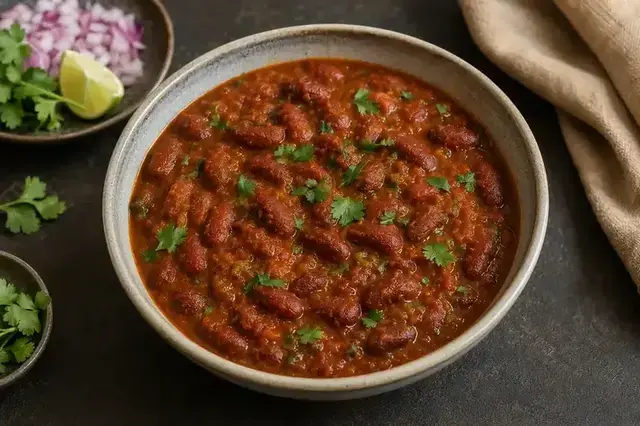
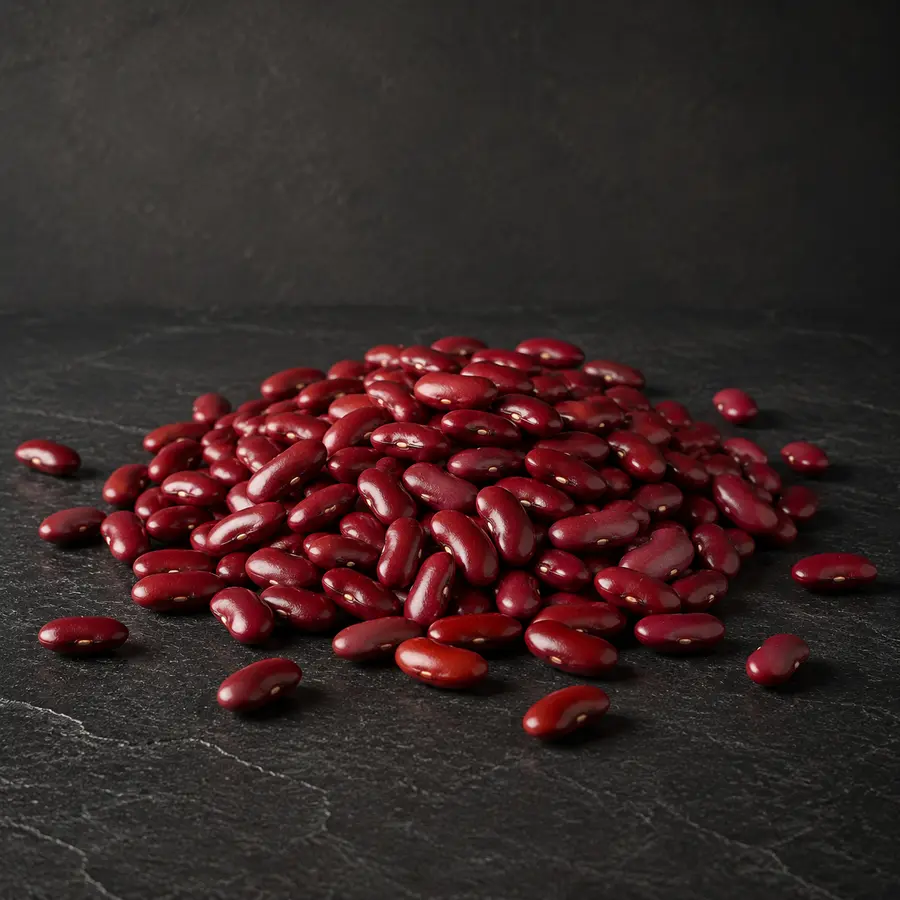
Ingredient at a glance: Kidney beans are large red legumes used in rajma, chilli and salads; raw and undercooked beans contain problematic phytohaemagglutinin.
Flavour, Aroma and Texture
Properly cooked beans are earthy, creamy and mildly sweet, with intact skins. Undercooked centres remain hard and unpleasant.
How to Select It
Choose clean dried beans without cracks, insect holes or dampness. Cans must be intact without swelling, leaks or severe dents at seams.
Professional Preparation
Sort, rinse and soak dried beans, discard soaking water and boil vigorously in fresh water according to authoritative safety guidance before simmering. Slow cookers alone may not reach the required initial heat.
Best Cooking Methods
- Boil safely, then simmer with rajma masala.
- Pressure-cook using manufacturer and food-safety instructions.
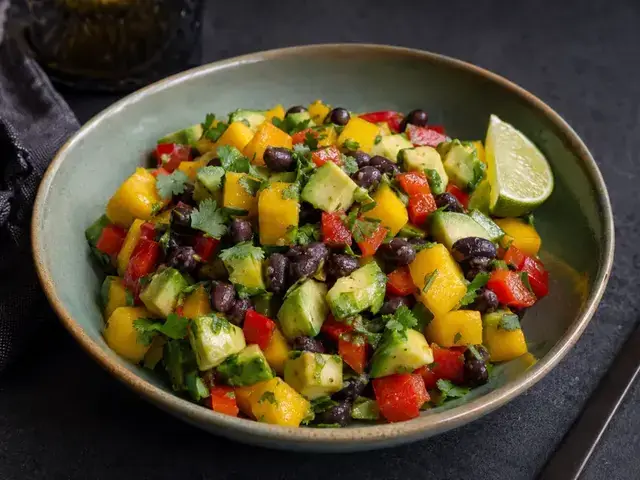
- Use rinsed canned beans in quick stews and salads.
Flavour Pairings
- Tomato, onion, ginger and garlic.
- Cumin, coriander, chilli and garam masala.
- Rice, maize, bell pepper and cheese.
- Lime, coriander leaves, yogurt and avocado.
Practical Substitutions
- Pinto beans for softer mottled texture.
- Black beans for earthier flavour.
- Adzuki beans for smaller sweeter beans with adjusted cooking.
Storage and Shelf Life
Store dried beans airtight and dry. Refrigerate cooked beans promptly in shallow containers and freeze portions in cooking liquid.
Season and Availability
A year-round dried or canned ingredient.
Nutrition and Dietary Context
Kidney beans provide protein, fibre and carbohydrate. Canned versions may contain more sodium but can be rinsed.
Allergen and Food-Safety Notes
Raw or undercooked kidney beans can cause acute illness. Never taste them during unsafe early cooking and do not depend on a low-temperature slow cooker for detoxification.
Zero-Waste Use
Freeze surplus cooked beans, use cooking liquid to thicken stew and measure dry quantities carefully because volume expands greatly.
Common Mistakes to Avoid
- Cooking soaked beans only on low in a slow cooker.
- Adding acid before older beans become tender.
- Serving a bean with a hard chalky centre.
Chef’s Quality Check
Every bean should be fully tender and creamy at the centre; no sample should retain crunch or raw-bean flavour.
This profile provides general culinary education. Product composition, allergens, storage life and safety requirements vary; check the label and follow local guidance.