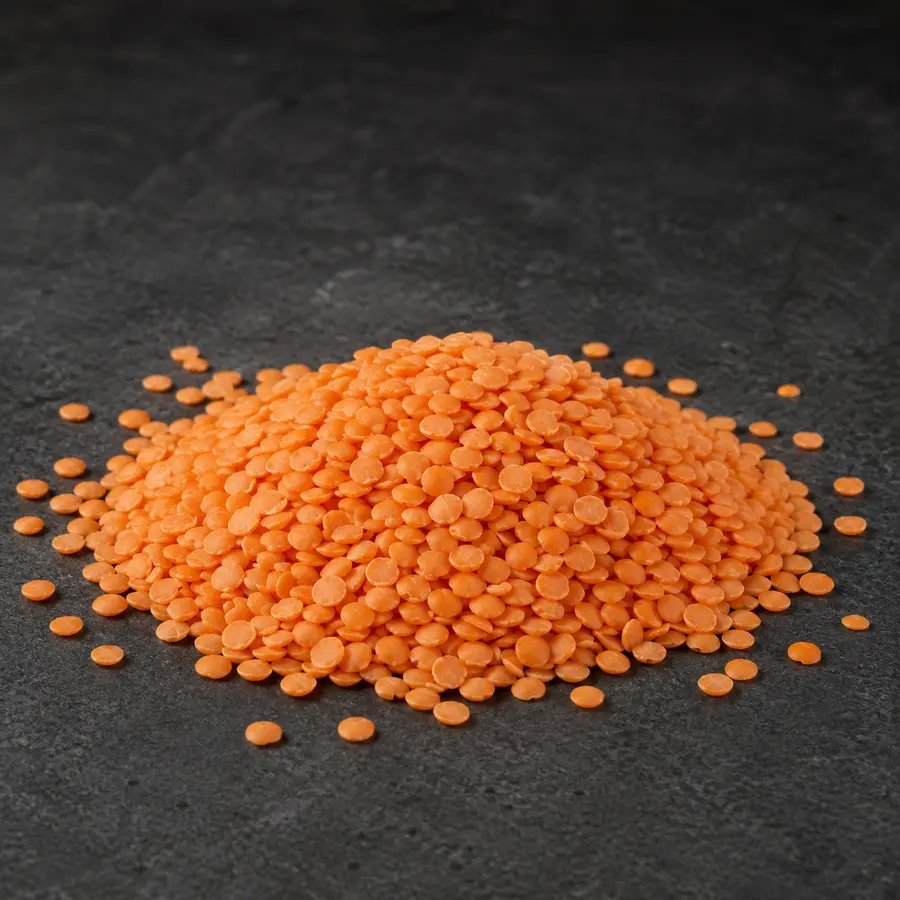
Ingredient at a glance: Red lentils are usually split and hulled, so they cook quickly and collapse readily into a creamy base.
Flavour, Aroma and Texture
They are mild, earthy and slightly sweet. Toasted spices and aromatics carry the flavour; overcooked lentils thicken dramatically as they cool.
How to Select It
Choose clean, evenly coloured splits with no stones, insects, dampness or musty smell. Older lentils may take longer and hydrate less evenly.
Professional Preparation
Sort carefully, rinse until water is less cloudy and drain. No long soak is normally needed. Use a broad pot because early foaming can rise.
Best Cooking Methods
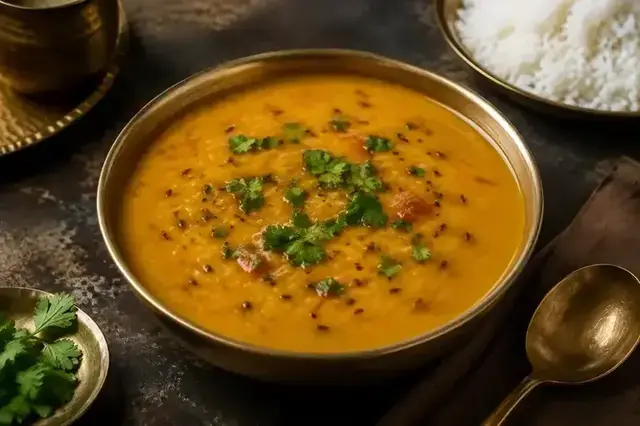
- Simmer gently into dal with aromatics and a finishing tempering.
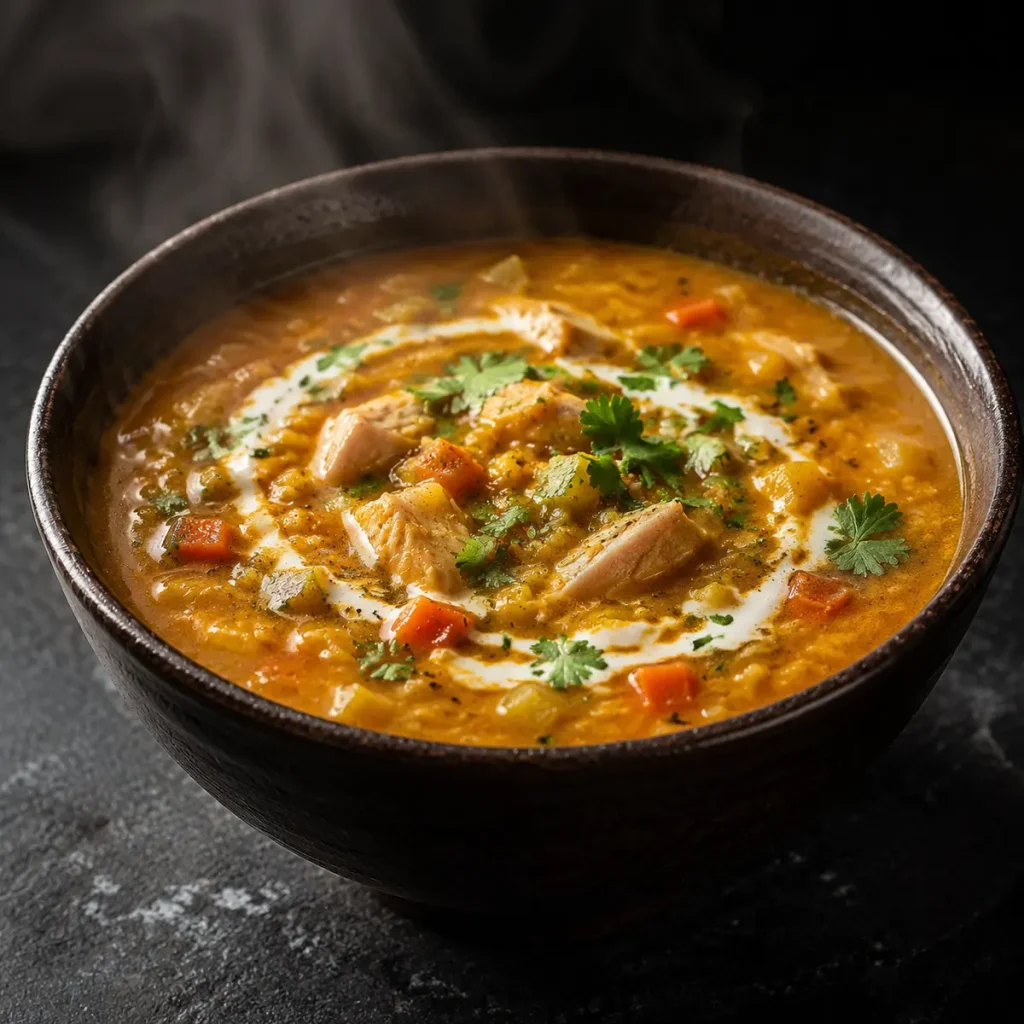
- Cook into soup and blend only if a finer texture is needed.
- Use as a binder in patties after controlled draining.
Flavour Pairings
- Cumin, turmeric, coriander and chilli.
- Garlic, ginger, tomato and onion.
- Lemon, coriander leaves, ghee and yogurt.
- Spinach, coconut, rice and flatbread.
Practical Substitutions
- Yellow split lentils with adjusted cooking time.
- Split mung dal for a lighter flavour.
- Cooked chickpeas blended for body but a firmer texture.
Storage and Shelf Life
Store dry lentils airtight, cool and pest-free. Cool cooked dal rapidly and refrigerate promptly; add water during reheating because it continues to thicken.
Season and Availability
A year-round dried staple.
Nutrition and Dietary Context
Red lentils provide plant protein, carbohydrate, fibre, iron and folate. Pairing with varied foods supports a balanced meal.
Allergen and Food-Safety Notes
Legume allergy is possible. Sort out stones and foreign matter. Dried pulses require cooking; safe holding matters after preparation.
Zero-Waste Use
Turn thick leftover dal into soup, patties or flatbread dough only after safe cooling. Measure portions and freeze surplus early.
Common Mistakes to Avoid
- Adding strong acid before lentils become tender.
- Using too small a pot for foaming.
- Judging final consistency while still boiling hot.
Chef’s Quality Check
A spoonful should be fully tender with no hard centres, creamy but not scorched, and seasoned through rather than only at the surface.
This profile provides general culinary education. Product composition, allergens, storage life and safety requirements vary; check the label and follow local guidance.