
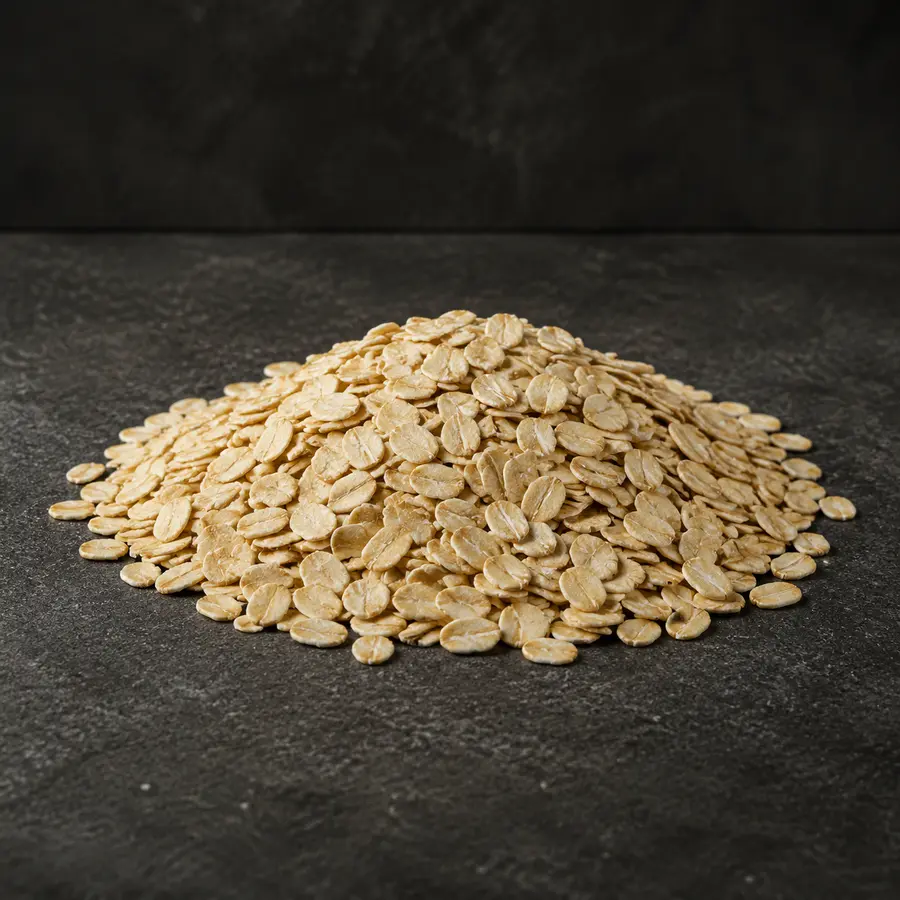
Ingredient at a glance: Rolled oats are steamed oat groats flattened into flakes; thickness controls hydration speed and final texture.
Flavour, Aroma and Texture
Oats taste gently sweet, nutty and cereal-like. Toasting strengthens nuttiness; overcooking produces gluey porridge as starch disperses.
How to Select It
Choose flakes with a clean cereal aroma, dry free-flowing texture and no insects, rancidity or damp clumps. Check whether they are thick, quick-cooking or instant.
Professional Preparation
Measure oats and liquid consistently. Toast dry for deeper flavour, or soak under refrigeration for overnight preparations.
Best Cooking Methods
- Simmer gently for creamy porridge while retaining some flake structure.
- Use in cookies, crumble, granola and bread.
- Toast for savoury risotto-style oats or crusts.
Flavour Pairings
- Milk, yogurt, banana and berries.
- Cinnamon, cardamom, honey and nuts.
- Apple, pear, chocolate and coconut.
- Mushrooms, egg, cheese and herbs in savoury dishes.
Practical Substitutions
- Steel-cut oats with much longer cooking.
- Quinoa flakes for a different gluten-free texture.
- Barley flakes where gluten is acceptable.
Storage and Shelf Life
Store airtight, cool and dark because oat fat can become rancid. Refrigerate prepared overnight oats and cooked porridge promptly.
Season and Availability
A year-round pantry product; milling and packaging freshness determine quality.
Nutrition and Dietary Context
Oats provide soluble beta-glucan fibre and carbohydrate. Toppings and sweeteners change the nutritional balance substantially.
Allergen and Food-Safety Notes
Oats are naturally gluten-free but frequently cross-contact wheat, barley or rye; use certified products when medically necessary. Oat allergy is possible.
Zero-Waste Use
Blend crumbs into flour, add leftover plain porridge to bread dough or pancakes, and make small granola batches before flakes turn stale.
Common Mistakes to Avoid
- Treating instant and thick rolled oats as identical.
- Boiling hard until porridge becomes pasty.
- Using ordinary oats for someone requiring certified gluten-free food.
Chef’s Quality Check
Cooked rolled oats should be creamy but still show individual flakes, with a clean nutty aroma and no rancid aftertaste.
This profile provides general culinary education. Product composition, allergens, storage life and safety requirements vary; check the label and follow local guidance.

