
 Botanical
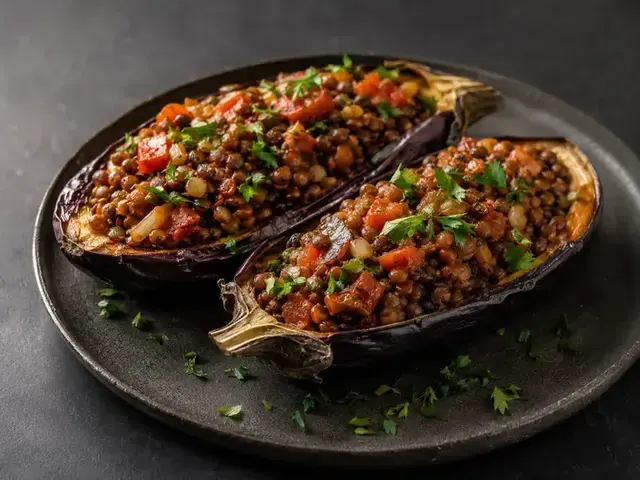
Stuffed Aubergine with Lentils
Lentil-stuffed aubergines combine a soft roasted shell with a tomato, cumin and paprika filling. Green lentils retain some bite against the tender aubergine. Lemon…
Braised chicken with lemon and olives has a light, savoury sauce with gentle citrus bitterness and briny accents. Bone-in thighs suit the moist cooking method. Browning gives depth before the covered simmer, while parsley freshens the final plate.

Follow the measured ingredients, numbered method, substitutions, safety notes and cooking mode below.
Taste olives before adding the full salt amount. Thin lemon slices contribute peel flavour; remove seeds and avoid an excessive quantity of thick white pith. Use stock whose salt level allows some reduction.
Brown chicken, soften onion and garlic, then simmer with stock, herbs and the planned lemon component. Check chicken reaches 74°C and is tender. Adjust extra lemon juice only after olives and reduced stock are present.
A bitter sauce may contain too much pith or overcooked lemon peel. A thin sauce can be reduced after lifting out cooked chicken. Additional salt should wait until the olives have flavoured the liquid.
Braised chicken with lemon and olives has a light, savoury sauce with gentle citrus bitterness and briny accents. Bone-in thighs suit the moist cooking method. Browning gives depth before the covered simmer, while parsley freshens the final plate.
1. Read firstRead every step once before switching on the cooker.
2. MeasureWeigh and prepare all ingredients in the order listed.
3. Control heatLow means a gentle bubble, medium cooks steadily, and high is for quick browning.
4. Check donenessUse the texture, timing and safe-temperature checks written in the method.
Complete one numbered step before moving to the next. Keep the heat and timing exactly as written.
Olives may make the finished sauce salty, so start with restrained salt. Thin lemon slices can turn bitter during an unnecessarily long boil.
Ingredient choices: Taste olives before adding the full salt amount. Thin lemon slices contribute peel flavour; remove seeds and avoid an excessive quantity of thick white pith. Use stock whose salt level allows some reduction.
Cooking control: Brown chicken, soften onion and garlic, then simmer with stock, herbs and the planned lemon component. Check chicken reaches 74°C and is tender. Adjust extra lemon juice only after olives and reduced stock are present.
If something goes wrong: A bitter sauce may contain too much pith or overcooked lemon peel. A thin sauce can be reduced after lifting out cooked chicken. Additional salt should wait until the olives have flavoured the liquid.
Keep raw poultry separate from ready-to-eat food and do not wash it. Check the thickest flesh and any stuffing reach at least 74°C with a food thermometer; colour and timing alone are not reliable.
Serve with potatoes, rice or bread prepared separately. Spoon olives and sauce around the chicken and remove bay leaves.
Refrigerate promptly in shallow covered containers at 4°C or below and use within 3 days. Reheat only the portion needed to at least 74°C throughout. Discard food left unrefrigerated for more than 2 hours, or 1 hour above 32°C.
Botanical
Lentil-stuffed aubergines combine a soft roasted shell with a tomato, cumin and paprika filling. Green lentils retain some bite against the tender aubergine. Lemon…
 Botanical
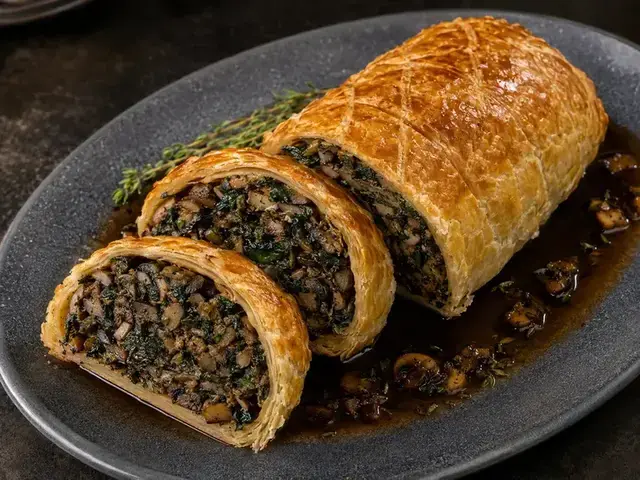
Vegan mushroom Wellington encloses a savoury mushroom-lentil filling in crisp puff pastry. The filling needs enough structure to slice without being a dry paste.…
 Botanical
Chickpea-spinach stuffed peppers combine a soft pepper shell with a tomato-seasoned rice and chickpea filling. The rice absorbs flavour while the chickpeas retain a…
No reviews yet. Be the first to rate this recipe.